
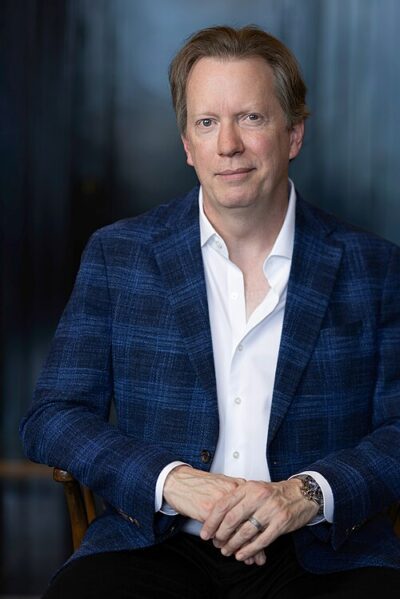
Sean M. Carroll
Sean M. Carroll is an American theoretical cosmologist. Born October 5, 1966, in Philadelphia. Known for From Eternity to Here, The Big Picture and The Particle at the End of the Universe. Educated at Harvard University and Pennsbury High School. Awards include Fellow of the American Physical Society, Emperor Has No Clothes Award and Andrew Gemant Award.
Facts
34 facts · 1 confirmed by two sources · 13 cited · 20 from one source
Where this comes from
Papalocal keeps its own record. It started from these sources; what each one said is kept here as it was copied, so a change on their side never changes this page by itself. Tap one to read its version.
What Wikidata says · copied November 15, 2026 · revision 2558596886
- Described as
- American theoretical cosmologist
- Other names
- Sean Carroll, Sean Michael Carroll
- Born
- October 5, 1966
- Born in
- Philadelphia · 1 reference
- Citizen of
- United States
- Occupation
- physicist · 1 reference; astrophysicist · 1 reference; university teacher
- Worked for
- Santa Fe Institute (2021–) · 1 reference; Johns Hopkins University (2022–) · 2 references; California Institute of Technology (2006–) · 1 reference; University of Chicago (1999–2006) · 1 reference; Kavli Institute for Theoretical Physics (1996–1999) · 1 reference; Massachusetts Institute of Technology (1993–1996) · 1 reference
- Education
- Harvard University · 1 reference; Pennsbury High School · 1 reference
- Member of
- American Physical Society
- Known for
- From Eternity to Here; The Big Picture; The Particle at the End of the Universe; Something Deeply Hidden; Can the dark energy equation-of-state parameter w be less than −1?
- Awards
- Fellow of the American Physical Society; Emperor Has No Clothes Award (2014); Andrew Gemant Award · 1 reference; Fellow of the American Association for the Advancement of Science (2020) · 1 reference; Guggenheim Fellowship (2015) · 1 reference; Packard Fellowship for Science and Engineering (2000) · 1 reference
- Field
- physics; cosmology · 1 reference
- Spouse
- Jennifer Ouellette
- Religion
- atheism
- Lived in
- Los Angeles · 1 reference; Baltimore
- Website
- https://www.preposterousuniverse.com/ · 1 reference; http://preposterousuniverse.com/ · 1 reference
- Wikipedias with a page
- 25
Wikidata item Q3129354 (wikidata.org/wiki/Q3129354), public domain (CC0). Copied November 15, 2026.
What Wikipedia says · copied November 15, 2026 · revision 1379415860
Sean Michael Carroll (born October 5, 1966) is an American theoretical physicist who specializes in quantum mechanics, cosmology, and the philosophy of science. He is the Homewood Professor of Natural Philosophy at Johns Hopkins University. He was formerly a research professor at the Walter Burke Institute for Theoretical Physics at the California Institute of Technology (Caltech) department of physics. He also is currently an external professor at the Santa Fe Institute, and he has been a contributor to the physics blog Cosmic Variance, where he has published in scientific journals such as Nature as well as other publications, including The New York Times, Sky & Telescope, and New Scientist. He is known for his atheism, his vocal critique of theism and defense of naturalism. He is considered a prolific public speaker and science popularizer. In 2007, Carroll was named NSF Distinguished Lecturer by the National Science Foundation.
He has appeared on the History Channel's The Universe, Science Channel's Through the Wormhole with Morgan Freeman, Closer to Truth (broadcast on PBS), and Comedy Central's The Colbert Report. Carroll is the author of Spacetime And Geometry, a graduate-level textbook in general relativity, and has also recorded lectures for The Great Courses on cosmology, time in physics and the Higgs boson. He is also the author of four popular books: From Eternity to Here about the arrow of time, The Particle at the End of the Universe about the Higgs boson, The Big Picture: On the Origins of Life, Meaning, and the Universe Itself about ontology, and Something Deeply Hidden about the foundations of quantum mechanics.
In 2018, Carroll began a podcast called Mindscape, in which he interviews other experts and intellectuals coming from a variety of disciplines, including "[s]cience, society, philosophy, culture, arts and ideas" in general. He has also published a YouTube video series entitled "The Biggest Ideas in the Universe" which provides physics instruction at a popular-science level but with equations and a mathematical basis, rather than mere analogy. The series has become the basis of a new book series with the installment, The Biggest Ideas in the Universe: Space, Time, and Motion, published in September 2022 and the second volume, Quanta and Fields, published in May 2024, with the third and final volume pending publication.
- Born, in its opening lines
- October 5, 1966
From the Wikipedia article “Sean M. Carroll” (en.wikipedia.org/wiki/Sean_M._Carroll), by its contributors, under CC BY-SA 4.0 (creativecommons.org/licenses/by-sa/4.0/). Copied November 15, 2026; not changed.
Confirmed Two sources agree. Cited One source, and it names where it got it. One source One source, without a reference of its own. Sources disagree The sources disagree. We show the best-supported value and keep theirs below.
