
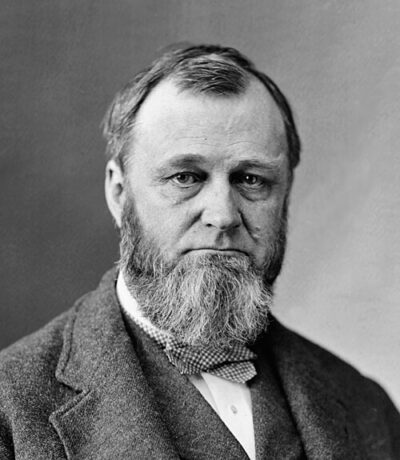
Spencer Fullerton Baird
Spencer Fullerton Baird was an American naturalist, ornithologist, ichthyologist, museum curator, and the 2nd Secretary of the Smithsonian. Born February 3, 1823, in Reading. Died August 19, 1887, in Woods Hole. Positions held include Secretary of the Smithsonian (1878–1887). Known for A history of North American birds, Natural History Illustrations and The water birds of North America. Educated at Dickinson College. Awards include Fellow of the American Academy of Arts and Sciences and Honorary Fellow of the Royal Society Te Apārangi.
Facts
40 facts · 2 confirmed by two sources · 11 cited · 27 from one source
Where this comes from
Papalocal keeps its own record. It started from these sources; what each one said is kept here as it was copied, so a change on their side never changes this page by itself. Tap one to read its version.
What Wikidata says · copied November 15, 2026 · revision 2569127826
- Described as
- American naturalist, ornithologist, ichthyologist, museum curator, and the 2nd Secretary of the Smithsonian (1823-1887)
- Other names
- Spencer Baird, Baird, Spencer F. Baird, S. F. Baird, Baird, SF, S. Fullerton Baird, BAIRD, SPENCER F., Spencer Fullerton Baird (1823-1887)
- Born
- February 3, 1823 · 3 references
- Died
- August 19, 1887 · 3 references
- Born in
- Reading · 1 reference
- Died in
- Woods Hole · 1 reference
- Buried in
- Oak Hill Cemetery
- Citizen of
- United States
- Occupation
- naturalist · 1 reference; curator; ornithologist; zoologist · 1 reference; ichthyologist; university teacher; writer · 1 reference; herpetologist
- Positions held
- Secretary of the Smithsonian (1878–1887) · 1 reference
- Worked for
- Smithsonian Institution; Dickinson College (–1850) · 1 reference
- Education
- Dickinson College
- Member of
- German Academy of Sciences Leopoldina; Hellenic Philological Society of Constantinople (1885–); National Academy of Sciences (1864–) · 1 reference; American Academy of Arts and Sciences; Hungarian Academy of Sciences; American Antiquarian Society; American Philosophical Society (1855–)
- Known for
- A history of North American birds; Natural History Illustrations; The water birds of North America; Outlines of American ornithology : part 1, Land birds; Report upon the invertebrate animals of Vineyard Sound and adjacent waters, with an account of the physical features of the region; Catalogue of North American birds, chiefly in the Museum of the Smithsonian Institution
- Awards
- Fellow of the American Academy of Arts and Sciences; Honorary Fellow of the Royal Society Te Apārangi (1877–) · 1 reference
- Field
- ornithology · 1 reference; ichthyology · 1 reference; herpetology · 1 reference
- Spouse
- Mary Helen Churchill Baird (1846–) · 1 reference
- Mother
- Lydia McFunn Baird · 1 reference
- Siblings
- William McFunn Baird
- Lived in
- Washington, D.C. (1850–) · 1 reference
- Wikipedias with a page
- 32
Wikidata item Q14049 (wikidata.org/wiki/Q14049), public domain (CC0). Copied November 15, 2026.
What Wikipedia says · copied November 15, 2026 · revision 1384727444
Spencer Fullerton Baird (; February 3, 1823 – August 19, 1887) was an American naturalist, ornithologist, ichthyologist, herpetologist, and museum curator. Baird was the first curator to be named at the Smithsonian Institution. He eventually served as assistant Secretary of the Smithsonian from 1850 to 1878, and as Secretary from 1878 until 1887. He was dedicated to expanding the natural history collections of the Smithsonian which he increased from 6,000 specimens in 1850 to over 2 million by the time of his death. He also served as the U.S. Commissioner of Fish and Fisheries from 1871 to 1887 and published over 1,000 works during his lifetime.
- Born, in its opening lines
- February 3, 1823
- Died, in its opening lines
- August 19, 1887
From the Wikipedia article “Spencer Fullerton Baird” (en.wikipedia.org/wiki/Spencer_Fullerton_Baird), by its contributors, under CC BY-SA 4.0 (creativecommons.org/licenses/by-sa/4.0/). Copied November 15, 2026; not changed.
Confirmed Two sources agree. Cited One source, and it names where it got it. One source One source, without a reference of its own. Sources disagree The sources disagree. We show the best-supported value and keep theirs below.
