
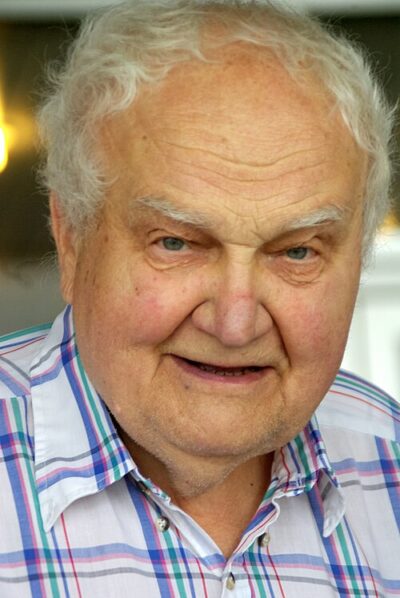
Vyacheslav Ivanov
Vyacheslav Ivanov was a Soviet linguist. Born August 21, 1929, in Moscow. Died October 7, 2017, in Los Angeles. Educated at Philological Faculty of Moscow State University and Lomonosov Moscow State University. Awards include USSR State Prize, Lenin Prize and Order of Friendship.
Facts
45 facts · 2 confirmed by two sources · 17 cited · 26 from one source
Where this comes from
Papalocal keeps its own record. It started from these sources; what each one said is kept here as it was copied, so a change on their side never changes this page by itself. Tap one to read its version.
What Wikidata says · copied November 15, 2026 · revision 2567377461
- Described as
- Soviet linguist (1929-2017)
- Other names
- Vyacheslav Vsevolodovich Ivanov, Vjaceslav Ivanov
- Born
- August 21, 1929 · 4 references
- Died
- October 7, 2017 · 3 references
- Born in
- Moscow · 1 reference
- Died in
- Los Angeles · 2 references
- Buried in
- Novodevichy Cemetery
- Citizen of
- Soviet Union (–1991); United States
- Occupation
- linguist · 1 reference; poet; historian; philosopher; translator; Hittitologist; university teacher; anthropologist · 1 reference
- Worked for
- Stanford University; Institute of Slavic Studies of the Russian Academy of Sciences · 1 reference; Russian State University for the Humanities; University of California, Los Angeles · 1 reference; Philological Faculty of Moscow State University · 1 reference; Moscow University's Department of Philosophy; Yale University; University of California
- Education
- Philological Faculty of Moscow State University (–1951); Lomonosov Moscow State University (1946–1951) · 2 references
- Member of
- USSR Union of Writers; Russian Academy of Sciences (2000–) · 1 reference; American Academy of Arts and Sciences (1993–) · 1 reference; British Academy (1977–) · 1 reference; American Philosophical Society (1994–); Croatian Academy of Sciences and Arts (2004–) · 1 reference
- Awards
- USSR State Prize; Lenin Prize; Order of Friendship; Order of Honour and Glory · 1 reference; Order of the Lithuanian Grand Duke Gediminas · 1 reference; Prize of the President of the Russian Federation · 1 reference
- Field
- linguistics · 1 reference; semiotics · 1 reference; anthropology; literary studies; historical linguistics · 1 reference; psycholinguistics · 1 reference
- Father
- Vsevolod Ivanov · 1 reference
- Mother
- Tamara Vladimirovna Ivanova · 1 reference
- Wikipedias with a page
- 25
Wikidata item Q794031 (wikidata.org/wiki/Q794031), public domain (CC0). Copied November 15, 2026.
What Wikipedia says · copied November 15, 2026 · revision 1376646760
Vyacheslav Vsevolodovich Ivanov (Russian: Вячесла́в Все́володович Ива́нов [vʲɪtɕɪˈslaf ˈfsʲevələdəvʲɪtɕ ɪˈvanəf]; 21 August 1929 – 7 October 2017) was a prominent Soviet and Russian philologist, semiotician and Indo-Europeanist probably best known for his glottalic theory of Indo-European consonantism and for placing the Indo-European urheimat in the area of the Armenian highlands and Lake Urmia.
- Born, in its opening lines
- August 21, 1929
- Died, in its opening lines
- October 7, 2017
From the Wikipedia article “Vyacheslav Ivanov (philologist)” (en.wikipedia.org/wiki/Vyacheslav_Ivanov_(philologist)), by its contributors, under CC BY-SA 4.0 (creativecommons.org/licenses/by-sa/4.0/). Copied November 15, 2026; not changed.
Confirmed Two sources agree. Cited One source, and it names where it got it. One source One source, without a reference of its own. Sources disagree The sources disagree. We show the best-supported value and keep theirs below.
