
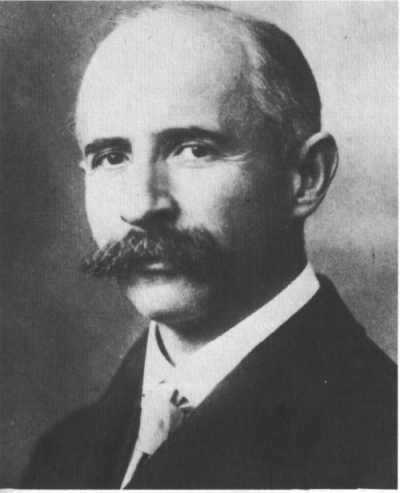
Walter Kaufmann
Walter Kaufmann was a German physicist. Born June 5, 1871, in Elberfeld. Died January 1, 1947, in Freiburg im Breisgau. Educated at University of Göttingen and Technische Universität Berlin.
Facts
21 facts · 2 confirmed by two sources · 7 cited · 12 from one source
Where this comes from
Papalocal keeps its own record. It started from these sources; what each one said is kept here as it was copied, so a change on their side never changes this page by itself. Tap one to read its version.
What Wikidata says · copied November 18, 2026 · revision 2569193312
- Described as
- German physicist (1871–1947)
- Born
- June 5, 1871 · 2 references
- Died
- January 1, 1947 · 2 references
- Born in
- Elberfeld · 1 reference
- Died in
- Freiburg im Breisgau · 1 reference
- Citizen of
- Germany
- Occupation
- physicist · 1 reference; university teacher; chemist · 1 reference
- Worked for
- University of Bonn; University of Freiburg; University of Königsberg
- Education
- University of Göttingen; Technische Universität Berlin; LMU Munich; Humboldt-Universität zu Berlin · 1 reference; Technical University of Munich · 1 reference
- Field
- experimental physics; physics · 1 reference; chemistry · 1 reference
- Children
- Rudolf Kaufmann · 1 reference
- Religion
- Lutheranism
- Wikipedias with a page
- 21
Wikidata item Q64978 (wikidata.org/wiki/Q64978), public domain (CC0). Copied November 18, 2026.
What Wikipedia says · copied November 18, 2026 · revision 1372422869
Walter Kaufmann (June 5, 1871 – January 1, 1947) was a German physicist. He is best known for his experiment that led to the first experimental evidence of the velocity dependence of mass, which was an important contribution to the development of modern physics, including special relativity.
- Born, in its opening lines
- June 5, 1871
- Died, in its opening lines
- January 1, 1947
From the Wikipedia article “Walter Kaufmann (physicist)” (en.wikipedia.org/wiki/Walter_Kaufmann_(physicist)), by its contributors, under CC BY-SA 4.0 (creativecommons.org/licenses/by-sa/4.0/). Copied November 18, 2026; not changed.
Confirmed Two sources agree. Cited One source, and it names where it got it. One source One source, without a reference of its own. Sources disagree The sources disagree. We show the best-supported value and keep theirs below.
