
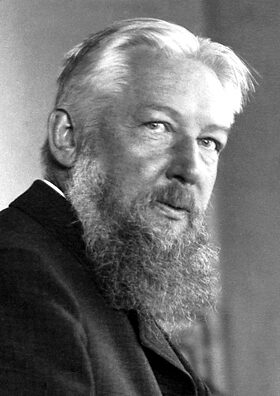
Wilhelm Ostwald
Wilhelm Ostwald was a Baltic German chemist. Born September 2, 1853, in Riga. Died April 4, 1932, in Großbothen. Known for Ostwald process, law of dilution and Ostwald ripening. Educated at Imperial University of Dorpat and Riga State Gymnasium No.1. Awards include Order of Saint Stanislaus, 2nd class, Faraday Lectureship Prize and Albert Order.
Facts
61 facts · 2 confirmed by two sources · 42 cited · 16 from one source · 1 where the sources disagree
What’s different
- Buried in: we show Great Cemetery (Sources disagree). Wikidata also lists Wilhelm Ostwald Park
Where this comes from
Papalocal keeps its own record. It started from these sources; what each one said is kept here as it was copied, so a change on their side never changes this page by itself. Tap one to read its version.
What Wikidata says · copied November 16, 2026 · revision 2569021573
- Described as
- Baltic German chemist (1853–1932)
- Other names
- Wilhelm Friedrich Ostwald, Friedrich Wilhelm Ostwald
- Born
- September 2, 1853 · 11 references
- Died
- April 4, 1932 · 11 references
- Born in
- Riga · 4 references
- Died in
- Großbothen · 1 reference
- Buried in
- Great Cemetery · 1 reference; Wilhelm Ostwald Park · 1 reference
- Citizen of
- Germany; Russian Empire
- Occupation
- chemist · 2 references; Esperantist; inventor; university teacher; Idist; writer · 2 references; physicist · 1 reference; philosopher · 2 references
- Worked for
- Leipzig University · 1 reference; Imperial University of Dorpat · 1 reference; Massachusetts Institute of Technology · 1 reference; Riga Technical University
- Education
- Imperial University of Dorpat (1872–) · 1 reference; Riga State Gymnasium No.1
- Member of
- Korporatsioon Fraternitas Rigensis · 1 reference; Royal Prussian Academy of Sciences; Saxon Academy of Sciences and Humanities (1887–) · 1 reference; German Bunsen Society for Physical Chemistry · 1 reference; Russian Academy of Sciences (1896–) · 1 reference; Royal Society of Sciences in Uppsala (1897–) · 1 reference; Hungarian Academy of Sciences (1897–) · 1 reference; Royal Netherlands Academy of Arts and Sciences (1904–) · 1 reference; American Academy of Arts and Sciences (1905–) · 1 reference; Academy of Sciences of Turin (1905–) · 1 reference
- Known for
- Ostwald process; law of dilution · 1 reference; Ostwald ripening · 1 reference; Ostwald Rule of Stages · 1 reference; Energeticism · 1 reference
- Awards
- Order of Saint Stanislaus, 2nd class (1903–) · 2 references; Faraday Lectureship Prize (1904) · 2 references; Albert Order (1906–) · 1 reference; Nobel Prize in Chemistry (1909) · 2 references; Wilhelm Exner Medal (1923) · 1 reference; honorary doctor of the University of Aberdeen · 1 reference; honorary doctorate from the University of Cambridge · 1 reference; honorary doctorate of the Karlsruhe Institute of Technology · 1 reference; honorary doctor of the University of Halle-Wittenberg · 1 reference; Honorary doctorate from University of Toronto · 1 reference; honorary doctor of the University of Liverpool · 1 reference; honorary member of the Physics Association (Frankfurt am Main, Germany) (1909)
- Field
- physical chemistry; philosophy · 1 reference; sociology · 1 reference; education · 1 reference; philosophy of science · 1 reference; constructed language · 1 reference
- Spouse
- Flora Helene* Mathilde Ostwald (von Reyher) · 1 reference
- Children
- Wolfgang Ostwald · 1 reference; Walter Ostwald · 1 reference; Margarete Ostwald · 1 reference
- Father
- Gottfried Ostwald · 1 reference
- Mother
- Elisabeth Ostwald
- Siblings
- Eugen Heinrich Ostwald · 1 reference
- Wikipedias with a page
- 90
Wikidata item Q12658 (wikidata.org/wiki/Q12658), public domain (CC0). Copied November 16, 2026.
What Wikipedia says · copied November 16, 2026 · revision 1383340560
Wilhelm Friedrich Ostwald (German: [ˈvɪlhɛlm ˈɔstvalt] ; 2 September [O.S. 21 August] 1853 – 4 April 1932) was a Baltic German chemist and philosopher. Ostwald is credited with being one of the founders of the field of physical chemistry, with Jacobus Henricus van 't Hoff, Walther Nernst and Svante Arrhenius.
He received the Nobel Prize in Chemistry in 1909 for his scientific contributions to the fields of catalysis, chemical equilibria and reaction velocities.
Following his 1906 retirement from academic life, Ostwald became much involved in philosophy, art, and politics. He made significant contributions to each of these fields. He has been described as a polymath.
- Born, in its opening lines
- September 2, 1853
- Died, in its opening lines
- April 4, 1932
From the Wikipedia article “Wilhelm Ostwald” (en.wikipedia.org/wiki/Wilhelm_Ostwald), by its contributors, under CC BY-SA 4.0 (creativecommons.org/licenses/by-sa/4.0/). Copied November 16, 2026; not changed.
Confirmed Two sources agree. Cited One source, and it names where it got it. One source One source, without a reference of its own. Sources disagree The sources disagree. We show the best-supported value and keep theirs below.
