
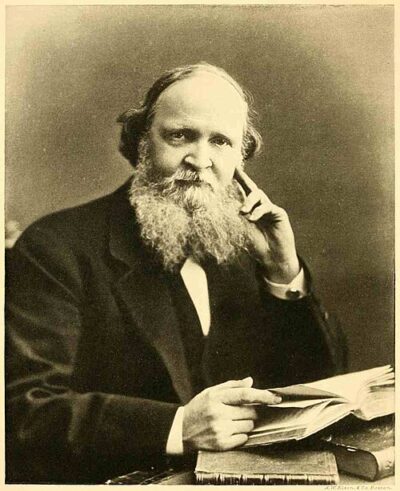
William Dwight Whitney
William Dwight Whitney was an American orientalist, linguist and lexicographer. Born February 9, 1827, in Northampton. Died June 7, 1894, in New Haven. Positions held include President of the Society for Classical Studies (1869–1870). Educated at University of Tübingen and Williams College. Awards include Pour le Mérite for Sciences and Arts order and Fellow of the American Academy of Arts and Sciences.
Facts
40 facts · 2 confirmed by two sources · 9 cited · 29 from one source
Where this comes from
Papalocal keeps its own record. It started from these sources; what each one said is kept here as it was copied, so a change on their side never changes this page by itself. Tap one to read its version.
What Wikidata says · copied November 15, 2026 · revision 2564783814
- Described as
- American orientalist, linguist and lexicographer (1827–1894)
- Other names
- W. D. Whitney, William D. Whitney, William Whitney
- Born
- February 9, 1827 · 4 references
- Died
- June 7, 1894 · 3 references
- Born in
- Northampton · 1 reference
- Died in
- New Haven · 1 reference
- Buried in
- Grove Street Cemetery · 1 reference
- Citizen of
- United States
- Occupation
- lexicographer; linguist; librarian; translator; writer · 1 reference; university teacher; philologist · 1 reference; orientalist · 1 reference
- Positions held
- President of the Society for Classical Studies (1869–1870)
- Worked for
- Yale University
- Education
- University of Tübingen; Williams College; Humboldt-Universität zu Berlin · 1 reference
- Member of
- Society for Classical Studies (1869–); Saint Petersburg Academy of Sciences; American Society for Premodern Asia; American Academy of Arts and Sciences (1860–); Royal Prussian Academy of Sciences (1873–); Russian Academy of Sciences; American Antiquarian Society; Academy of Sciences of Turin (1881–) · 1 reference; National Academy of Sciences; American Philosophical Society (1863–)
- Awards
- Pour le Mérite for Sciences and Arts order; Fellow of the American Academy of Arts and Sciences
- Field
- linguistics · 1 reference; philology · 1 reference
- Children
- Edward Baldwin Whitney; Emily Henrietta Whitney · 1 reference; Marian Parker Whitney · 1 reference
- Father
- Josiah Dwight Whitney
- Mother
- Sarah Williston
- Siblings
- Josiah Whitney; Maria Whitney
- Wikipedias with a page
- 25
Wikidata item Q573847 (wikidata.org/wiki/Q573847), public domain (CC0). Copied November 15, 2026.
What Wikipedia says · copied November 15, 2026 · revision 1376905048
William Dwight Whitney (February 9, 1827 – June 7, 1894) was an American linguist, philologist, and lexicographer known for his work on Sanskrit grammar and Vedic philology as well as his influential view of language as a social institution. He was the first president of the American Philological Association and editor-in-chief of The Century Dictionary.
- Born, in its opening lines
- February 9, 1827
- Died, in its opening lines
- June 7, 1894
From the Wikipedia article “William Dwight Whitney” (en.wikipedia.org/wiki/William_Dwight_Whitney), by its contributors, under CC BY-SA 4.0 (creativecommons.org/licenses/by-sa/4.0/). Copied November 15, 2026; not changed.
Confirmed Two sources agree. Cited One source, and it names where it got it. One source One source, without a reference of its own. Sources disagree The sources disagree. We show the best-supported value and keep theirs below.
