
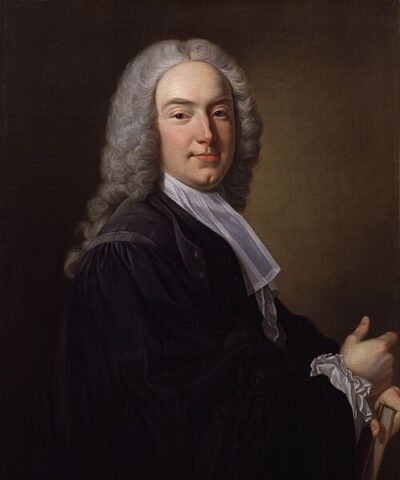
William Murray, 1st Earl of Mansfield
William Murray, 1st Earl of Mansfield was a British barrister, politician and judge. Born March 2, 1705, in Scone. Died March 20, 1793, in Highgate. Positions held include Lord Chief Justice of England and Wales (1756–1788), Lord Speaker (1783) and Chancellor of the Exchequer (1757). Educated at Christ Church and Westminster School.
Facts
30 facts · 2 confirmed by two sources · 11 cited · 17 from one source
What’s different
- Born: we show March 2, 1705 (Confirmed). Wikidata also lists March 2, 1704
Where this comes from
Papalocal keeps its own record. It started from these sources; what each one said is kept here as it was copied, so a change on their side never changes this page by itself. Tap one to read its version.
What Wikidata says · copied November 18, 2026 · revision 2562729257
- Described as
- British barrister, politician and judge (1705–1793)
- Other names
- William Murray, Earl of Mansfield
- Born
- March 2, 1705 · 4 references; March 2, 1704 · 1 reference
- Died
- March 20, 1793 · 5 references
- Born in
- Scone
- Died in
- Highgate
- Buried in
- Westminster Abbey
- Citizen of
- Kingdom of Great Britain
- Occupation
- judge; politician; jurist · 1 reference
- Positions held
- Lord Chief Justice of England and Wales (1756–1788); Lord Speaker (1783); Chancellor of the Exchequer (1757); Attorney General for England and Wales (1754–1756); Solicitor General for England and Wales (1742–1754); member of the House of Lords; member of the 9th Parliament of Great Britain; member of the 10th Parliament of Great Britain; member of the 11th Parliament of Great Britain
- Education
- Christ Church; Westminster School
- Field
- law · 1 reference; justice and judicial activities · 1 reference; politics · 1 reference
- Spouse
- Lady Elizabeth Finch (1738–) · 2 references
- Father
- David Murray, 5th Viscount of Stormont · 2 references
- Mother
- Marjory Scott · 2 references
- Siblings
- David Murray, 6th Viscount of Stormont · 1 reference; James Murray · 1 reference; Hon. Marjorie Murray · 1 reference; Hon. Emilia Murray · 1 reference
- Wikipedias with a page
- 22
Wikidata item Q869340 (wikidata.org/wiki/Q869340), public domain (CC0). Copied November 18, 2026.
What Wikipedia says · copied November 18, 2026 · revision 1383152399
William Murray, 1st Earl of Mansfield, (2 March 1705 – 20 March 1793), was a British barrister, politician and judge best known for his reforms to English law. Born in Scone Palace, Perthshire into the Scottish nobility, he was educated in Perth before moving to London at the age of 13 to study at Westminster School. Accepted into Christ Church, Oxford, in May 1723, Mansfield graduated four years later and returned to London, where he was called to the Bar by Lincoln's Inn in November 1730 and quickly gained a reputation as an excellent barrister.
He became involved in British politics in 1742, beginning with his election to the House of Commons as a Member of Parliament for Boroughbridge and appointment as Solicitor General. In the absence of a strong Attorney General, Mansfield became the main spokesman for the government in the House of Commons, where he was noted for his "great powers of eloquence" and was described as "beyond comparison the best speaker". With the promotion of Sir Dudley Ryder to Lord Chief Justice in 1754, Mansfield became Attorney General and, when Ryder unexpectedly died several months later, he took his place as Chief Justice.
As the most powerful British jurist of the 18th century, Mansfield's decisions reflected the Age of Enlightenment and moved the country onto the path to abolishing slavery. He advanced commercial law in ways that helped establish Britain as world leader in industry, finance, and trade; modernised both English law and England's courts; rationalised the system for submitting motions, and reformed the way judgments were delivered to reduce expense for the parties. For his work in Carter v Boehm and Pillans v Van Mierop, Mansfield has been called the founder of English commercial law.
Mansfield is also known for his judgment in Somerset v Stewart where he held that slavery had no basis in common law and had never been established by positive law in England, and therefore was not binding in law. Though the judgement did not explicitly outlaw slavery in either England or British colonies, it played an important role in the early stages of the British abolitionist movement and inspired challenges to slavery on both sides of the Atlantic.
- Born, in its opening lines
- March 2, 1705
- Died, in its opening lines
- March 20, 1793
From the Wikipedia article “William Murray, 1st Earl of Mansfield” (en.wikipedia.org/wiki/William_Murray,_1st_Earl_of_Mansfield), by its contributors, under CC BY-SA 4.0 (creativecommons.org/licenses/by-sa/4.0/). Copied November 18, 2026; not changed.
Confirmed Two sources agree. Cited One source, and it names where it got it. One source One source, without a reference of its own. Sources disagree The sources disagree. We show the best-supported value and keep theirs below.
