governance
Governance is an all of the processes of governing, whether undertaken by a government, market or network, whether over a family, tribe, formal or informal organization or territory and whether through the laws, norms, power or language of an organized society.
- What it is
- type of regulation and control
All 3 facts, and where they come from
Facts
3 facts · 0 confirmed by two sources · 0 cited · 3 from one source
Where this comes from
Papalocal keeps its own record. It started from these sources; what each one said is kept here as it was copied, so a change on their side never changes this page by itself. Tap one to read its version.
What Wikidata says · copied November 17, 2026 · revision 2565373030
- Described as
- all of the processes of governing, whether undertaken by a government, market or network, whether over a family, tribe, formal or informal organization or territory and whether through the laws, norms, power or language of an organized society
- Other names
- governed
- What it is
- type of regulation and control; academic discipline; activity
- Wikipedias with a page
- 53
Wikidata item Q1553864 (wikidata.org/wiki/Q1553864), public domain (CC0). Copied 2026-11-17.
What Wikipedia says · copied November 17, 2026 · revision 1383387452
Governance is the overall complex system or framework of processes, functions, structures, rules, laws and norms born out of the relationships, interactions, power dynamics and communication within an organized group of individuals. It sets the boundaries of acceptable conduct and practices of different actors of the group and controls their decision-making powers through the creation and enforcement of rules and regulations. Furthermore, it also manages, allocates and mobilizes relevant resources and capacities of different members and sets the overall direction of the group in order to effectively address its specific collective needs, problems and challenges.
The concept of governance can be applied to social, political or economic entities (groups of individuals engaged in some purposeful activity) such as a state and its government (public administration), a governed territory, a society, a community, a social group (like a tribe or a family), a formal or informal organization, a corporation, a non-governmental organization, a non-profit organization, a project team, a market, a network or even on the global stage. "Governance" can also pertain to a specific sector of activities such as land, environment, health, internet, security, etc. The degree of formality in governance depends on the internal rules of a given entity and its external interactions with similar entities. As such, governance may take many forms, driven by many different motivations and with many different results.
Smaller groups may rely on informal leadership structures, whereas effective governance of a larger group typically relies on a well-functioning governing body, which is a specific group of people entrusted with the authority and responsibilities to make decisions about the rules, enforcing them and overseeing the smooth operation of the group within the broader framework of governance. The most formal type of a governing body is a government, which has the responsibility and authority to make binding decisions for a specific geopolitical system (like a country) through established rules and guidelines. A government may operate as a democracy where citizens vote on who should govern towards the goal of public good. Beyond governments, other entities can also have governing bodies. These can be legal entities or organizations, such as corporations, companies or non-profit organizations governed by small boards of directors pursuing more specific aims. They can also be socio-political groups including hierarchical political structures, tribes, religious subgroups, or even families. In the case of a state, governance expresses a growing awareness of the ways in which diffuse forms of power and authority can secure order even in the absence of state activity. A variety of external actors without decision-making power can influence this system of state governance. These include lobbies, think-tanks, political parties, non-government organizations, community and media. Governance is also shaped by external factors such as globalization, social movements or technological progress.
Many institutions of higher education - such as the Balsillie School of International Affairs, Munk School of Global Affairs, Sciences Po Paris, Graduate Institute Geneva, Hertie School, and the London School of Economics, among others - offer governance as an academic subjects. Many social scientists prefer to use the term "governance" when discussing the process of governing, because it covers the whole range of institutions and involved relationships.
From the Wikipedia article “Governance” (en.wikipedia.org/wiki/Governance), by its contributors, under CC BY-SA 4.0 (creativecommons.org/licenses/by-sa/4.0/). Copied 2026-11-17; not changed.
Confirmed Two sources agree. Cited One source, and it names where it got it. One source One source, without a reference of its own. Sources disagree The sources disagree. We show the best-supported value and keep theirs below.
People connected 27
Field 26
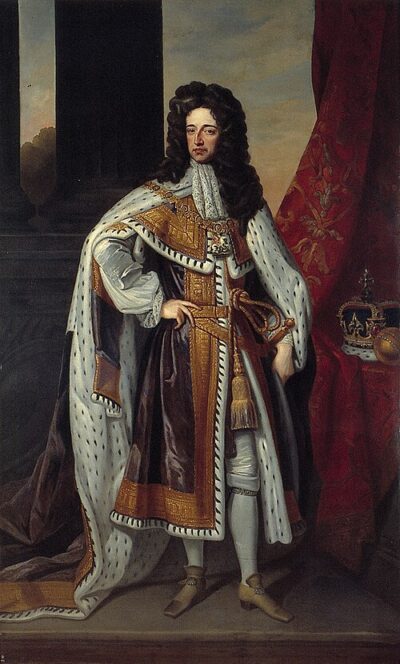 William III of EnglandKing of England, Scotland, and Ireland from 1689 to 1702 (1650–1702)
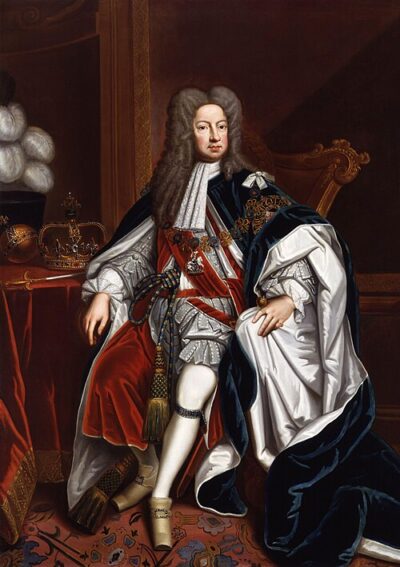 George I of Great BritainKing of Great Britain and Ireland from 1714 to 1727
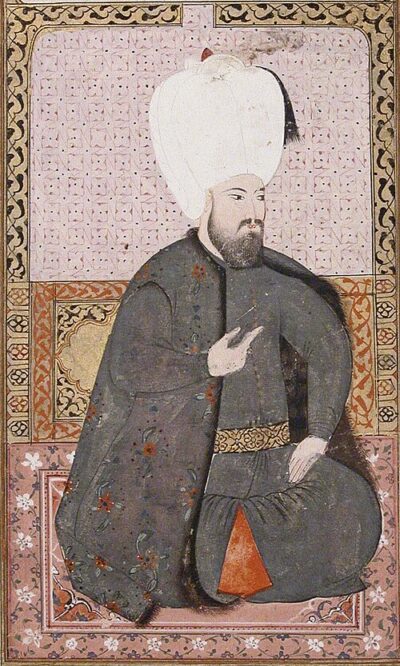 Ahmed I14th Sultan of the Ottoman Empire (1603–1617)
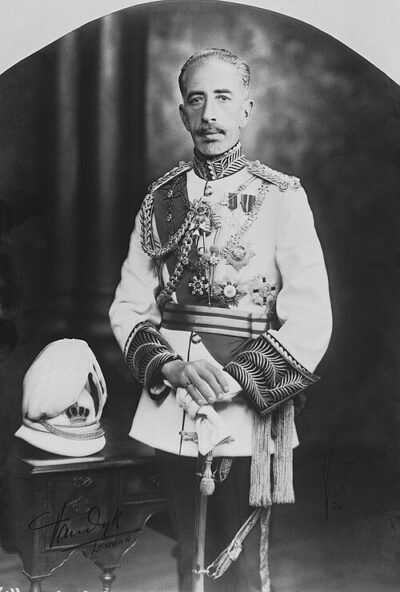 Faisal I of Iraq1st king of Hashemite Iraq from 1921 to 1933
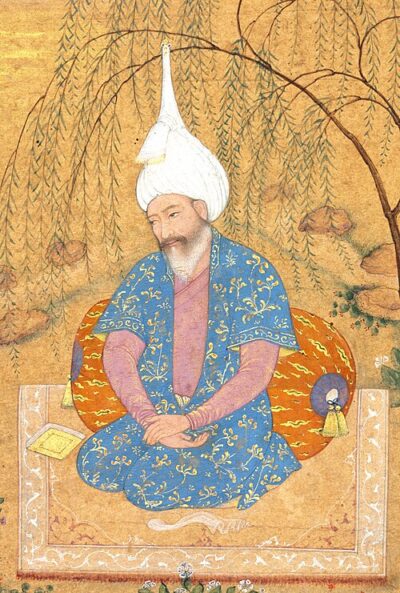 Tahmasp ISafavid Shah of Iran from 1524 to 1576
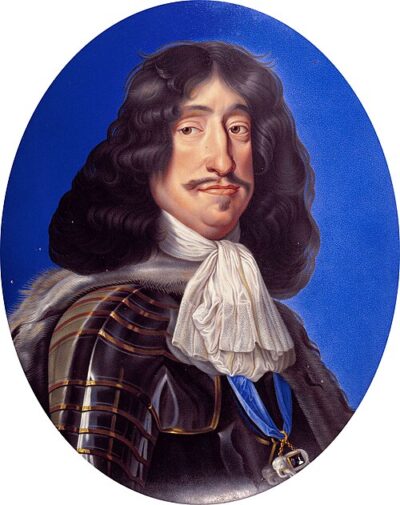 Frederick III of DenmarkKing of Denmark and Norway from 1648 to 1670
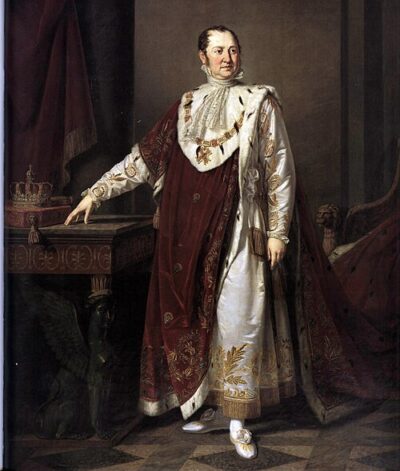 Maximilian I Joseph of BavariaKing of Bavaria
 Denis I of PortugalKing of Portugal
 Victor Amadeus II of SavoyDuke of Savoy and King of Sardinia (1666–1732)
 Maximilian II of BavariaKing of Bavaria between 1848 and 1864 (1811–1864)
 Carlo Emanuele III of SardiniaKing of Sardinia (1730-1773)
 Joan of ValoisFrench queen who entered religious life, became a nun and later an abbess who founded the Sisters of the Annunciation of Mary (canonized 1950)
 Frederick, Prince of Walesheir apparent to the British throne from 1727 until his death
 Maria Josepha of Austriaarchduchess of Austria, princess of Hungary, queen of Poland (born 1699 - died 1757)
 Ferdinando I de' MediciGrand Duke of Tuscany (1549-1609)
 Georg V of HanoverKing of Hanover (1819–1878)
 Victor Amadeus I of SavoyDuke of Savoy (1587–1637)
 William V, Prince of OrangePrince of Orange, General Stadtholder of the United Provinces (1748-1806)
 Frederick I, Grand Duke of Badensixth Grand Duke of Baden from 1856 to 1907
 Charles Alexander, Duke of WürttembergDuke of Württemberg from 1733 to 1737 (1684-1737)
 Charles I Louis, Elector PalatineElector palatine of the Rhine (1617–1680)
 William I, Elector of HesseLandgrave of Hesse-Kassel 1785 – 1821
 Louis IX of Hesse-DarmstadtLandgrave of Hesse-Darmstadt (1719-1790)
 Louis I, Grand Duke of HesseGerman Grand Duke (1753-1830)
and 2 more