Manhattan Project
Manhattan Project is a World War II American R&D program that produced the first nuclear weapons. Its headquarters are in Oak Ridge.
- Headquarters
- Oak Ridge
- Country
- United States
All 6 facts, and where they come from
Facts
6 facts · 0 confirmed by two sources · 0 cited · 6 from one source
Where this comes from
Papalocal keeps its own record. It started from these sources; what each one said is kept here as it was copied, so a change on their side never changes this page by itself. Tap one to read its version.
What Wikidata says · copied November 16, 2026 · revision 2563100649
- Described as
- World War II American R&D program that produced the first nuclear weapons
- What it is
- military project; task; group of humans
- Headquarters
- Oak Ridge
- Country
- United States; United Kingdom
- Wikipedias with a page
- 89
Wikidata item Q127050 (wikidata.org/wiki/Q127050), public domain (CC0). Copied 2026-11-16.
What Wikipedia says · copied November 16, 2026 · revision 1384063802
The Manhattan Project was a research and development program undertaken during World War II to produce the first nuclear weapons. It was led by the United States in collaboration with the United Kingdom and Canada. The Manhattan Project employed nearly 130,000 people at its peak and cost nearly US$2 billion (equivalent to about $28 billion in 2025).
From 1942 to 1946, the project was directed by Major General Leslie Groves of the U.S. Army Corps of Engineers. Nuclear physicist J. Robert Oppenheimer was the director of the Los Alamos Laboratory that designed the bombs. The Army program was designated the Manhattan District, as its first headquarters were in Manhattan; the name superseded the initial codename, Development of Substitute Materials, for the entire project. The project absorbed its earlier British counterpart, Tube Alloys.
Over 80 percent of project cost was for building and operating the fissile material production plants. The project proposed both highly enriched uranium and plutonium as fuel for nuclear weapons. Enriched uranium was produced at the Clinton Engineer Works in Tennessee. Plutonium was produced in the world's first industrial-scale nuclear reactors at the Hanford Engineer Works in Washington. These sites were supported by dozens of other facilities across Canada, the US and the UK.
The weapons' designs were produced at the Los Alamos Laboratory (Project Y) in New Mexico, and resulted in two weapon designs used during the war: Little Boy (enriched uranium gun-type) and Fat Man (plutonium implosion). The Fat Man design was initially a low priority fallback option, as it was complex and required explosive lenses, but in 1944 it was confirmed that plutonium from Hanford was not suitable for a gun-type bomb because of the high proportion of plutonium-240. The first nuclear device ever detonated was an implosion-type bomb during the Trinity test, conducted at White Sands Proving Ground in New Mexico on 16 July 1945. The project was responsible for developing the specific means of delivering the weapons onto military targets, and for the use of the Little Boy and Fat Man bombs in the atomic bombings of Hiroshima and Nagasaki in August 1945.
The project was also charged with gathering intelligence on the German nuclear weapon project. Through Operation Alsos, Manhattan Project personnel served in Europe, sometimes behind enemy lines, where they gathered nuclear materials and documents and rounded up German scientists. Despite the Manhattan Project's own emphasis on security, Soviet atomic spies penetrated the program.
In the immediate postwar years, the Manhattan Project conducted weapons testing at Bikini Atoll as part of Operation Crossroads, developed new weapons, promoted the development of the network of national laboratories, supported medical research into radiology, and laid the foundations for the nuclear navy. It maintained control over American atomic weapons research and production until the formation of the United States Atomic Energy Commission (AEC) in January 1947.
From the Wikipedia article “Manhattan Project” (en.wikipedia.org/wiki/Manhattan_Project), by its contributors, under CC BY-SA 4.0 (creativecommons.org/licenses/by-sa/4.0/). Copied 2026-11-16; not changed.
Confirmed Two sources agree. Cited One source, and it names where it got it. One source One source, without a reference of its own. Sources disagree The sources disagree. We show the best-supported value and keep theirs below.
Picture: Wikimedia Commons: Trinity shot color.jpg · See Commons file page
People connected 10
Worked here
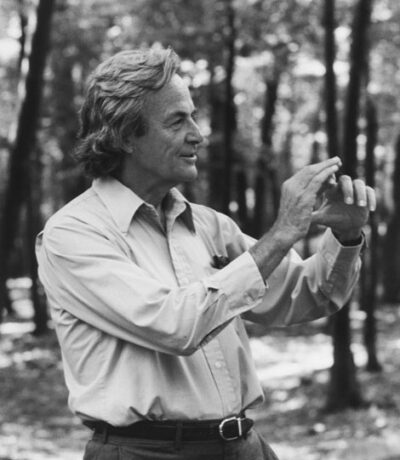 Richard Feynman (1941–1945)American theoretical physicist (1918–1988)
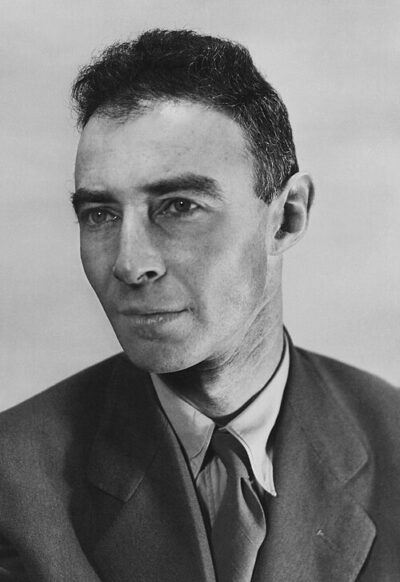 J. Robert OppenheimerAmerican theoretical physicist (1904–1967)
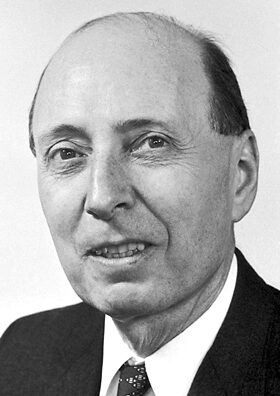 Eugene Paul Wigner (1942–1945)Hungarian-American physicist and mathematician (1902–1995)
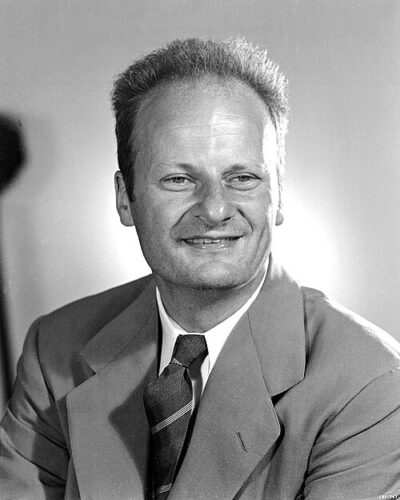 Hans Bethe (1943–)German-American nuclear physicist
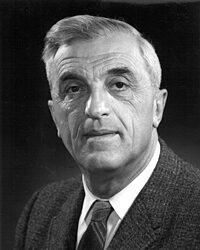 Felix Bloch (–1943)Swiss physicist (1905-1983)
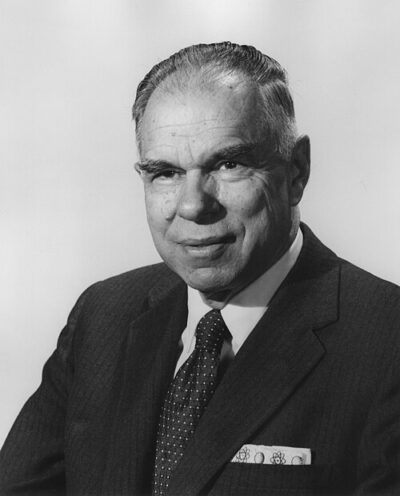 Glenn Theodore SeaborgAmerican chemist (1912–1999)
- RRichard Hamming (1945–1946)American mathematician and information theorist (1915–1998)
 Peter Lax (1945–1951)American mathematician of Hungarian origin (1926–2025)
- JJohn George Kemeny (1946)Jewish-Hungarian American mathematician, computer scientist, educator, and President of Dartmouth College