
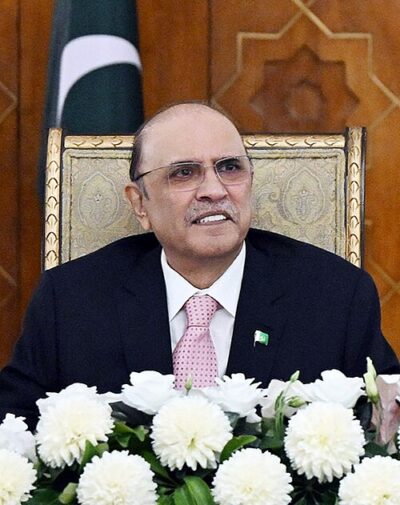
President of Pakistan
President of Pakistan is a head of state of Pakistan. It was created in 1956.
All 6 facts, and where they come from
Facts
6 facts · 0 confirmed by two sources · 0 cited · 6 from one source
Where this comes from
Papalocal keeps its own record. It started from these sources; what each one said is kept here as it was copied, so a change on their side never changes this page by itself. Tap one to read its version.
What Wikidata says · copied November 17, 2026 · revision 2560907024
- Described as
- head of state of Pakistan
- What it is
- commander-in-chief; ceremonial head of state
- Created
- March 2, 1956
- Country
- Pakistan
- Office of
- Pakistan
- Official website
- http://www.president.gov.pk
- Wikipedias with a page
- 46
Wikidata item Q473984 (wikidata.org/wiki/Q473984), public domain (CC0). Copied 2026-11-17.
What Wikipedia says · copied November 17, 2026 · revision 1384826850
The President of Pakistan is the head of state of the Islamic Republic of Pakistan. The president is the nominal head of the executive and the federal parliament, the first citizen of the country, and the supreme commander of the Pakistan Armed Forces. Serving as the ceremonial head of the federation, the president is bound to act on advice of the prime minister and the federal cabinet. Asif Ali Zardari is the 14th and current president, having assumed the presidency on 10 March 2024.
The office of president was created upon the proclamation of the Islamic Republic on 23 March 1956. The then serving governor-general, Major General Iskander Mirza, assumed office as the first president. Following the 1958 coup d'etat, the office of prime minister was abolished, leaving the Presidency as the most powerful office in the country. This position was further strengthened when the 1962 Constitution was adopted. It turned Pakistan into a Presidential Republic, giving all executive powers to the president. In 1973, the new Constitution established Parliamentary democracy and reduced the president's role to a ceremonial one. Nevertheless, the military takeover in 1977 reversed the changes. The 8th Amendment turned Pakistan into a semi-presidential republic and in the period between 1985 and 2010, the executive power was shared by the president and prime minister. The 18th Amendment in 2010 restored Parliamentary Democracy in the country, and reduced the presidency to a ceremonial position.
The constitution prohibits the president from directly running the government. Instead, the executive power is exercised on his behalf by the prime minister who keeps him informed on all matters of internal and foreign policy, as well as all legislative proposals. The Constitution however, vests the President with the powers of granting pardons, reprieves, and the control over military; however, all appointments at higher commands of the military must be made by the President on a "required and necessary" basis, upon consultation and approval from the prime minister.
The President is indirectly elected by the Electoral College for a five-year term. The Constitution requires the president to be a "Muslim of not less than forty five (45) years of age". The president resides in an estate in Islamabad known as Aiwan-e-Sadar (President's House). In his absence, the chairman of Senate exercises the responsibilities of the post, until the actual president resumes office, or the next office holder is elected.
There have been a total of 14 presidents. The first president was Iskander Ali Mirza who entered office on 23 March 1956. The current President is Asif Ali Zardari, who took charge on 10 March 2024, following his controversial victory in the 2024 election.
From the Wikipedia article “President of Pakistan” (en.wikipedia.org/wiki/President_of_Pakistan), by its contributors, under CC BY-SA 4.0 (creativecommons.org/licenses/by-sa/4.0/). Copied 2026-11-17; not changed.
Confirmed Two sources agree. Cited One source, and it names where it got it. One source One source, without a reference of its own. Sources disagree The sources disagree. We show the best-supported value and keep theirs below.
Picture: Press Service of the President of the Republic of Azerbaijan, via Wikimedia Commons · CC BY 4.0
People connected 15
Held this office
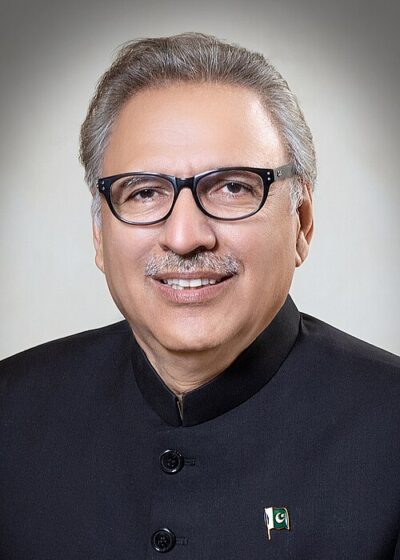 Arif Alvi (2018–2024)13th President of Pakistan from 2018 to 2024
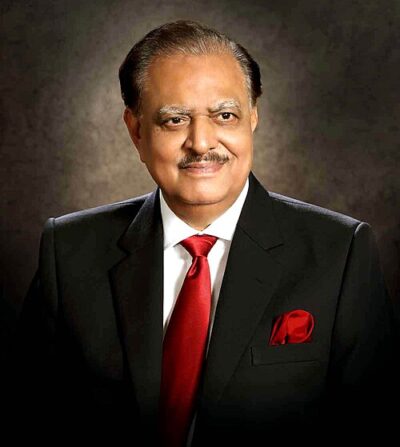 Mamnoon Hussain (2013–2018)12th president of Pakistan from 2013 to 2018
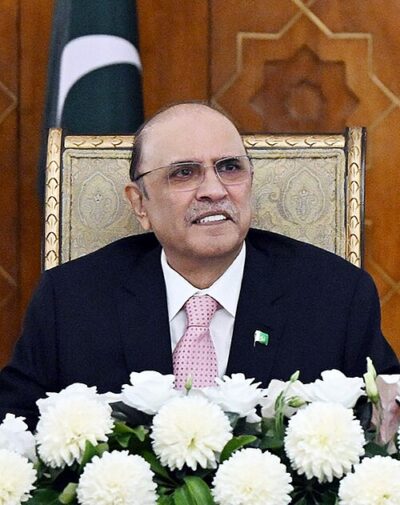 Asif Ali Zardari (2008–)President of Pakistan (2008–2013; since 2024)
 Muhammad Mian Soomro (2008)Pakistani politician
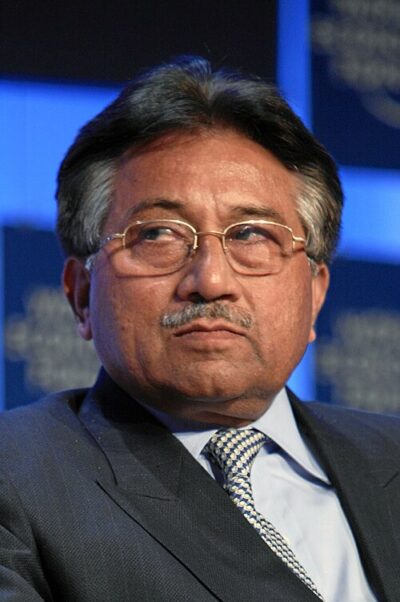 Pervez Musharraf (2001–2008)Pakistani soldier and politician (1943-2023)
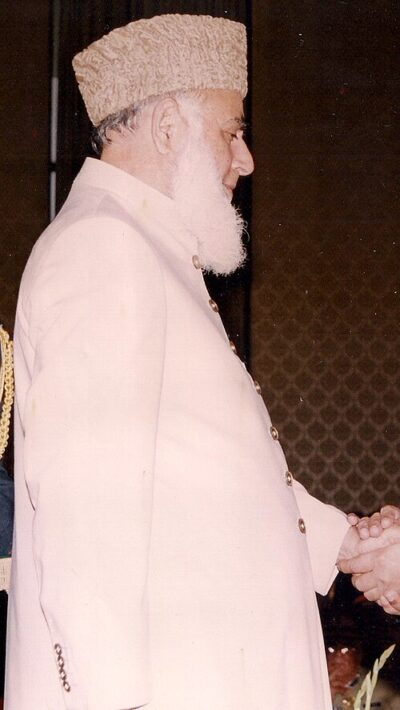 Muhammad Rafiq Tarar (1998–2001)Pakistani judge and activist (1929–2022)
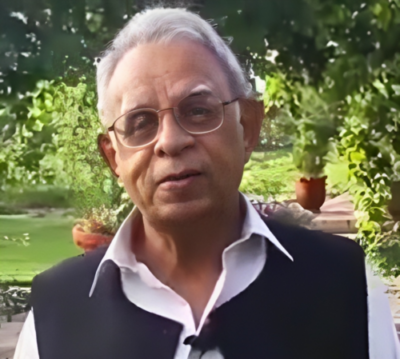 Wasim Sajjad (1993–1998)Acting President of Pakistan in 1993 and 1997–98
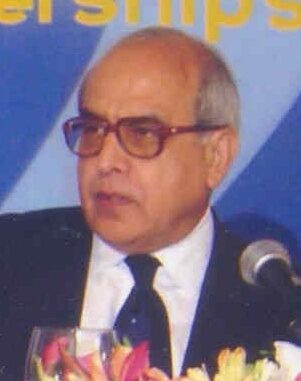 Farooq Leghari (1993–1997)Pakistani politician (1940-2010)
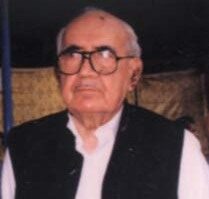 Ghulam Ishaq Khan (1988–1993)7th President of Pakistan (1915-2006)
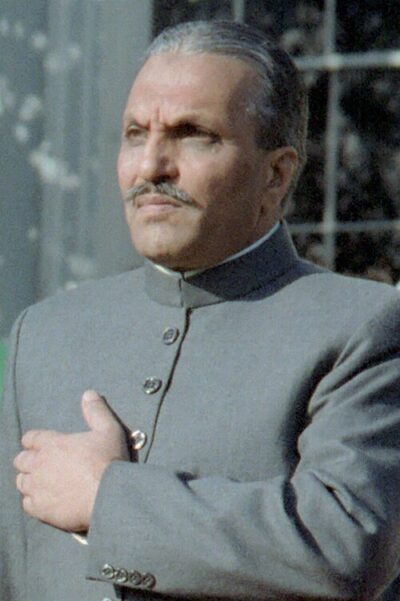 Muhammad Zia-ul-Haq (1978–1988)President of Pakistan from 1978 to 1988, of Saudi origin
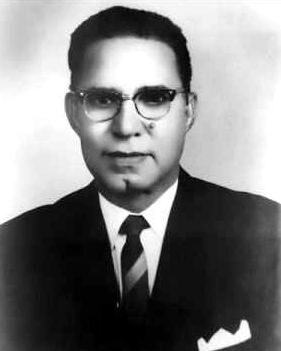 Fazal Ilahi Chaudhry (1973–1978)Pakistani politician (1904-1982)
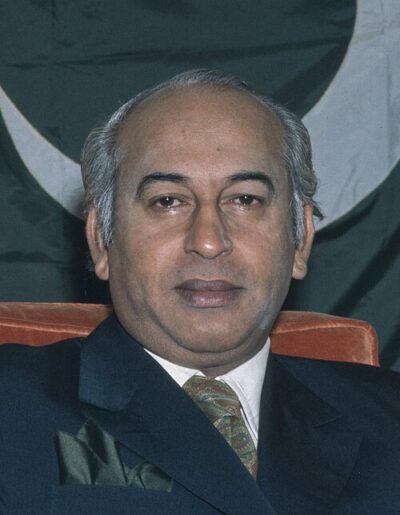 Zulfikar Ali Bhutto (1971–1973)4th President and 9th Prime Minister of Pakistan (1928–1979)
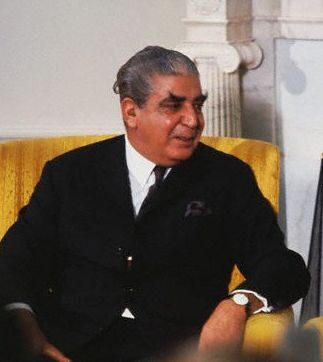 Yahya Khan (1969–1971)former Pakistani president (1917–1980)
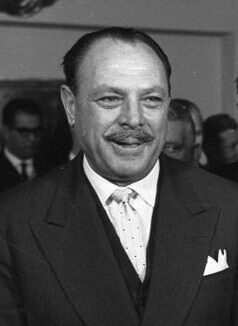 Ayub Khan (1958–1969)President of Pakistan from 1958 to 1969
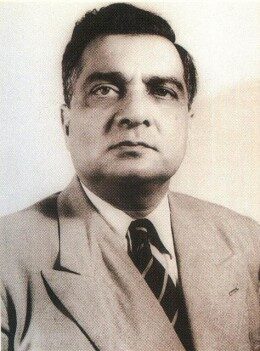 Iskandar Ali Mirza (1956–1958)Pakistani politician, statesman and military general (1899–1969)
