
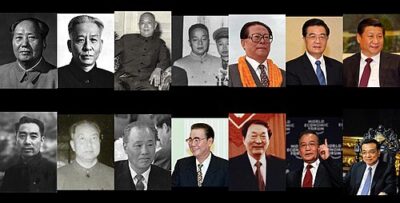
President of the People's Republic of China
The President of the People's Republic of China is a Ceremonial state representative of China since 1982. It was created in 1954.
- Office of
- People's Republic of China
- Country
- People's Republic of China
- Created
- September 27, 1954
All 5 facts, and where they come from
Facts
5 facts · 0 confirmed by two sources · 0 cited · 4 from one source · 1 where the sources disagree
What’s different
- Created: we show September 27, 1954 (Sources disagree). Wikidata also lists December 4, 1982
Where this comes from
Papalocal keeps its own record. It started from these sources; what each one said is kept here as it was copied, so a change on their side never changes this page by itself. Tap one to read its version.
What Wikidata says · copied November 16, 2026 · revision 2558086382
- Described as
- Ceremonial state representative of China since 1982
- Other names
- President of China, Chinese President, China's President, PRC President, Presidency of China, Chinese presidency
- What it is
- position
- Created
- September 27, 1954; December 4, 1982
- Country
- People's Republic of China
- Office of
- People's Republic of China
- Official website
- http://english.gov.cn/2013-03/14/content_2353971.htm
- Wikipedias with a page
- 61
Wikidata item Q655407 (wikidata.org/wiki/Q655407), public domain (CC0). Copied 2026-11-16.
What Wikipedia says · copied November 16, 2026 · revision 1385993989
The president of the People's Republic of China is the state representative of the People's Republic of China. On its own, it is a ceremonial office and has no real power in China's political system, though since 1993, the post has been concurrently held by the general secretary of the Chinese Communist Party (CCP) and chairman of the Central Military Commission, who is the country's paramount leader. While the office has many of the characteristics of a head of state, the country's constitution does not define it as such.
The presidency in its current form originated from the chairman of the Central People's Government of the People's Republic of China, which was established on 1 October 1949 by a decision of the Chinese People's Political Consultative Conference. It was replaced in the 1954 constitution with the office of state chairman. It was successively held by Mao Zedong and Liu Shaoqi. Liu fell into political disgrace during the Cultural Revolution, after which the presidency became vacant. The post of chairman was abolished under the 1975 constitution, and the function of state representative was bestowed on the chairman of the Standing Committee of the National People's Congress. The office was reinstated in the 1982 constitution but with reduced powers and a stipulation that the president could not serve more than two consecutive terms. The Chinese president was the third to fifth highest-ranking position when it was re-established in 1982. The term limits were abolished in 2018. Since 1982, the title's official English-language translation has been "president", although the Chinese title remains unchanged.
The presidency is a part of the system of people's congress based on the principle of unified state power in which the National People's Congress (NPC) functions as the sole branch of government and as the supreme state organ of power. The presidency is a state organ of the NPC and equivalent to, for instance, the State Council and the National Supervisory Commission, rather than a political office, unlike the premier of the State Council. Together with the NPC Standing Committee, the presidency performs certain functions performed by a head of state in most other countries. The president can engage in state affairs with the consent of the NPC Standing Committee, but has no independent powers other than those bestowed by China's permanent organ. While the presidency is not a powerful organ in itself, since 27 March 1993, the president has concurrently served as general secretary of the Central Committee of the Chinese Communist Party (CCP) and chairman of the Central Military Commission (CMC), making the incumbent China's paramount leader and supreme commander of the armed forces.
From the Wikipedia article “President of China” (en.wikipedia.org/wiki/President_of_China), by its contributors, under CC BY-SA 4.0 (creativecommons.org/licenses/by-sa/4.0/). Copied 2026-11-16; not changed.
Confirmed Two sources agree. Cited One source, and it names where it got it. One source One source, without a reference of its own. Sources disagree The sources disagree. We show the best-supported value and keep theirs below.
Picture: 彭嘉傑, via Wikimedia Commons · CC BY 3.0
People connected 8
Held this office
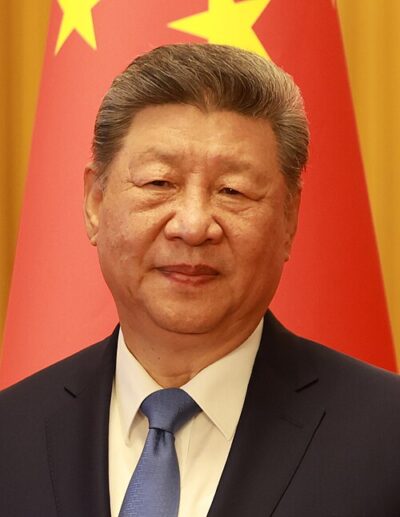 Xi Jinping (2013–)General Secretary of the Chinese Communist Party since 2012 (born 1953)
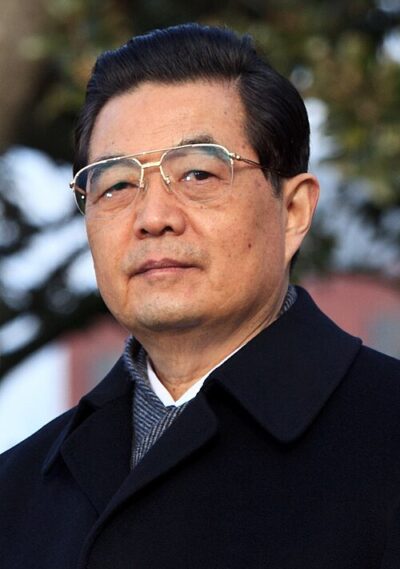 Hu Jintao (2003–2013)former General Secretary of the Chinese Communist Party
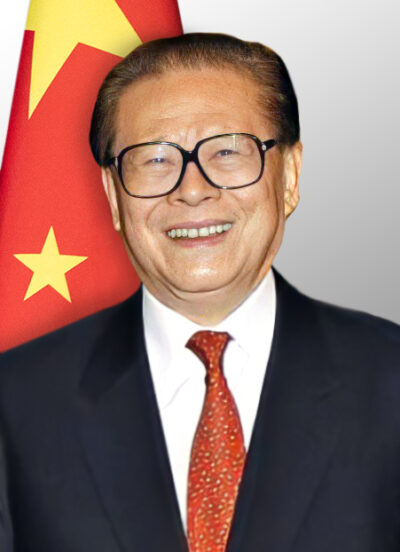 Jiang Zemin (1993–2003)former General Secretary of the Chinese Communist Party (1926–2022)
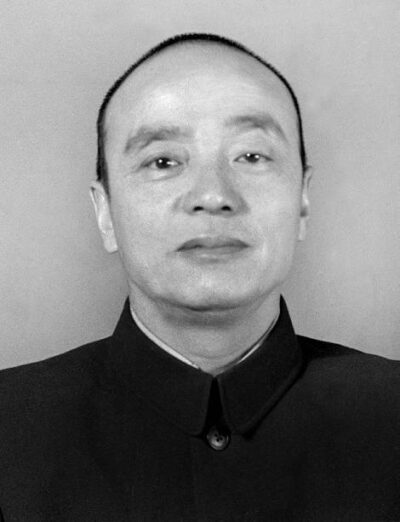 Yang Shangkun (1988–1993)4th President of the People's Republic of China (1907–1998)
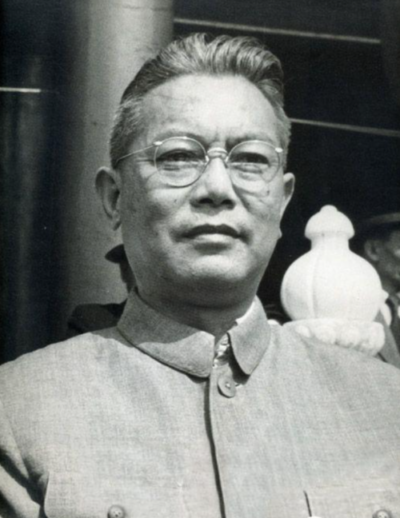 Li Xiannian (1983–1988)3rd President of the People's Republic of China (1909-1992)
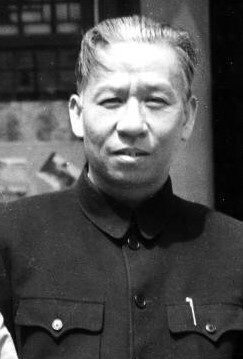 Liu Shaoqi (1959–1968)2nd President of the People's Republic of China (1898–1969)
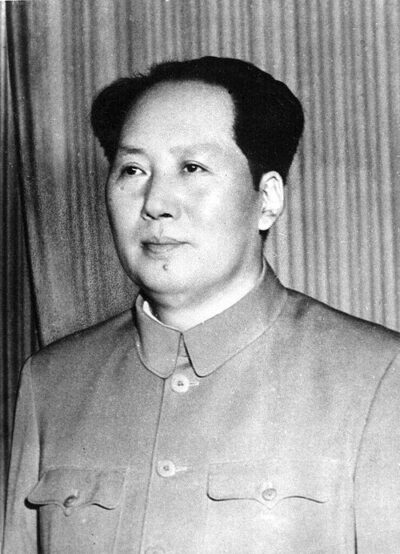 Mao Zedong (1954–1959)1st chairman of the Chinese Communist Party and founder of the People's Republic of China (1893–1976)
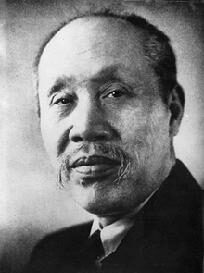 Dong Biwuformer acting President of the People's Republic of China (1886–1975)
