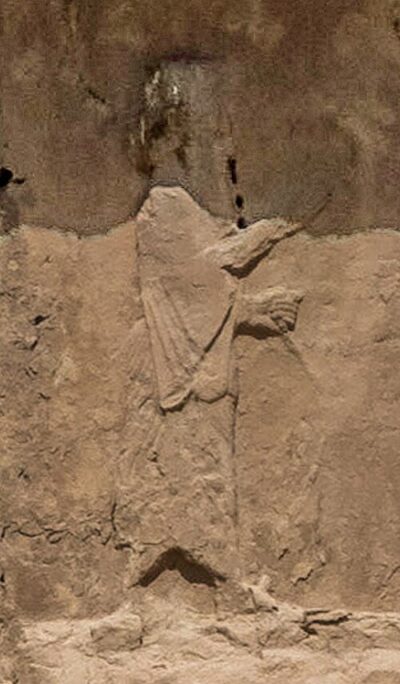
shah
Shah is a royal title of Iranian kings.
- Country
- Safavid Iran
All 3 facts, and where they come from
Facts
3 facts · 0 confirmed by two sources · 0 cited · 3 from one source
Where this comes from
Papalocal keeps its own record. It started from these sources; what each one said is kept here as it was copied, so a change on their side never changes this page by itself. Tap one to read its version.
What Wikidata says · copied November 17, 2026 · revision 2553170393
- Described as
- royal title of Iranian kings
- Other names
- Shah of Persia, Shāh
- What it is
- noble title; historical position
- Country
- Safavid Iran
- Wikipedias with a page
- 86
Wikidata item Q184299 (wikidata.org/wiki/Q184299), public domain (CC0). Copied 2026-11-17.
What Wikipedia says · copied November 17, 2026 · revision 1370236398
Shāh (; Persian: شاه [ʃɒːh] ) is a royal title meaning 'king' in Persian. Though chiefly associated with the monarchs of Iran, it was also used to refer to the leaders of numerous Persianate societies and non-Islamic kingdoms, such as the Ottoman Empire, the Khanate of Bukhara and the Emirate of Bukhara, the Mughal Empire, the Maratha Empire, the Bengal Sultanate, and various Afghan dynasties, as well as among Gurkhas. With regard to Iranian history, in particular, each ruling monarch was not seen simply as the head of the concurrent dynasty and state, but as the successor to a long line of royalty beginning with the original Persian Empire of Cyrus the Great. To this end, he was more emphatically known as the Shāhanshāh (شاهنشاه, šāhanšāh, 'king of kings' [ˌʃaːhanˈʃaːɦ]) since the Achaemenid dynasty. A roughly equivalent title is Pādishāh (پادشاه, pādišāh, pādšāh, 'master king'), which was most widespread during the Muslim period in the Indian subcontinent.
From the Wikipedia article “Shah” (en.wikipedia.org/wiki/Shah), by its contributors, under CC BY-SA 4.0 (creativecommons.org/licenses/by-sa/4.0/). Copied 2026-11-17; not changed.
Confirmed Two sources agree. Cited One source, and it names where it got it. One source One source, without a reference of its own. Sources disagree The sources disagree. We show the best-supported value and keep theirs below.
Picture: Wikimedia Commons: Mohammad Ali Shah.jpg · See Commons file page
People connected 21
Held this office
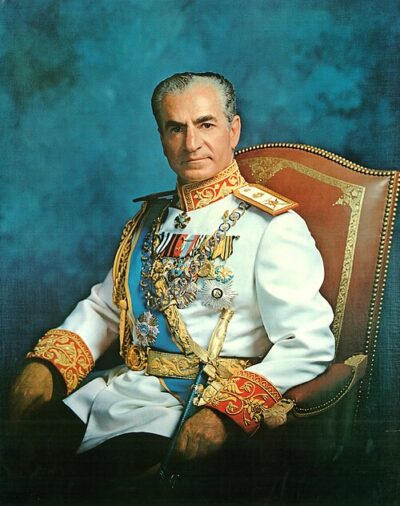 Mohammad Reza I of Iran (1941–1979)Shah of Iran from 1941 to 1979
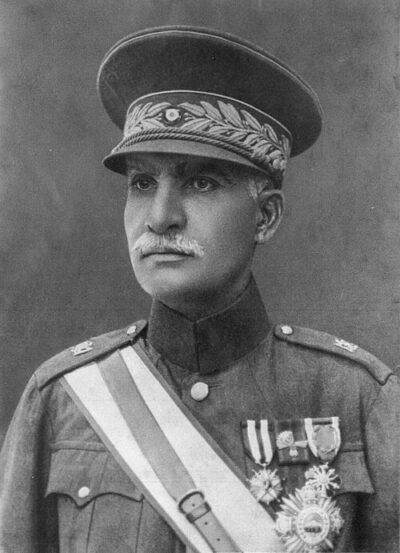 Reza Shah (1925–1941)Shah of Iran from 1925 to 1941 and founder of the Pahlavi Dynasty
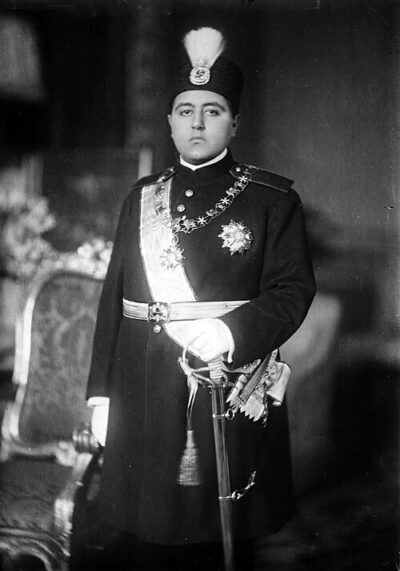 Ahmad Shah Qajar (1909–1925)The seventh and last Shah of Iran Qajar (1909–1925)
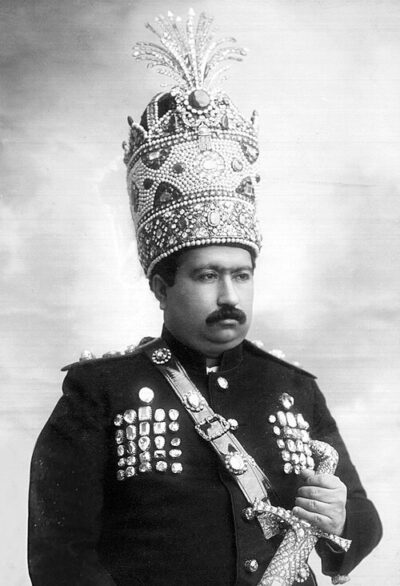 Mohammad Ali Shah Qajar (1907–1909)The sixth Shah of Iran Qajar (1907–1909)
 Mozaffar ad-Din Shah Qajar (1896–1907)The fifth Shah of Iran Qajar (1896–1907)
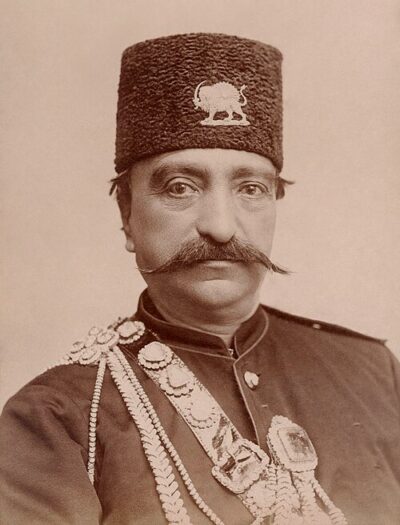 Naser al-Din Shah Qajar (1848–1896)Shah of Qajar Iran from 1848 to 1896
 Mohammad Shah Qajar (1834–1848)The third Shah of Iran Qajar (1834–1848)
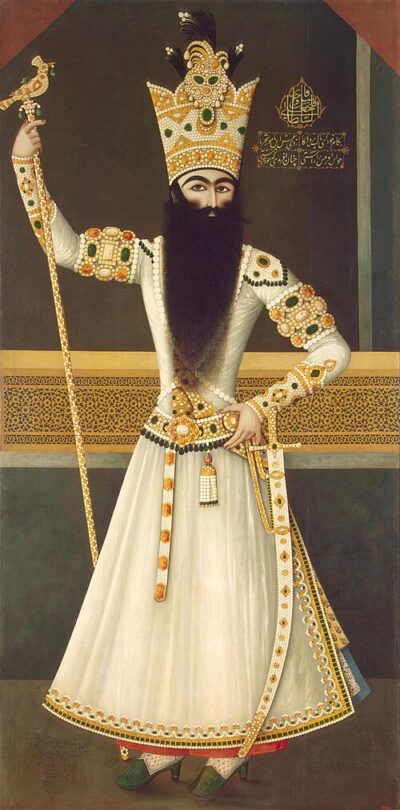 Fath-Ali Shah Qajar (1797–1834)second Qajar shah of Iran (1797–1834).
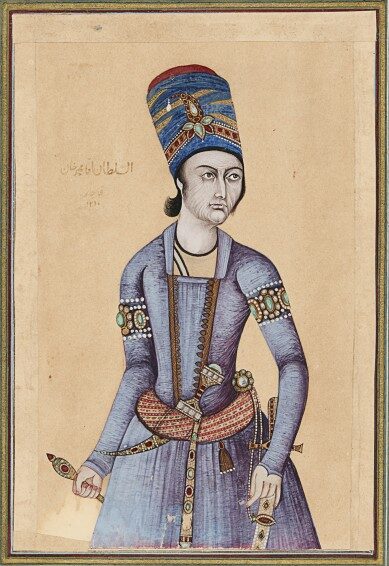 Agha Mohammad Khan Qajar (1789–1797)founder of the Qajar Dynasty (1796–1797)
 Lotf Ali Khan (1789–1794)The seventh and last Khan of Zand Dynasty (1789–1794)
 Karim Khan zand (1751–1779)founder of the Zand Dynasty (1751–1779)
 Adil Shah (1747–1748)The second Afsharid king (1747–1748)
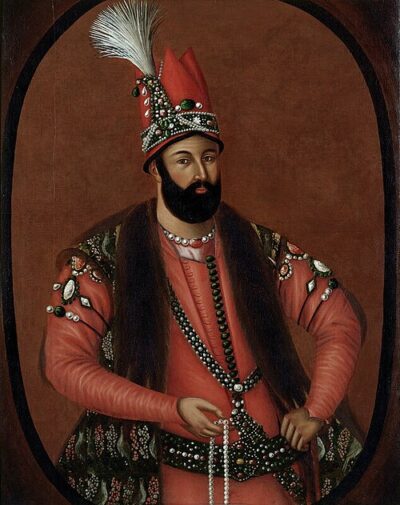 Nader Shah (1736–1747)Shah of Iran (r. 1736–47) and founder of the Afsharid dynasty
 Abbas III (1732–1736)The first nominal Safavid king (1732–1736)
 Ashraf Hotaki (1725–1729)Hotak emir of Afghanistan (died 1730)
 Mahmud Hotaki (1722–1725)Hotak ruler of Iran from 1722 to 1725
 Jahan Shah (1438–1467)The third and greatest sultan of Qara Qoyunlu dynasty (1435–1467)
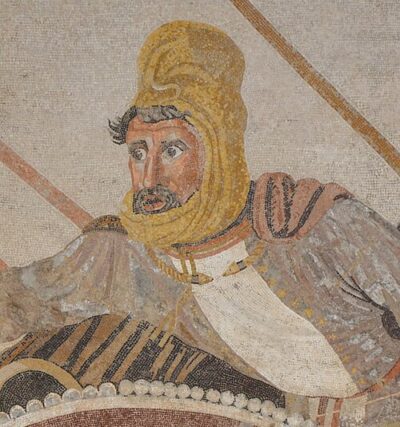 Darius III (-336–-330)last king of the Achaemenid Empire (r. 336–330 BC)
 SisygambisPersian princess and queen consort