
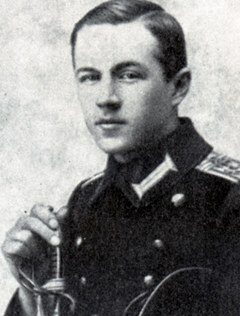
Aksel Berg
Aksel Berg was a Soviet scientist and admiral. Born October 29, 1893, in Orenburg. Died July 9, 1979, in Moscow. Educated at F. E. Dzerzhinsky Naval Engineering Academy and Peter the Great Saint Petersburg State Polytechnical University. Awards include Order of Lenin, Medal "For the Victory over Germany in the Great Patriotic War 1941–1945" and Order of the Red Banner.
Facts
47 facts · 1 confirmed by two sources · 11 cited · 34 from one source · 1 where the sources disagree
What’s different
- Born: we show October 29, 1893 (Sources disagree). Wikipedia says November 10, 1893
Where this comes from
Papalocal keeps its own record. It started from these sources; what each one said is kept here as it was copied, so a change on their side never changes this page by itself. Tap one to read its version.
What Wikidata says · copied November 18, 2026 · revision 2567786569
- Described as
- Soviet scientist and admiral (1893-1979)
- Other names
- Akselʹ Ivanovich Berg, Aksel Ivanovich Berg
- Born
- October 29, 1893
- Died
- July 9, 1979 · 1 reference
- Born in
- Orenburg · 1 reference
- Died in
- Moscow · 1 reference
- Buried in
- Novodevichy Cemetery
- Citizen of
- Russian Empire; Soviet Union
- Occupation
- military officer; submariner; engineer · 2 references; admiral · 1 reference; physicist · 1 reference
- Political party
- Communist Party of the Soviet Union (1944–) · 1 reference
- Worked for
- Vladimir Ulyanov (Lenin) LETI Saint Petersburg State Electrotechnical University (1929–) · 1 reference; TsNIRTI (1943–1957) · 1 reference; V.A. Kotelnikov Institute of Radio-engineering and Electronics (1953–1959) · 1 reference; F. E. Dzerzhinsky Naval Engineering Academy · 1 reference; N.G. Kuznetsov Naval Academy · 1 reference; Scientific Research Naval Communications Institute (1932–) · 1 reference
- Education
- F. E. Dzerzhinsky Naval Engineering Academy; Peter the Great Saint Petersburg State Polytechnical University · 1 reference; Saint Peter's School (–1904) · 1 reference; Naval Cadet Corps · 1 reference; N.G. Kuznetsov Naval Academy (–1925) · 1 reference
- Member of
- Russian Academy of Sciences (1943–) · 1 reference
- Awards
- Order of Lenin · 1 reference; Medal "For the Victory over Germany in the Great Patriotic War 1941–1945"; Order of the Red Banner · 1 reference; Hero of Socialist Labour (1963) · 2 references; Order of the Red Star · 2 references; Order of the October Revolution · 1 reference; Order of the Patriotic War, 1st class (1945) · 1 reference; Jubilee Medal "XX Years of the Workers' and Peasants' Red Army"; A. S. Popov Gold Medal (1951) · 1 reference; Honoured Radioman; Order of Saint Stanislaus (1916) · 1 reference; Jubilee Medal "Twenty Years of Victory in the Great Patriotic War 1941–1945" · 1 reference; Jubilee Medal "30 Years of the Soviet Army and Navy" · 1 reference; Jubilee Medal "40 Years of the Armed Forces of the USSR" · 1 reference; Jubilee Medal "50 Years of the Armed Forces of the USSR" · 1 reference
- Field
- radio-frequency engineering
- Spouse
- Ellinor Berg
- Children
- Marina Akselevna Berg · 1 reference
- Father
- Johan Alexander Berg
- Military branch
- Imperial Russian Navy (1914–1917) · 1 reference; Soviet Navy (1917–1957)
- Military rank
- admiral · 1 reference
- Wikipedias with a page
- 20
Wikidata item Q421478 (wikidata.org/wiki/Q421478), public domain (CC0). Copied November 18, 2026.
What Wikipedia says · copied November 18, 2026 · revision 1375170872
Aksel Ivanovich Berg (Russian: Аксель Иванович Берг; 10 November [O.S. 29 October] 1893 – 9 July 1979) was a Soviet scientist in radio-frequency engineering and Soviet Navy Admiral, Hero of Socialist Labour. He was a key figure in the introduction of cybernetics to the Soviet Union.
- Born, in its opening lines
- November 10, 1893
- Died, in its opening lines
- July 9, 1979
From the Wikipedia article “Aksel Berg” (en.wikipedia.org/wiki/Aksel_Berg), by its contributors, under CC BY-SA 4.0 (creativecommons.org/licenses/by-sa/4.0/). Copied November 18, 2026; not changed.
Confirmed Two sources agree. Cited One source, and it names where it got it. One source One source, without a reference of its own. Sources disagree The sources disagree. We show the best-supported value and keep theirs below.
