
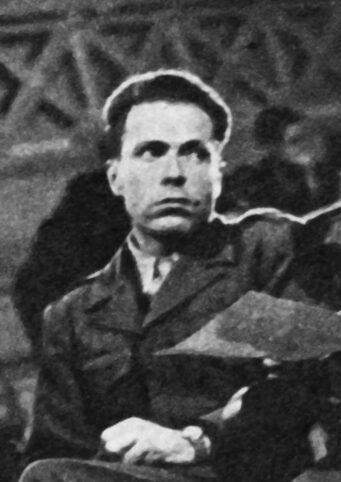
Albert O. Hirschman
Albert O. Hirschman was a German-American economist; member of the French Resistance. Born April 7, 1915, in Berlin. Died December 10, 2012, in Ewing Township. Known for Exit, Voice, and Loyalty and The Rhetoric of Reaction. Educated at London School of Economics and Political Science and HEC Paris. Awards include Leontief Prize for Advancing the Frontiers of Economic Thought, Honorary doctor of the Free University of Berlin and Distinguished Fellow of the American Economic Association.
Facts
48 facts · 2 confirmed by two sources · 11 cited · 35 from one source
Where this comes from
Papalocal keeps its own record. It started from these sources; what each one said is kept here as it was copied, so a change on their side never changes this page by itself. Tap one to read its version.
What Wikidata says · copied November 15, 2026 · revision 2568395715
- Described as
- German-American economist; member of the French Resistance
- Other names
- Albert Otto Hirschman, Albert Hermant, Albert Hirschman
- Born
- April 7, 1915 · 5 references
- Died
- December 10, 2012 · 4 references
- Born in
- Berlin · 1 reference
- Died in
- Ewing Township
- Name at birth
- Otto-Albert Hirschmann
- Citizen of
- United States; Germany
- Occupation
- economist · 1 reference; university teacher · 1 reference; writer; social scientist · 1 reference
- Worked for
- Harvard University; University of California, Berkeley; Columbia University; Yale University; Institute for Advanced Study
- Education
- London School of Economics and Political Science; HEC Paris; University of Trieste; Humboldt-Universität zu Berlin · 1 reference; Französisches Gymnasium Berlin · 1 reference
- Member of
- Accademia Nazionale dei Lincei (1985–) · 1 reference; National Academy of Sciences; Berlin-Brandenburg Academy of Sciences and Humanities; American Academy of Arts and Sciences; Emergency Rescue Committee; HEC Alumni; American Philosophical Society (1979–)
- Known for
- Exit, Voice, and Loyalty · 1 reference; The Rhetoric of Reaction · 1 reference
- Awards
- Leontief Prize for Advancing the Frontiers of Economic Thought (2013) · 1 reference; Honorary doctor of the Free University of Berlin; Distinguished Fellow of the American Economic Association; Silvert Award (1986); honorary doctor of the University of Trier; honorary doctor of the University of Madrid Complutense (2001); Great Immigrants Award (2007) · 1 reference; honorary doctorate of Paris Nanterre University (1992) · 1 reference; honorary doctorate from University of Grenoble-II (1996) · 1 reference; honorary doctorate from Sciences Po (1989) · 1 reference; Toynbee Prize (1997) · 1 reference; Benjamin E. Lippincott Award (2003) · 1 reference
- Field
- economics; political economics · 1 reference; political ideology · 1 reference; development economics · 1 reference
- Siblings
- Ursula Hirschmann
- Military branch
- International Brigades
- Wikipedias with a page
- 33
Wikidata item Q215949 (wikidata.org/wiki/Q215949), public domain (CC0). Copied November 15, 2026.
What Wikipedia says · copied November 15, 2026 · revision 1380999649
Albert Otto Hirschman (born Otto Albert Hirschmann; April 7, 1915 – December 10, 2012) was an American economist. He was the author of several influential books on development economics, political economy, and political ideology including The Strategy of Economic Development (1958), Exit, Voice, and Loyalty (1970), The Passions and the Interests (1977), and The Rhetoric of Reaction (1991). He was a founding figure in the School of Social Science at the Institute for Advanced Study and an influential economic advisor to Latin American leaders. In World War II, he played a key role in rescuing refugees from occupied France with the Emergency Rescue Committee.
- Born, in its opening lines
- April 7, 1915
- Died, in its opening lines
- December 10, 2012
From the Wikipedia article “Albert O. Hirschman” (en.wikipedia.org/wiki/Albert_O._Hirschman), by its contributors, under CC BY-SA 4.0 (creativecommons.org/licenses/by-sa/4.0/). Copied November 15, 2026; not changed.
Confirmed Two sources agree. Cited One source, and it names where it got it. One source One source, without a reference of its own. Sources disagree The sources disagree. We show the best-supported value and keep theirs below.
