
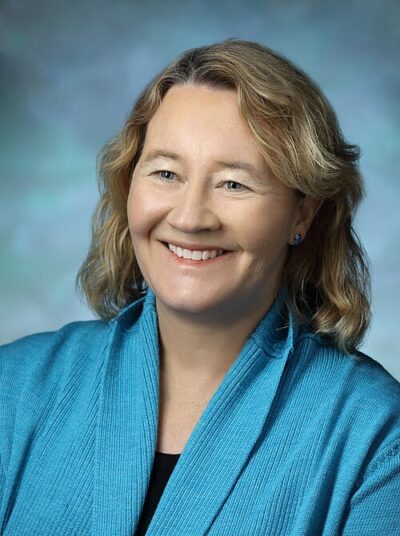
Carol Greider
Carol Greider is an American molecular biologist. Born April 15, 1961, in San Diego. Educated at University of California, Berkeley and University of California, Santa Barbara. Awards include Albert Lasker Award for Basic Medical Research, Nobel Prize in Physiology or Medicine and Canada Gairdner International Award.
Facts
38 facts · 1 confirmed by two sources · 23 cited · 14 from one source
Where this comes from
Papalocal keeps its own record. It started from these sources; what each one said is kept here as it was copied, so a change on their side never changes this page by itself. Tap one to read its version.
What Wikidata says · copied November 13, 2026 · revision 2566936585
- Described as
- American molecular biologist
- Other names
- Carolyn Widney Greider, Carolyn Widney "Carol" Greider, CW Greider, Carol W. Greider
- Born
- April 15, 1961 · 4 references
- Born in
- San Diego · 1 reference
- Citizen of
- United States
- Occupation
- biologist · 1 reference; molecular biologist · 1 reference; geneticist; biochemist · 1 reference; university teacher
- Worked for
- Johns Hopkins University (1997–) · 1 reference; Cold Spring Harbor Laboratory; Johns Hopkins School of Medicine · 1 reference; University of California, Santa Cruz (2020–) · 2 references
- Education
- University of California, Berkeley; University of California, Santa Barbara
- Member of
- National Academy of Sciences (2003–) · 1 reference; American Academy of Arts and Sciences · 1 reference; National Academy of Medicine; American Association for the Advancement of Science · 1 reference
- Awards
- Albert Lasker Award for Basic Medical Research (2006) · 1 reference; Nobel Prize in Physiology or Medicine (2009) · 2 references; Canada Gairdner International Award (1998); Paul Ehrlich and Ludwig Darmstaedter Prize (2009); Louisa Gross Horwitz Prize (2007) · 1 reference; Dickson Prize in Medicine (2007); Pearl Meister Greengard Prize (2008); Rosenstiel Award (1998) · 1 reference; Richard Lounsbery Award (2003) · 1 reference; Fellow of the American Academy of Arts and Sciences · 1 reference; Maryland Women's Hall of Fame (2011) · 1 reference; Clarivate Citation Laureates (2009) · 1 reference; AACR Award for Outstanding Achievement in Cancer Research · 1 reference; Fellow of the American Association for the Advancement of Science (2003) · 1 reference
- Field
- molecular biology · 1 reference; biology · 1 reference; genetics · 1 reference
- Spouse
- Nathaniel C. Comfort (1993–2011) · 3 references
- Lived in
- Davis · 1 reference
- Website
- https://greiderlab.org/
- Wikipedias with a page
- 81
Wikidata item Q26322 (wikidata.org/wiki/Q26322), public domain (CC0). Copied November 13, 2026.
What Wikipedia says · copied November 13, 2026 · revision 1381483816
Carolyn Widney Greider (born April 15, 1961) is an American molecular biologist and Nobel laureate. She is a Distinguished Professor of Molecular, Cell, and Developmental Biology at the University of California, Santa Cruz.
Greider discovered the enzyme telomerase in 1984, while she was a graduate student of Elizabeth Blackburn at the University of California, Berkeley. Greider pioneered research on the structure of telomeres, the ends of the chromosomes. She was awarded the 2009 Nobel Prize for Physiology or Medicine, along with Blackburn and Jack W. Szostak, for their discovery that telomeres are protected from progressive shortening by the enzyme telomerase.
- Born, in its opening lines
- April 15, 1961
From the Wikipedia article “Carol W. Greider” (en.wikipedia.org/wiki/Carol_W._Greider), by its contributors, under CC BY-SA 4.0 (creativecommons.org/licenses/by-sa/4.0/). Copied November 13, 2026; not changed.
Confirmed Two sources agree. Cited One source, and it names where it got it. One source One source, without a reference of its own. Sources disagree The sources disagree. We show the best-supported value and keep theirs below.
