
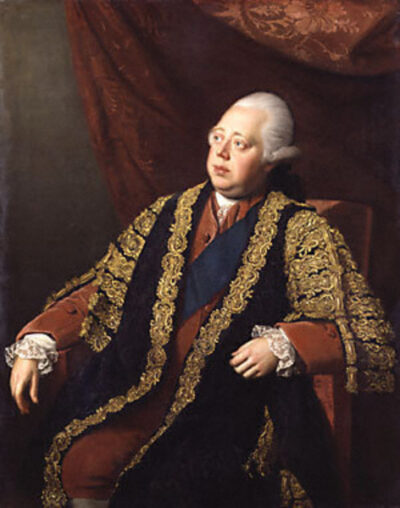
Frederick North, 2nd Earl of Guilford
Frederick North, 2nd Earl of Guilford was a British statesman and Prime Minister of Great Britain from 1770 to 1782. Born April 13, 1732, in London. Died August 5, 1792, in London. Positions held include Home Secretary (1783), Prime Minister of the United Kingdom (1770–1782) and Chancellor of the Exchequer (1767–1782). Educated at Trinity College and Eton College. Awards include Order of the Garter.
Facts
36 facts · 2 confirmed by two sources · 10 cited · 24 from one source
Where this comes from
Papalocal keeps its own record. It started from these sources; what each one said is kept here as it was copied, so a change on their side never changes this page by itself. Tap one to read its version.
What Wikidata says · copied November 16, 2026 · revision 2570533158
- Described as
- British statesman and Prime Minister of Great Britain from 1770 to 1782 (1732-1792)
- Other names
- Frederick North, Frederick North, Lord North, Frederick, Lord North, Lord North
- Born
- April 13, 1732 · 6 references
- Died
- August 5, 1792 · 8 references
- Born in
- London · 1 reference
- Died in
- London · 1 reference
- Buried in
- Church of All Saints, Wroxton
- Citizen of
- Kingdom of Great Britain
- Occupation
- politician
- Positions held
- Home Secretary (1783); Prime Minister of the United Kingdom (1770–1782); Chancellor of the Exchequer (1767–1782); member of the 11th Parliament of Great Britain; member of the 12th Parliament of Great Britain; member of the 13th Parliament of Great Britain; member of the 14th Parliament of Great Britain; member of the 15th Parliament of Great Britain; member of the 16th Parliament of Great Britain; member of the 17th Parliament of Great Britain; Chancellor of the University of Oxford (1772–1792); Leader of the House of Commons (1768–1783) · 1 reference; Lord Lieutenant of Somerset (1774–1792); Lord Warden of the Cinque Ports (1778–1792)
- Political party
- Tories; Northite
- Education
- Trinity College; Eton College · 1 reference
- Member of
- Privy Council of the United Kingdom
- Awards
- Order of the Garter
- Spouse
- Anne Speke (1756–) · 2 references
- Children
- Frederick North, 5th Earl of Guilford; George North, 3rd Earl of Guilford · 1 reference; Catherine Douglas, Baroness Glenbervie · 1 reference; Francis North, 4th Earl of Guilford; Lady Charlotte North · 1 reference; Lady Anne North · 1 reference
- Father
- Francis North, 1st Earl of Guilford · 1 reference
- Mother
- Lady Lucy Montague · 2 references
- Wikipedias with a page
- 47
Wikidata item Q312593 (wikidata.org/wiki/Q312593), public domain (CC0). Copied November 16, 2026.
What Wikipedia says · copied November 16, 2026 · revision 1385500791
Frederick North, 2nd Earl of Guilford (13 April 1732 – 5 August 1792), styled The Honourable Frederick North before 1752 and Lord North between 1752 and 1790, being best known to history by the latter title, was a British statesman who served as Prime Minister of Great Britain from 1770 to 1782. Aligned with the Whigs from 1754, he had developed strong Tory sympathies by the time he became Chancellor of the Exchequer in 1767. North is most often remembered for losing the 13 colonies in the American Revolutionary War. The war ended in 1783 with the Treaty of Paris, as part of which Britain recognised American independence.
North's reputation among historians has varied wildly, reaching its lowest point in the late 19th century, when he was depicted as a creature of King George III and an incompetent who lost the American colonies. In the early 20th century a revised view emerged which emphasised his strengths in administering the Treasury, handling the House of Commons, and in defending the Church of England. The historian Herbert Butterfield, however, argued that his indolence was a barrier to efficient crisis management; he neglected his role in supervising the entire war effort.
- Born, in its opening lines
- April 13, 1732
- Died, in its opening lines
- August 5, 1792
From the Wikipedia article “Frederick North, Lord North” (en.wikipedia.org/wiki/Frederick_North,_Lord_North), by its contributors, under CC BY-SA 4.0 (creativecommons.org/licenses/by-sa/4.0/). Copied November 16, 2026; not changed.
Confirmed Two sources agree. Cited One source, and it names where it got it. One source One source, without a reference of its own. Sources disagree The sources disagree. We show the best-supported value and keep theirs below.
