
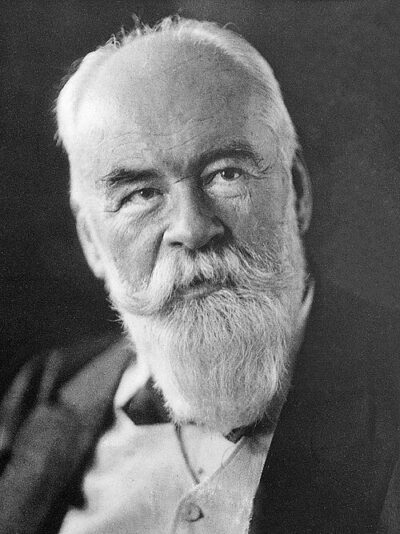
Gustav von Schmoller
Gustav von Schmoller was a German economist. Born June 24, 1838, in Heilbronn. Died June 27, 1917, in Bad Harzburg. Positions held include member of the Prussian House of Lords and Historiographer of the Prussian state (1887–). Educated at University of Tübingen. Awards include Pour le Mérite for Sciences and Arts order, Bavarian Maximilian Order for Science and Art and ennoblement.
Facts
38 facts · 0 confirmed by two sources · 12 cited · 26 from one source
Where this comes from
Papalocal keeps its own record. It started from these sources; what each one said is kept here as it was copied, so a change on their side never changes this page by itself. Tap one to read its version.
What Wikidata says · copied November 16, 2026 · revision 2567485500
- Described as
- German economist (1838–1917)
- Other names
- Gustav Friedrich von Schmoller, Gustav Friedrich Schmoller, Gustav Schmoller, Schmoller
- Born
- June 24, 1838 · 6 references
- Died
- June 27, 1917 · 4 references
- Born in
- Heilbronn · 1 reference
- Died in
- Bad Harzburg · 1 reference
- Buried in
- Kaiser Wilhelm Memorial Cemetery
- Citizen of
- Kingdom of Prussia; German Reich (1871–)
- Occupation
- economist · 2 references; politician; university teacher · 1 reference; Master's Degree in Economics · 1 reference; social scientist · 1 reference; opinion journalist · 1 reference; historian · 1 reference; social politician · 1 reference
- Positions held
- member of the Prussian House of Lords; Historiographer of the Prussian state (1887–)
- Worked for
- Martin Luther University Halle-Wittenberg; Frederick William University Berlin; Humboldt-Universität zu Berlin · 1 reference
- Education
- University of Tübingen
- Member of
- Royal Prussian Academy of Sciences; Bavarian Academy of Sciences and Humanities; Saint Petersburg Academy of Sciences; Hungarian Academy of Sciences; Russian Academy of Sciences; Royal Danish Academy of Sciences and Letters; Accademia Nazionale dei Lincei (1909–) · 1 reference
- Awards
- Pour le Mérite for Sciences and Arts order (1899); Bavarian Maximilian Order for Science and Art (1908); ennoblement; Ehrengrab (1956–)
- Field
- economics · 1 reference
- Spouse
- Lucie Schmoller (1869–) · 1 reference
- Children
- Ludwig von Schmoller; Cornelia von Schmoller
- Father
- Friedrich von Schmoller
- Religion
- Lutheranism
- Wikipedias with a page
- 31
Wikidata item Q62833 (wikidata.org/wiki/Q62833), public domain (CC0). Copied November 16, 2026.
What Wikipedia says · copied November 16, 2026 · revision 1376872894
Gustav Friedrich (after 1908: von) Schmoller (German: [ˈʃmɔlɐ] ; 24 June 1838 – 27 June 1917) was the leader of the "younger" German historical school of economics.
He was a leading Sozialpolitiker (more derisively, Kathedersozialist, "Socialist of the Chair"), and a founder and long-time chairman of the Verein für Socialpolitik, the German Economic Association, which continues to exist.
The appellation "Kathedersozialist" was given to Schmoller and other members of the Verein by their enemies. Schmoller disavowed the "socialist" label, instead tracing his thought to the heterodox liberalism represented by Jérôme-Adolphe Blanqui, Jean Charles Léonard de Sismondi, John Stuart Mill, Johann Heinrich von Thünen, Bruno Hildebrand, Thomas Edward Cliffe Leslie, Lorenz von Stein, and Émile de Laveleye and radicals such as Frederic Harrison and Edward Spencer Beesly. His goal was to reconcile the Prussian monarchy and bureaucracy "with the idea of the Liberal state and complemented by the best elements of parliamentarianism" to carry out social reform.
From the Wikipedia article “Gustav von Schmoller” (en.wikipedia.org/wiki/Gustav_von_Schmoller), by its contributors, under CC BY-SA 4.0 (creativecommons.org/licenses/by-sa/4.0/). Copied November 16, 2026; not changed.
Confirmed Two sources agree. Cited One source, and it names where it got it. One source One source, without a reference of its own. Sources disagree The sources disagree. We show the best-supported value and keep theirs below.
