
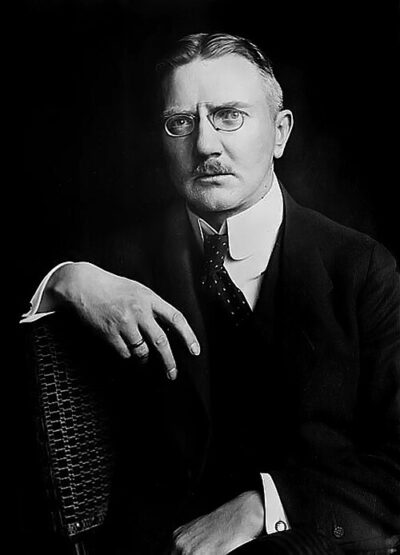
Hjalmar Schacht
Hjalmar Schacht was a German politician and economist. Born January 22, 1877, in Tinglev Municipality. Died June 3, 1970, in Munich. Educated at Kiel University and LMU Munich. Awards include Golden Party Badge.
Facts
26 facts · 2 confirmed by two sources · 10 cited · 14 from one source
Where this comes from
Papalocal keeps its own record. It started from these sources; what each one said is kept here as it was copied, so a change on their side never changes this page by itself. Tap one to read its version.
What Wikidata says · copied November 16, 2026 · revision 2565535065
- Described as
- German politician and economist (1877–1970)
- Other names
- Hjalmar Horace Greeley Schacht
- Born
- January 22, 1877 · 8 references
- Died
- June 3, 1970 · 4 references
- Born in
- Tinglev Municipality · 1 reference
- Died in
- Munich · 2 references
- Buried in
- Ostfriedhof
- Citizen of
- Germany
- Occupation
- economist · 1 reference; banker · 2 references; politician · 1 reference
- Political party
- German Democratic Party (1918–1926); Nazi Party (1934–1943); Aktionsgemeinschaft Unabhängiger Deutscher
- Worked for
- Reichsbank (1923–) · 1 reference; Dresdner Bank (1908–) · 1 reference
- Education
- Kiel University; LMU Munich; Gelehrtenschule des Johanneums; University of Paris · 1 reference; Humboldt-Universität zu Berlin · 1 reference; Leipzig University · 2 references
- Member of
- German Archaeological Institute; Freemasonry · 1 reference
- Awards
- Golden Party Badge
- Spouse
- Manci Schacht · 1 reference
- Children
- Inge Schacht · 1 reference
- Religion
- Protestantism
- Wikipedias with a page
- 58
Wikidata item Q151691 (wikidata.org/wiki/Q151691), public domain (CC0). Copied November 16, 2026.
What Wikipedia says · copied November 16, 2026 · revision 1385651365
Horace Greeley Hjalmar Schacht (German: [ˈjalmaʁ ˈʃaxt]; 22 January 1877 – 3 June 1970) was a German economist, banker, politician, and co-founder of the German Democratic Party. He served as the Currency Commissioner and President of the Reichsbank during the Weimar Republic. He was a fierce critic of his country's post-World War I reparations obligations. He was also central in helping create the group of German industrialists and landowners that pushed Hindenburg to appoint the first Nazi-led government.
Schacht served in Adolf Hitler's government as President of the Central Bank (Reichsbank) 1933–1939 and as Minister of Economics (August 1934 – November 1937).
While Schacht was for a time feted for his role in the German "economic miracle", he opposed elements of Hitler's policy of German re-armament insofar as it violated the Treaty of Versailles and (in his view) disrupted the German economy. His views in this regard led Schacht to clash with Hitler and Hermann Göring. He resigned as President of the Reichsbank in January 1939. He remained as a minister without portfolio and received the same salary until he left the government in January 1943.
In 1944, Schacht was arrested by the Gestapo following the assassination attempt on Hitler on 20 July 1944 because he allegedly had contact with the assassins. Subsequently, he was interned in the Ravensbrück, Flossenbürg, and Dachau concentration camps. In the final days of the war, he was one of the 139 special and clan prisoners who were transported by the SS from Dachau to South Tyrol. This location is within the area named by Himmler the "Alpine Fortress", and it is speculated that the purpose of the prisoner transport was the intent of holding hostages. They were freed in Niederdorf, South Tyrol on 30 April 1945.
Schacht was tried at Nuremberg, but was acquitted despite Soviet objections. Later, a German denazification tribunal sentenced him to eight years of hard labour, which was also overturned on appeal.
- Born, in its opening lines
- January 22, 1877
- Died, in its opening lines
- June 3, 1970
From the Wikipedia article “Hjalmar Schacht” (en.wikipedia.org/wiki/Hjalmar_Schacht), by its contributors, under CC BY-SA 4.0 (creativecommons.org/licenses/by-sa/4.0/). Copied November 16, 2026; not changed.
Confirmed Two sources agree. Cited One source, and it names where it got it. One source One source, without a reference of its own. Sources disagree The sources disagree. We show the best-supported value and keep theirs below.
