
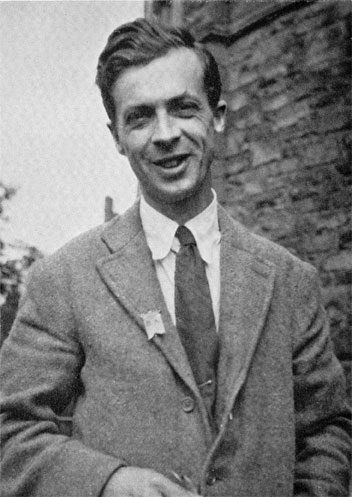
Julian Huxley
Julian Huxley was a British evolutionary biologist, philosopher, author. Born June 22, 1887, in London. Died February 14, 1975, in London. Positions held include Director-General of UNESCO (1946–1948). Educated at Balliol College and Eton College. Awards include Fellow of the Royal Society, Humanist of the Year and Kalinga Prize.
Facts
51 facts · 2 confirmed by two sources · 22 cited · 27 from one source
Where this comes from
Papalocal keeps its own record. It started from these sources; what each one said is kept here as it was copied, so a change on their side never changes this page by itself. Tap one to read its version.
What Wikidata says · copied November 16, 2026 · revision 2558044351
- Described as
- British evolutionary biologist, philosopher, author (1887–1975)
- Other names
- Julian Sorell Huxley, Sir Julian Sorell Huxley, Sir Julian Huxley
- Born
- June 22, 1887 · 16 references
- Died
- February 14, 1975 · 12 references
- Born in
- London · 2 references
- Died in
- London · 2 references
- Buried in
- Golders Green Crematorium
- Citizen of
- United Kingdom · 1 reference; United Kingdom of Great Britain and Ireland (–1927)
- Occupation
- evolutionary biologist · 1 reference; ethologist; writer · 2 references; professor; philosopher; physiologist · 1 reference; biologist · 1 reference; film director
- Positions held
- Director-General of UNESCO (1946–1948)
- Worked for
- Rice University; King's College London
- Education
- Balliol College · 1 reference; Eton College · 1 reference
- Member of
- Royal Society of London; Hungarian Academy of Sciences; American Academy of Arts and Sciences
- Awards
- Fellow of the Royal Society; Humanist of the Year (1962); Kalinga Prize (1953) · 1 reference; Darwin Medal (1956) · 1 reference; Darwin–Wallace Medal (1958) · 1 reference; Frink Medal (1973); Godman-Salvin Medal (1971); Anisfield-Wolf Book Awards (1937); Albert Lasker Award for Basic Medical Research; Knight Bachelor; Newdigate Prize
- Field
- biology; transhumanism; evolutionary biology · 1 reference; embryology · 1 reference; philosophy · 1 reference
- Spouse
- Juliette Huxley · 1 reference
- Children
- Anthony Huxley · 2 references; Francis Huxley · 2 references
- Father
- Leonard Huxley · 1 reference
- Mother
- Julia Huxley · 2 references
- Siblings
- Aldous Huxley · 1 reference; Andrew Huxley; [Noel] Trevenen Huxley · 1 reference; Margaret Arnold Huxley · 1 reference
- Religion
- atheism
- Military branch
- British Army
- Military rank
- sub-lieutenant · 1 reference
- Wikipedias with a page
- 55
Wikidata item Q243419 (wikidata.org/wiki/Q243419), public domain (CC0). Copied November 16, 2026.
What Wikipedia says · copied November 16, 2026 · revision 1379808990
Sir Julian Sorell Huxley (22 June 1887 – 14 February 1975) was an English evolutionary biologist, eugenicist and internationalist. He was a proponent of natural selection, and a leading figure in the mid-twentieth-century modern synthesis. He was secretary of the Zoological Society of London (1935–1942), the first director of UNESCO, a founding member of the World Wildlife Fund, the president of the British Eugenics Society (1959–1962), and the first president of the British Humanist Association.
Huxley was well known for his presentation of science in books and articles, and on radio and television. He directed an Oscar-winning wildlife film. He was awarded UNESCO's Kalinga Prize for the popularisation of science in 1953, the Darwin Medal of the Royal Society in 1956, and the Darwin–Wallace Medal of the Linnaean Society in 1958. He was also knighted in the 1958 New Year Honours, a hundred years after Charles Darwin and Alfred Russel Wallace announced the theory of evolution by natural selection. In 1956 he received a Special Award from the Lasker Foundation in the category Planned Parenthood – World Population.
- Born, in its opening lines
- June 22, 1887
- Died, in its opening lines
- February 14, 1975
From the Wikipedia article “Julian Huxley” (en.wikipedia.org/wiki/Julian_Huxley), by its contributors, under CC BY-SA 4.0 (creativecommons.org/licenses/by-sa/4.0/). Copied November 16, 2026; not changed.
Confirmed Two sources agree. Cited One source, and it names where it got it. One source One source, without a reference of its own. Sources disagree The sources disagree. We show the best-supported value and keep theirs below.
