
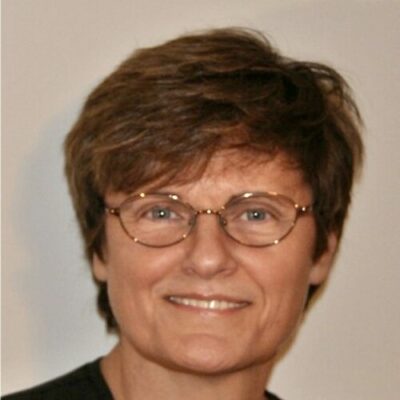
Katalin Karikó
Katalin Karikó is a Hungarian biochemist. Born January 17, 1955, in Szolnok. Educated at Móricz Zsigmond Gimnázium és Közgazdasági Szakközépiskola and University of Szeged. Awards include Rosenstiel Award, Széchenyi Prize and For Human Dignity Award.
Facts
41 facts · 1 confirmed by two sources · 29 cited · 11 from one source
Where this comes from
Papalocal keeps its own record. It started from these sources; what each one said is kept here as it was copied, so a change on their side never changes this page by itself. Tap one to read its version.
What Wikidata says · copied November 13, 2026 · revision 2565635113
- Described as
- Hungarian biochemist
- Other names
- Karikó Katalin, K. Karikó
- Born
- January 17, 1955 · 1 reference
- Born in
- Szolnok · 1 reference
- Citizen of
- Hungary · 1 reference; United States · 1 reference
- Occupation
- researcher · 1 reference; biochemist · 2 references; university teacher; inventor; consultant (2026–) · 1 reference; neuroscientist · 1 reference
- Worked for
- University of Pennsylvania (1987–) · 4 references; BioNTech (2013–) · 2 references; Biological Research Centre (1978–); Temple University · 1 reference; Uniformed Services University of the Health Sciences
- Education
- Móricz Zsigmond Gimnázium és Közgazdasági Szakközépiskola; University of Szeged (1973–1982)
- Member of
- Academia Europaea · 1 reference; German Academy of Sciences Leopoldina · 1 reference; American Academy of Arts and Sciences · 1 reference
- Awards
- Rosenstiel Award (2020) · 1 reference; Széchenyi Prize (2021) · 2 references; For Human Dignity Award (2021) · 1 reference; Wilhelm Exner Medal (2021) · 1 reference; Princess of Asturias Award for Technical and Scientific Research (2021) · 1 reference; Breakthrough Prize in Life Sciences (2022) · 2 references; Fellow of the American Association for the Advancement of Science (2021) · 1 reference; Keio Medical Science Prize (2021); Louisa Gross Horwitz Prize (2021) · 1 reference; Grand Prize of the French Academy of Science (2021); Time 100 (2021) · 1 reference; Paul Ehrlich and Ludwig Darmstaedter Prize (2022) · 1 reference; Fellow of the American Academy of Arts and Sciences (2022) · 1 reference; Pearl Meister Greengard Prize (2022) · 1 reference; Jessie Stevenson Kovalenko Medal (2022) · 1 reference
- Field
- messenger RNA · 1 reference; biochemistry
- Children
- Susan Francia
- Lived in
- Philadelphia (1985–) · 3 references; Abington Township · 1 reference
- Website
- https://www.pennmedicine.org/providers/profile/katalin-kariko · 1 reference
- Wikipedias with a page
- 73
Wikidata item Q88608397 (wikidata.org/wiki/Q88608397), public domain (CC0). Copied November 13, 2026.
What Wikipedia says · copied November 13, 2026 · revision 1380250296
Katalin "Kati" Karikó (born 17 January 1955) is a Hungarian and American biochemist who specializes in ribonucleic acid (RNA)-mediated mechanisms, particularly in vitro-transcribed messenger RNA (mRNA) for protein replacement therapy. Karikó laid the scientific groundwork for mRNA vaccines, overcoming major obstacles and skepticism in the scientific community. Karikó received the Nobel Prize in Physiology or Medicine in 2023 for her work, along with American immunologist Drew Weissman.
Karikó co-founded and was CEO of RNARx from 2006 to 2013. From 2013 to 2022, she was associated with BioNTech RNA Pharmaceuticals, first as a vice president and promoted to senior vice president in 2019. In 2022, she left BioNTech to devote more time to research. In 2021, she received an honorary doctorate from the University of Szeged in Hungary, where she has since become a professor. While Karikó has also been associated with the University of Pennsylvania, which would benefit financially from her eventual discovery, the university had actively discouraged her from pursuing research by underfunding and deprioritizing work on mRNA. After being demoted by the University of Pennsylvania in 1995, Karikó was never granted tenure and joined BioNTech in 2013 after the university had declined to reinstate her.
Karikó's work includes scientific research on RNA-mediated immune activation, resulting in the co-discovery with Drew Weissman of the nucleoside modifications that suppress the immunogenicity of RNA. This is seen as a further contribution to the therapeutic use of mRNA. Together with Weissman, she holds United States patents for the application of non-immunogenic, nucleoside-modified RNA. This technology has been licensed by BioNTech and Moderna to develop their protein replacement technologies, but it was also used for their COVID-19 vaccines.
The messenger RNA-based technology developed by Karikó and the two most effective vaccines based on it, BioNTech/Pfizer and Moderna, formed the basis for the effective and successful fight against SARS-CoV-2 virus worldwide and contributed significantly to the containment of the COVID-19 pandemic. For their work, Karikó and Weissman have received numerous other awards besides the Nobel, including the Lasker–DeBakey Clinical Medical Research Award, Time Magazine's Hero of the Year 2021, and the Tang Prize Award in Biopharmaceutical Science in 2022.
- Born, in its opening lines
- January 17, 1955
From the Wikipedia article “Katalin Karikó” (en.wikipedia.org/wiki/Katalin_Karikó), by its contributors, under CC BY-SA 4.0 (creativecommons.org/licenses/by-sa/4.0/). Copied November 13, 2026; not changed.
Confirmed Two sources agree. Cited One source, and it names where it got it. One source One source, without a reference of its own. Sources disagree The sources disagree. We show the best-supported value and keep theirs below.
