
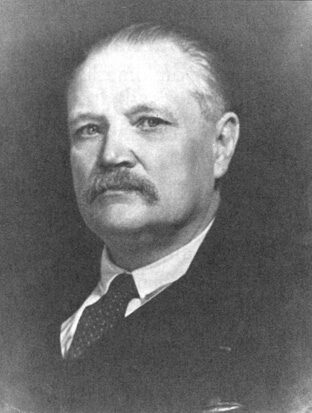
Michael Rostovtzeff
Michael Rostovtzeff was a Russian historian of ancient history. Born November 10, 1870, in Zhytomyr. Died October 20, 1952, in New Haven. Positions held include professor. Educated at Faculty of History and Philology of St. Petersburg University (3 times) and Taras Shevchenko National University of Kyiv. Awards include Sterling Professor, honorary doctor of the University of Athens and Honorary doctor of the University of Oxford.
Facts
48 facts · 2 confirmed by two sources · 21 cited · 25 from one source
Where this comes from
Papalocal keeps its own record. It started from these sources; what each one said is kept here as it was copied, so a change on their side never changes this page by itself. Tap one to read its version.
What Wikidata says · copied November 15, 2026 · revision 2559135995
- Described as
- Russian historian of ancient history (1870–1952)
- Other names
- M. Rostovtzeff, Michel Rostovtzeff, Mikhail Rostovtsev, Mikhail Ivanovich Rostovtsev, Mikhail Ivanovich Rostovtzeff
- Born
- November 10, 1870 · 8 references
- Died
- October 20, 1952 · 10 references
- Born in
- Zhytomyr · 5 references
- Died in
- New Haven · 4 references
- Buried in
- Grove Street Cemetery
- Citizen of
- Russian Empire; United States
- Occupation
- economic historian; classical archaeologist; historian of classical antiquity; university teacher · 1 reference; social historian; economist · 1 reference; latinist · 1 reference; archaeologist · 1 reference
- Positions held
- professor · 1 reference
- Political party
- Constitutional Democratic Party
- Worked for
- Imperial St. Petersburg University (1898–) · 1 reference; University of Wisconsin–Madison (1920–1925) · 1 reference; Yale University (1925–1939) · 2 references; University of Oxford (1918–1920) · 1 reference; Bestuzhev Courses · 1 reference
- Education
- Faculty of History and Philology of St. Petersburg University (3 times) (1892, 1899, 1903) · 1 reference; Taras Shevchenko National University of Kyiv; Kiev Gymnasium (–1888)
- Member of
- Royal Prussian Academy of Sciences; German Archaeological Institute; Russian Academy of Sciences (1916–1919) · 1 reference; Academy of Sciences of the USSR; Royal Swedish Academy of Sciences; Académie des Inscriptions et Belles-Lettres (1927–1952) · 2 references; Royal Netherlands Academy of Arts and Sciences; Hungarian Academy of Sciences; American Academy of Arts and Sciences · 1 reference; Austrian Academy of Sciences (1932–)
- Awards
- Sterling Professor · 1 reference; honorary doctor of the University of Athens (1937); Honorary doctor of the University of Oxford (1919) · 1 reference; honorary doctorate from the University of Cambridge; honorary doctor of Harvard University (1936); honorary doctor of the Leipzig University (1909) · 1 reference; Officer of the Legion of Honour · 1 reference
- Field
- history; classical philology; archaeology
- Spouse
- Sophie M. Kulezycki (1901) · 1 reference
- Father
- Ivan Yakovlevich Rostovtzveff
- Mother
- Maria Monachova Rostovtzeva · 1 reference
- Wikipedias with a page
- 34
Wikidata item Q502983 (wikidata.org/wiki/Q502983), public domain (CC0). Copied November 15, 2026.
What Wikipedia says · copied November 15, 2026 · revision 1376598835
Mikhail Ivanovich Rostovtzeff or Rostovtsev (Russian: Михаи́л Ива́нович Росто́вцев; 10 November [O.S. 29 October] 1870 – October 20, 1952) was a Russian historian whose career straddled the 19th and 20th centuries and who produced important works on ancient Roman and Greek history. He served as president of the American Historical Association in 1935. He was also a member of the Russian Academy of Science, the American Academy of Arts and Sciences, and the American Philosophical Society.
- Born, in its opening lines
- November 10, 1870
- Died, in its opening lines
- October 20, 1952
From the Wikipedia article “Michael Rostovtzeff” (en.wikipedia.org/wiki/Michael_Rostovtzeff), by its contributors, under CC BY-SA 4.0 (creativecommons.org/licenses/by-sa/4.0/). Copied November 15, 2026; not changed.
Confirmed Two sources agree. Cited One source, and it names where it got it. One source One source, without a reference of its own. Sources disagree The sources disagree. We show the best-supported value and keep theirs below.
