
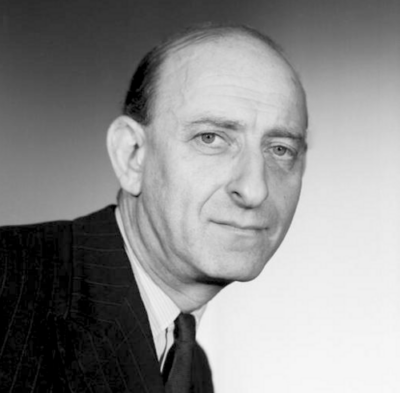
Raymond Aron
Raymond Aron was a French philosopher, sociologist, journalist, and political scientist. Born March 14, 1905, in 6th arrondissement of Paris. Died October 17, 1983, in 4th arrondissement of Paris. Positions held include president (1961–1964), director (1960–1983) and président de l'Académie des sciences morales et politiques (1976–). Educated at École Normale Supérieure and Paris Institute of Political Studies. Awards include Pour le Mérite for Sciences and Arts order, Fellow of the American Academy of Arts and Sciences and Ambassadors' Prize.
Facts
57 facts · 2 confirmed by two sources · 21 cited · 34 from one source
Where this comes from
Papalocal keeps its own record. It started from these sources; what each one said is kept here as it was copied, so a change on their side never changes this page by itself. Tap one to read its version.
What Wikidata says · copied November 16, 2026 · revision 2566421049
- Described as
- French philosopher, sociologist, journalist, and political scientist (1905–1983)
- Other names
- Raymond Claude Ferdinand Aron, Raymon Aron, R. Aron
- Born
- March 14, 1905 · 15 references
- Died
- October 17, 1983 · 17 references
- Born in
- 6th arrondissement of Paris · 1 reference
- Died in
- 4th arrondissement of Paris · 2 references
- Buried in
- Montparnasse Cemetery
- Cause of death
- myocardial infarction
- Name at birth
- Raymond Claude Ferdinand Aron · 1 reference
- Citizen of
- France · 3 references
- Occupation
- journalist · 1 reference; philosopher · 4 references; writer; political scientist · 4 references; sociologist · 4 references; professor · 2 references; economist; opinion journalist · 2 references
- Positions held
- president (1961–1964); director (1960–1983); président de l'Académie des sciences morales et politiques (1976–)
- Political party
- Rally of the French People (1947–); French Section of the Workers' International (1925–)
- Worked for
- Collège de France (1970–1978) · 2 references; Paris Institute of Political Studies · 1 reference; Le Figaro (1947–1977) · 1 reference; L'Express · 1 reference; University of Paris (1955–1968); University of Toulouse (1896-1968) · 1 reference; University of Cologne (1930–1931) · 1 reference; Combat (1946–1947) · 1 reference
- Education
- École Normale Supérieure; Paris Institute of Political Studies; University of Paris · 1 reference; Lycée Condorcet; Lycée Hoche
- Member of
- American Academy of Arts and Sciences; German Academy for Language and Literature; Académie des Sciences Morales et Politiques; Comité des intellectuels pour l'Europe des libertés (1978–); American Philosophical Society (1966–)
- Sport
- tennis · 1 reference
- Awards
- Pour le Mérite for Sciences and Arts order; Fellow of the American Academy of Arts and Sciences; Ambassadors' Prize (1962) · 1 reference; Goethe Prize of the City of Frankfurt (1979); Erasmus Prize (1983) · 1 reference; Toynbee Prize · 1 reference; “Today” Prize (1981); Officer of the Legion of Honour · 1 reference; Commander of the French Order of Academic Palms · 1 reference
- Field
- international relations
- Spouse
- Suzanne Aron
- Children
- Dominique Schnapper
- Father
- Gustave Aron
- Siblings
- Adrien Aron; Robert Aron
- Military branch
- French Air Force
- Lived in
- France (1933–)
- Wikipedias with a page
- 65
Wikidata item Q160640 (wikidata.org/wiki/Q160640), public domain (CC0). Copied November 16, 2026.
What Wikipedia says · copied November 16, 2026 · revision 1383600831
Raymond Claude Ferdinand Aron (; French: [ʁɛmɔ̃ aʁɔ̃]; 14 March 1905 – 17 October 1983) was a French philosopher, sociologist, political scientist, historian and journalist, one of France's most prominent thinkers of the 20th century.
Aron is best known for his 1955 book The Opium of the Intellectuals, the title of which inverts Karl Marx's claim that religion was the opium of the people; he argues that Marxism was the opium of the intellectuals in post-war France. In the book, Aron chastised French intellectuals for what he described as their harsh criticism of capitalism and democracy and their simultaneous defense of the actions of the communist governments of the East. Critic Roger Kimball suggests that Opium is "a seminal book of the twentieth century". Aron is also known for his lifelong friendship, sometimes fractious, with philosopher Jean-Paul Sartre. The saying "Better be wrong with Sartre than right with Aron" became popular among French intellectuals.
Considered by many as a voice of moderation in politics, Aron had many disciples on both the political left and right; he remarked that he personally was "more of a left-wing Aronian than a right-wing one". Aron wrote extensively on a wide range of other topics. Citing the breadth and quality of Aron's writings, historian James R. Garland suggests, "Though he may be little known in America, Raymond Aron arguably stood as the preeminent example of French intellectualism for much of the twentieth century."
- Born, in its opening lines
- March 14, 1905
- Died, in its opening lines
- October 17, 1983
From the Wikipedia article “Raymond Aron” (en.wikipedia.org/wiki/Raymond_Aron), by its contributors, under CC BY-SA 4.0 (creativecommons.org/licenses/by-sa/4.0/). Copied November 16, 2026; not changed.
Confirmed Two sources agree. Cited One source, and it names where it got it. One source One source, without a reference of its own. Sources disagree The sources disagree. We show the best-supported value and keep theirs below.
