
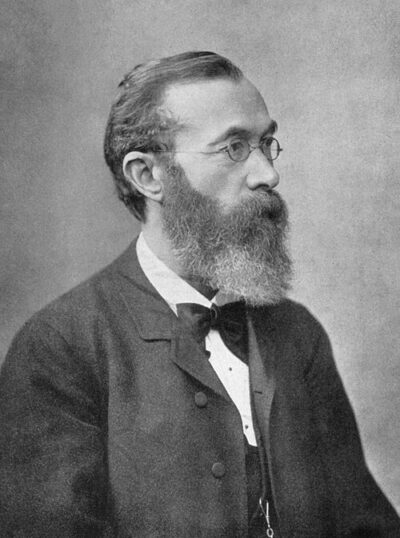
Wilhelm Wundt
Wilhelm Wundt was a German physician, physiologist, philosopher and professor. Born August 16, 1832, in Neckarau. Died August 31, 1920, in Leipzig. Educated at University of Tübingen and Heidelberg University. Awards include Bavarian Maximilian Order for Science and Art, Pour le Mérite for Sciences and Arts order and honorary citizen of Leipzig.
Facts
39 facts · 2 confirmed by two sources · 14 cited · 23 from one source
Where this comes from
Papalocal keeps its own record. It started from these sources; what each one said is kept here as it was copied, so a change on their side never changes this page by itself. Tap one to read its version.
What Wikidata says · copied November 16, 2026 · revision 2568744451
- Described as
- German physician, physiologist, philosopher and professor (1832–1920)
- Other names
- Wundt, Wilhelm Maximilian Wundt, Wilhelm Max Wundt
- Born
- August 16, 1832 · 14 references
- Died
- August 31, 1920 · 14 references
- Born in
- Neckarau · 2 references
- Died in
- Leipzig · 1 reference
- Buried in
- Leipzig South Cemetery
- Name at birth
- Wilhelm Maximilian Wundt
- Citizen of
- Germany
- Occupation
- philosopher · 1 reference; university teacher; psychologist · 2 references; physiologist · 2 references; writer · 1 reference
- Worked for
- Heidelberg University (1864–); University of Zurich (1857–) · 3 references; Leipzig University (1858–) · 1 reference
- Education
- University of Tübingen; Heidelberg University; Humboldt-Universität zu Berlin · 1 reference
- Member of
- Saint Petersburg Academy of Sciences; Saxon Academy of Sciences and Humanities (1882–); Russian Academy of Sciences; Royal Prussian Academy of Sciences; Bavarian Academy of Sciences and Humanities; National Academy of Sciences (1909–) · 1 reference; Academy of Sciences of Turin (1903–) · 1 reference; Accademia Nazionale dei Lincei (1903–) · 1 reference
- Awards
- Bavarian Maximilian Order for Science and Art (1908); Pour le Mérite for Sciences and Arts order; honorary citizen of Leipzig (1902) · 1 reference
- Field
- physiology · 1 reference; volkerpsychologie; experimental psychology
- Spouse
- Sophie melano · 1 reference
- Children
- Max Wundt · 1 reference; Eleonore Wundt · 1 reference; Lilli Wundt · 1 reference
- Father
- Maximilian Wundt · 1 reference
- Mother
- Marie Friederike Wundt · 1 reference
- Siblings
- Ludwig Wundt · 1 reference
- Wikipedias with a page
- 92
Wikidata item Q75814 (wikidata.org/wiki/Q75814), public domain (CC0). Copied November 16, 2026.
What Wikipedia says · copied November 16, 2026 · revision 1383931750
Wilhelm Maximilian Wundt (; German: [vʊnt]; 16 August 1832 – 31 August 1920) was a German physiologist, philosopher, professor, and one of the fathers of modern psychology. Wundt, who distinguished psychology as a science from philosophy and biology, was the first person to call himself a psychologist.
He is widely regarded as the "father of experimental psychology". In 1879, at the University of Leipzig, Wundt founded the first formal laboratory for psychological research. This marked psychology as an independent field of study.
He also established the first academic journal for psychological research, Philosophische Studien (from 1883 to 1903), followed by Psychologische Studien (from 1905 to 1917), to publish the institute's research.
A survey published in American Psychologist in 1991 ranked Wundt's reputation as first for "all-time eminence", based on ratings provided by 31 American historians of psychology. William James and Sigmund Freud were ranked a distant second and third.
- Born, in its opening lines
- August 16, 1832
- Died, in its opening lines
- August 31, 1920
From the Wikipedia article “Wilhelm Wundt” (en.wikipedia.org/wiki/Wilhelm_Wundt), by its contributors, under CC BY-SA 4.0 (creativecommons.org/licenses/by-sa/4.0/). Copied November 16, 2026; not changed.
Confirmed Two sources agree. Cited One source, and it names where it got it. One source One source, without a reference of its own. Sources disagree The sources disagree. We show the best-supported value and keep theirs below.
