
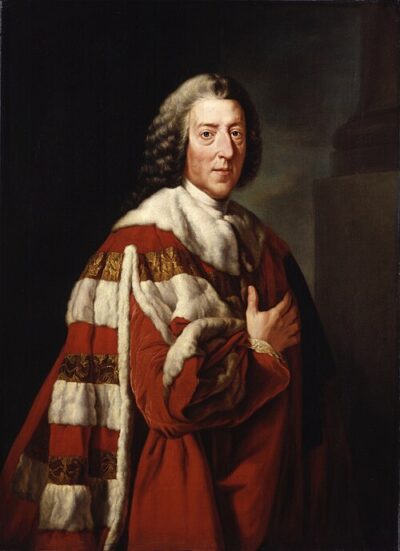
William Pitt, 1st Earl of Chatham
William Pitt, 1st Earl of Chatham was a Prime Minister of Great Britain from 1766 to 1768. Born November 15, 1708, in London. Died May 11, 1778, in Bromley. Positions held include Prime Minister of the United Kingdom (1766–1768), Lord Privy Seal (1766–1768) and Leader of the House of Commons (1756–1761). Educated at Trinity College and Eton College. Awards include Fellow of the Royal Society.
Facts
33 facts · 2 confirmed by two sources · 11 cited · 20 from one source
Where this comes from
Papalocal keeps its own record. It started from these sources; what each one said is kept here as it was copied, so a change on their side never changes this page by itself. Tap one to read its version.
What Wikidata says · copied November 16, 2026 · revision 2564314315
- Described as
- Prime Minister of Great Britain from 1766 to 1768 (1708–1778)
- Other names
- William Pitt, Earl of Chatham, William Pitt Earl of Chatham, The Great Commoner, Pitt the Elder, William, 1st Earl of Chatham Pitt, Great Commoner, William, the Elder Pitt, William Chatham, William Pitt the Elder, William, the Celebrated Commoner Pitt
- Born
- November 15, 1708 · 13 references
- Died
- May 11, 1778 · 12 references
- Born in
- London · 2 references
- Died in
- Bromley
- Buried in
- Westminster Abbey
- Citizen of
- Kingdom of Great Britain
- Occupation
- politician · 1 reference
- Positions held
- Prime Minister of the United Kingdom (1766–1768); Lord Privy Seal (1766–1768); Leader of the House of Commons (1756–1761); Secretary of State for the Southern Department; Paymaster of the Forces; member of the 8th Parliament of Great Britain; member of the 9th Parliament of Great Britain; member of the 10th Parliament of Great Britain; member of the 11th Parliament of Great Britain; member of the 12th Parliament of Great Britain
- Political party
- Whigs
- Education
- Trinity College; Eton College · 1 reference; Utrecht University · 1 reference
- Member of
- Royal Society of London
- Awards
- Fellow of the Royal Society
- Spouse
- Hester Pitt, Countess of Chatham (1754–1778) · 2 references
- Children
- William Pitt the Younger · 1 reference; John Pitt, 2nd Earl of Chatham · 1 reference; Lady Harriet Pitt · 3 references; Hester Stanhope, Viscountess Mahon · 2 references; James Charles Pitt · 1 reference
- Father
- Robert Pitt · 1 reference
- Mother
- Harriet Villiers · 2 references
- Siblings
- Thomas Pitt of Boconnoc · 2 references
- Religion
- Church of England
- Wikipedias with a page
- 67
Wikidata item Q208663 (wikidata.org/wiki/Q208663), public domain (CC0). Copied November 16, 2026.
What Wikipedia says · copied November 16, 2026 · revision 1385440167
William Pitt, 1st Earl of Chatham (15 November 1708 – 11 May 1778) was a British Whig statesman who served as Prime Minister of Great Britain from 1766 to 1768. Historians call him "Chatham" or "Pitt the Elder" to distinguish him from his son William Pitt the Younger, who also served as prime minister. Pitt was also known as "the Great Commoner" because of his long-standing refusal to accept a title until 1766.
Pitt was a member of the British cabinet and with a brief interlude in 1757, its informal leader from 1756 to 1761, during the Seven Years' War (including the French and Indian War in the American colonies). He again led the ministry, holding the official title of Lord Privy Seal, between 1766 and 1768. Much of his power came from his brilliant oratory. He was out of power for most of his career and became well known for his attacks on the government, such as those on Walpole's corruption in the 1730s, Hanoverian subsidies in the 1740s, peace with France in the 1760s, and the policy toward the American colonies during the 1770s.
Pitt is best known as the wartime political leader of Britain during the Seven Years' War, especially for his single-minded devotion to victory over France, a victory that ultimately solidified Britain's dominance over world affairs. He is also known for his popular appeal, his opposition to corruption in government, his support for the American position in the run-up to the American Revolutionary War, his advocacy of British greatness, expansionism and empire, and his antagonism toward Britain's chief enemies and rivals for colonial power, Spain and France. Marie Peters argues his statesmanship was based on a clear, consistent and distinct appreciation of the value of the Empire.
The British parliamentary historian P. D. G. Thomas argued that Pitt's power was based not on his family connections, but on the extraordinary parliamentary skills by which he dominated the House of Commons. He displayed a commanding manner, brilliant rhetoric and sharp debating skills that cleverly used his broad literary and historical knowledge. Scholars rank him highly among all British prime ministers.
- Born, in its opening lines
- November 15, 1708
- Died, in its opening lines
- May 11, 1778
From the Wikipedia article “William Pitt, 1st Earl of Chatham” (en.wikipedia.org/wiki/William_Pitt,_1st_Earl_of_Chatham), by its contributors, under CC BY-SA 4.0 (creativecommons.org/licenses/by-sa/4.0/). Copied November 16, 2026; not changed.
Confirmed Two sources agree. Cited One source, and it names where it got it. One source One source, without a reference of its own. Sources disagree The sources disagree. We show the best-supported value and keep theirs below.
