
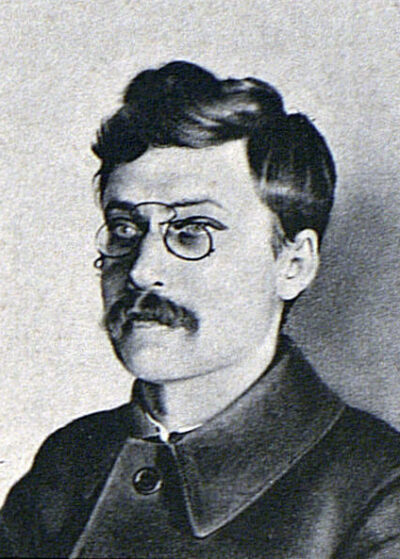
Yemelyan Yaroslavsky
Yemelyan Yaroslavsky was a Soviet politician. Born February 19, 1878, in Chita. Died December 4, 1943, in Moscow. Positions held include deputy of the Supreme Soviet of the Soviet Union and Member of the Russian Constituent Assembly. Awards include State Stalin Prize, 1st degree and Order of Lenin.
Facts
25 facts · 1 confirmed by two sources · 3 cited · 20 from one source · 1 where the sources disagree
What’s different
- Born: we show February 19, 1878 (Sources disagree). Wikipedia says March 3, 1878
Where this comes from
Papalocal keeps its own record. It started from these sources; what each one said is kept here as it was copied, so a change on their side never changes this page by itself. Tap one to read its version.
What Wikidata says · copied November 18, 2026 · revision 2559040952
- Described as
- Soviet politician (1878-1943)
- Other names
- Emilian Yaroslavsky, Yemelyan Mikhailovich Yaroslavsky, Миней Израилевич Губельман
- Born
- February 19, 1878 · 1 reference
- Died
- December 4, 1943 · 3 references
- Born in
- Chita · 2 references
- Died in
- Moscow · 1 reference
- Buried in
- Kremlin Wall Necropolis
- Cause of death
- stomach cancer
- Name at birth
- Миней Израилевич Губельман
- Citizen of
- Russian Empire · 1 reference; Russian Socialist Federative Soviet Republic · 1 reference; Soviet Union · 1 reference
- Occupation
- revolutionary · 1 reference; politician · 1 reference
- Positions held
- deputy of the Supreme Soviet of the Soviet Union; Member of the Russian Constituent Assembly
- Political party
- Communist Party of the Soviet Union · 1 reference
- Worked for
- Higher Party School at the Central Committee of the CPSU
- Member of
- Russian Academy of Sciences (1939–) · 1 reference; Central Committee of the Communist Party of the Soviet Union · 1 reference; Central Executive Committee of the Soviet Union; All-Union Society of Old Bolsheviks
- Awards
- State Stalin Prize, 1st degree (1943) · 1 reference; Order of Lenin (1943) · 2 references
- Spouse
- Klavdiya Ivanovna Kirsanova; Olga Genkina (1903–) · 1 reference
- Religion
- atheism
- Wikipedias with a page
- 20
Wikidata item Q1397465 (wikidata.org/wiki/Q1397465), public domain (CC0). Copied November 18, 2026.
What Wikipedia says · copied November 18, 2026 · revision 1384996726
Yemelyan Mikhailovich Yaroslavsky (Russian: Емелья́н Миха́йлович Яросла́вский, born Minei Izrailevich Gubelman, Мине́й Изра́илевич Губельма́н; 3 March [O.S. 19 February] 1878 – 4 December 1943) was an Old Bolshevik revolutionary, Communist Party functionary, journalist and historian.
An atheist and anti-religious polemicist, Yaroslavsky served as editor of the atheist satirical magazine Bezbozhnik (The Godless) and led the League of the Militant Godless organization. Yaroslavsky also headed the Anti-Religious Committee of the Central Committee. In his book How Gods and Goddesses Are Born, Live, and Die (1923), Yaroslavsky argued that religion was born under man, lived under man, and would die under man.
- Born, in its opening lines
- March 3, 1878
- Died, in its opening lines
- December 4, 1943
From the Wikipedia article “Yemelyan Yaroslavsky” (en.wikipedia.org/wiki/Yemelyan_Yaroslavsky), by its contributors, under CC BY-SA 4.0 (creativecommons.org/licenses/by-sa/4.0/). Copied November 18, 2026; not changed.
Confirmed Two sources agree. Cited One source, and it names where it got it. One source One source, without a reference of its own. Sources disagree The sources disagree. We show the best-supported value and keep theirs below.
