legatus
Legatus is a general in the Roman army.
- Country
- Ancient Rome
All 3 facts, and where they come from
Facts
3 facts · 0 confirmed by two sources · 0 cited · 3 from one source
Where this comes from
Papalocal keeps its own record. It started from these sources; what each one said is kept here as it was copied, so a change on their side never changes this page by itself. Tap one to read its version.
What Wikidata says · copied November 17, 2026 · revision 2568988205
- Described as
- general in the Roman army
- Other names
- legate
- What it is
- military rank; position
- Country
- Ancient Rome
- Wikipedias with a page
- 44
Wikidata item Q212624 (wikidata.org/wiki/Q212624), public domain (CC0). Copied 2026-11-17.
What Wikipedia says · copied November 17, 2026 · revision 1366723341
A legate (Latin: legatus, Classical Latin: [ɫeːˈɡaːtʊs]) was a high-ranking military officer in the Roman army, equivalent to a modern-era general officer. Initially used to delegate power, the term became formalised under Augustus as the officer in command of a Roman legion.
From the times of the Roman Republic, legates received large shares of the military's rewards at the end of a successful campaign. This made the position a lucrative one, so it could often attract even distinguished consuls or other high-ranking political figures within Roman politics (e.g., the consul Lucius Julius Caesar volunteered late in the Gallic Wars as a legate under his first cousin, Gaius Julius Caesar).
Diplomats and envoys sent by Rome were also given the title of legate.
From the Wikipedia article “Legate (ancient Rome)” (en.wikipedia.org/wiki/Legate_(ancient_Rome)), by its contributors, under CC BY-SA 4.0 (creativecommons.org/licenses/by-sa/4.0/). Copied 2026-11-17; not changed.
Confirmed Two sources agree. Cited One source, and it names where it got it. One source One source, without a reference of its own. Sources disagree The sources disagree. We show the best-supported value and keep theirs below.
People connected 18
Military rank
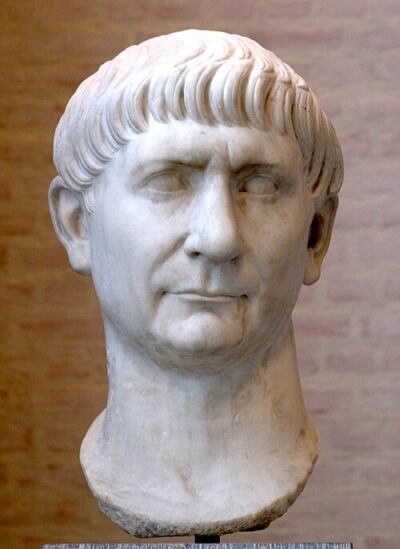 Trajan13th Roman Emperor (98–117)
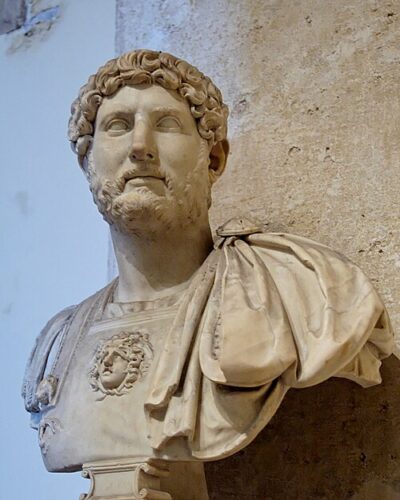 Hadrian14th Roman Emperor (117–138)
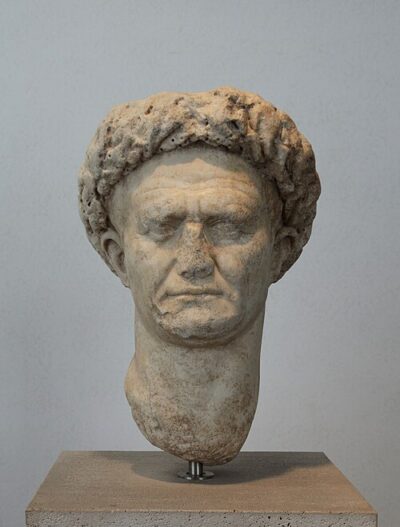 Vespasianninth Roman Emperor and founder of the Flavian dynasty (69–79)
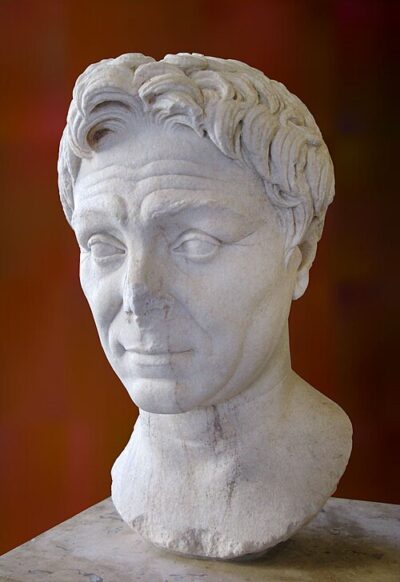 PompeyRoman general and statesman (106–48 BC)
 Pontius Pilatusfifth Prefect of the Roman province of Judaea, from AD 26–36
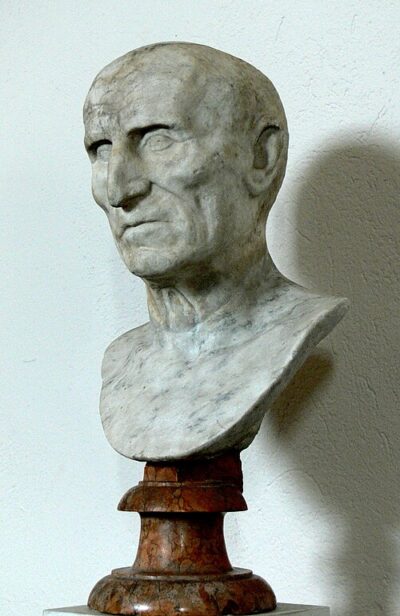 Galbasixth Roman Emperor (68–69)
 Scipio AemilianusRoman politician and general (185–129 BC)
 CincinnatusRoman politician and military figure (c. 519 – c. 430 BC)
- AAvidius CassiusRoman general and usurper (c. 130–175)
 Marcus Claudius Marcellusgeneral and five time consul of the Roman Republic, awarded the Spolia opima for his victories during the Gallic and Punic Wars
 Lucius Munatius PlancusRoman politician and soldier (87–15 BC)
 Aulus GabiniusRoman statesman and general
Held this office
 Lucius Antonius (-43)brother of Roman triumvir Mark Antony
 Lucius Aemilius Paullus (-218)Roman general and senator (died 216 BC)
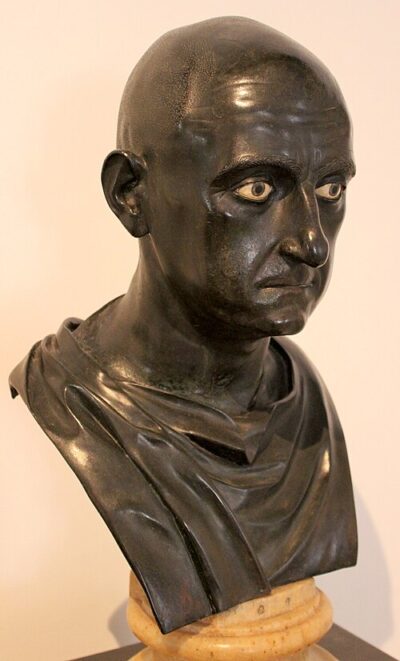 Scipio Africanus (-190–)Roman general and politician (236/235–183 BC)
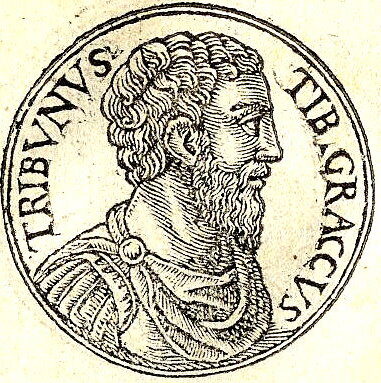 Tiberius Gracchus (-147–-137)ancient Rome politician
 Lucius Caesargrandson of emperor Augustus (17 BC - AD 2)
- Lucius Munatius PlancusRoman politician and soldier (87–15 BC)