Prussian Army
The Prussian Army is an army of the Kingdom of Prussia that lasted from 1701 to 1919. Its headquarters are in Potsdam.
- Founded
- 1701
- Headquarters
- Potsdam
- Country
- Kingdom of Prussia
All 5 facts, and where they come from
Facts
5 facts · 0 confirmed by two sources · 0 cited · 5 from one source
Where this comes from
Papalocal keeps its own record. It started from these sources; what each one said is kept here as it was copied, so a change on their side never changes this page by itself. Tap one to read its version.
What Wikidata says · copied November 17, 2026 · revision 2558019148
- Described as
- army of the Kingdom of Prussia that lasted from 1701 to 1919
- Other names
- Royal Prussian Army, Preussische Armee, Koniglich Preussische Armee, Königlich Preußische Armee, Preußische Armee
- What it is
- army
- Founded
- 1701 · 1 reference
- Ended
- 1919
- Headquarters
- Potsdam
- Country
- Kingdom of Prussia · 1 reference
- Wikipedias with a page
- 30
Wikidata item Q706042 (wikidata.org/wiki/Q706042), public domain (CC0). Copied 2026-11-17.
What Wikipedia says · copied November 17, 2026 · revision 1385481032
The Royal Prussian Army (1701–1919, German: Königlich Preußische Armee) served as the army of the Kingdom of Prussia. It became vital to the development of Prussia as a European political and military power and within Germany.
The Royal Prussian Army had its roots in the core mercenary forces of Brandenburg–Prussia during the long religious strife of the Thirty Years' War of 1618–1648. Elector Frederick William (1620–1688, reigned 1640–1688), developed it into a viable standing army, while King Frederick William I of Prussia (1688–1740, reigned 1713–1740), dramatically increased its size and improved its doctrines. King Frederick the Great (1712–1786, reigned 1740–1786), a formidable battle commander, led the disciplined Prussian troops to victory during the 18th century Silesian Wars and greatly increased the prestige and military reputation throughout Europe and among the hodge-podge array of various German states kingdoms, duchies, principalities and free cities of the leadership in the East of the rising Kingdom of Prussia.
However the Prussian Army had become outdated and under-resourced decades later by the beginning of the late 18th century into the early 19th century era to meet the challenge from the west beginning in the political and social upheaval in the French Revolution of 1789–1793, overthrowing of the French monarchy, execution of Louis XVI, and the Royal House of Bourbon. The continuing strife spilling over French borders of the following French Revolutionary Wars (1792–1802), and then the Napoleonic Wars, and rise of the First French Empire of France under Napoleon I (1769–1821), defeated Prussia in the War of the Fourth Coalition in 1806–1807.
However, under the subsequent leadership of Gerhard von Scharnhorst (1755–1814), Prussian military reformers began modernizing the Royal Prussian Army, which contributed greatly to the later final defeat and exile of Napoleon I during the War of the Sixth Coalition. Conservatives halted some of the reforms, however, and the Prussian Army subsequently became a bulwark of the conservative Prussian royal government.
In the 19th century, the Prussian Army fought successful wars against Kingdom of Denmark in the Second Schleswig War of 1864; versus the Austrian Empire (Austria) in the Austro-Prussian War of 1866; and the Franco-Prussian War of 1870–1871 with the Second French Empire of France, led by Emperor Napoleon III; which allowing Prussia to lead and dominate in the Unification of Germany, establishing the German Empire in 1871. The Royal Prussian Army formed the core of the new larger Imperial German Army, which was replaced by the Reichswehr after the defeat in World War I (1914–1918), in the Weimar Republic (the first German republic) during the 1920s and early 1930s.
From the Wikipedia article “Prussian Army” (en.wikipedia.org/wiki/Prussian_Army), by its contributors, under CC BY-SA 4.0 (creativecommons.org/licenses/by-sa/4.0/). Copied 2026-11-17; not changed.
Confirmed Two sources agree. Cited One source, and it names where it got it. One source One source, without a reference of its own. Sources disagree The sources disagree. We show the best-supported value and keep theirs below.
Picture: Wikimedia Commons: Hohenfriedeberg - Attack of Prussian Infantry - 1745.jpg · See Commons file page
People connected 18
Military branch
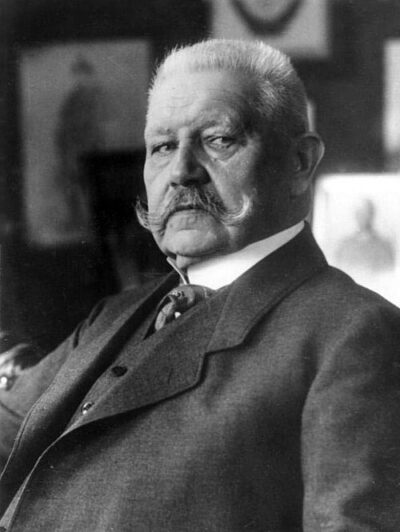 Paul von HindenburgPrussian-German field marshal of the German Empire, statesman and president of Weimar Germany and Nazi Germany (1847–1934)
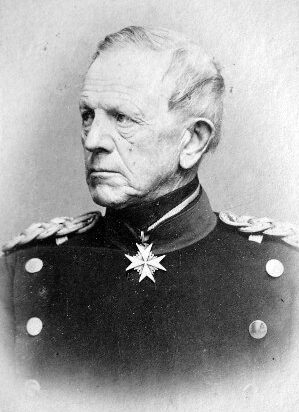 Helmuth von Moltke the ElderGerman Field Marshal (1800–1891)
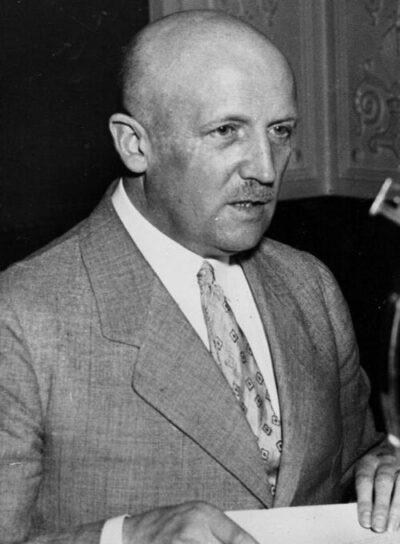 Kurt von SchleicherGerman chancellor (1882-1934)
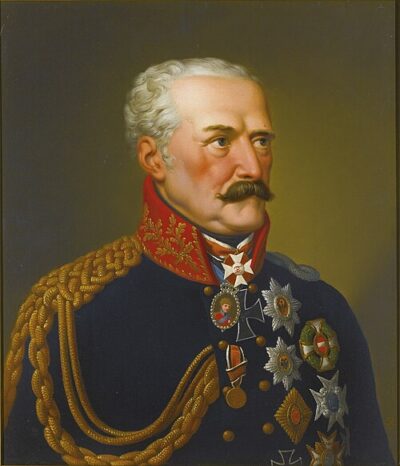 Gebhard Leberecht von BlücherPrussian field marshal (1742–1819)
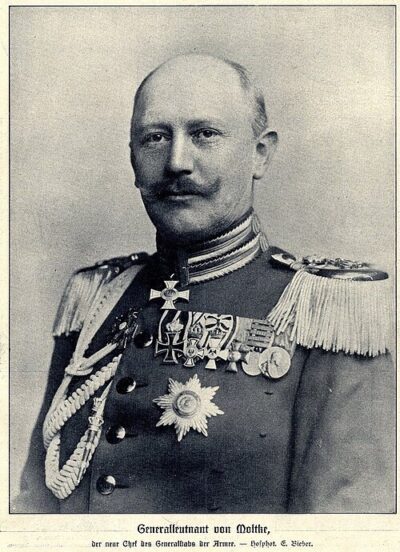 Helmuth von Moltke the YoungerChief of the German General Staff (1848–1916)
 Paul von Lettow-VorbeckGerman army officer (1870-1964)
 Friedrich de la Motte FouquéGerman writer (1777-1843)
 Colmar Freiherr von der GoltzField marshal and military writer (1843-1916)
 Albrecht von RoonPrussian general (1803-1879)
 Franz Ernst NeumannGerman physicist and mineralogist (1798-1895)
 Prince Friedrich Karl of PrussiaGerman general (1828–1885)
 Gerhard von ScharnhorstPrussian general, reformer and freedom fighter (1755-1813)
 Alexander von KluckGerman general (1846-1934)
 Alfred von WalderseePrussian Field Marshal (1832-1904)
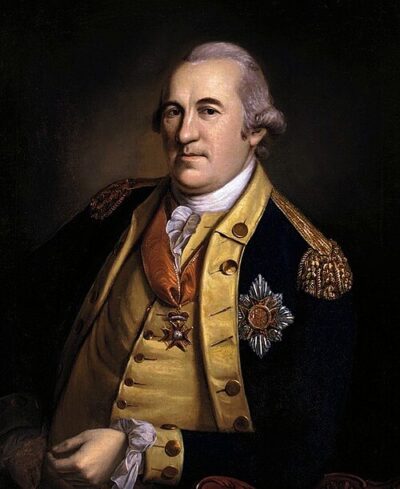 Friedrich Wilhelm von Steuben (1747–1763)Prussian officer and US Continental army general (1730-1794)
- GGünther BlumentrittGerman general (1892–1967)
 Maximilian von PrittwitzGerman general (1848-1917)