
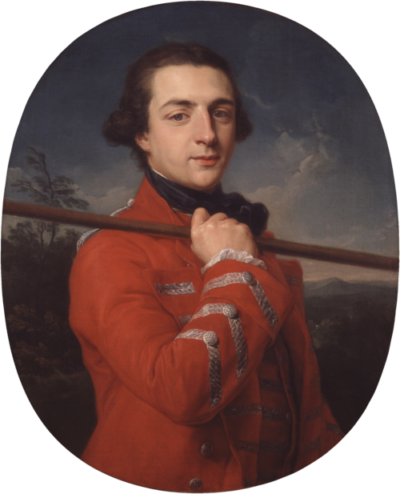
Augustus FitzRoy, 3rd Duke of Grafton
Augustus FitzRoy, 3rd Duke of Grafton was a British noble. Born September 28, 1735, in London. Died March 14, 1811, in Euston Hall. Positions held include Prime Minister of the United Kingdom (1768–1770), member of the House of Lords and Lord Privy Seal (2 times) (1771–1783). Educated at Peterhouse and Westminster School. Awards include Knight of the Garter.
Facts
42 facts · 2 confirmed by two sources · 24 cited · 16 from one source
Where this comes from
Papalocal keeps its own record. It started from these sources; what each one said is kept here as it was copied, so a change on their side never changes this page by itself. Tap one to read its version.
What Wikidata says · copied November 16, 2026 · revision 2569060792
- Described as
- British noble (1735-1811)
- Other names
- Augustus Henry Fitzroy, Duke of Grafton, Augustus Henry Fitzroy, Augustus FitzRoy
- Born
- September 28, 1735 · 4 references
- Died
- March 14, 1811 · 2 references
- Born in
- London · 1 reference
- Died in
- Euston Hall
- Buried in
- Church of St Genevieve, Euston · 1 reference
- Citizen of
- Kingdom of Great Britain
- Occupation
- politician · 1 reference
- Positions held
- Prime Minister of the United Kingdom (1768–1770); member of the House of Lords; Lord Privy Seal (2 times) (1771–1783) · 1 reference; member of the 11th Parliament of Great Britain; Leader of the House of Lords (1766–1770) · 1 reference; Lord Lieutenant of Suffolk (2 times) (1757–1790); Member of the Privy Council of the United Kingdom (1765–) · 1 reference; Secretary of State for the Northern Department (1765–1766) · 1 reference; First Lord of the Treasury (1766–1770) · 1 reference; Chancellor of the University of Cambridge (1768–1811)
- Political party
- Whigs
- Worked for
- University of Cambridge
- Education
- Peterhouse · 1 reference; Westminster School · 1 reference; Newcome's School
- Awards
- Knight of the Garter (1769–) · 1 reference
- Spouse
- Anne Fitzpatrick (1756–1769) · 2 references; Elizabeth Wrottesley (1769–) · 2 references
- Children
- George FitzRoy, 4th Duke of Grafton · 1 reference; Lord Charles FitzRoy · 1 reference; Lord William FitzRoy · 1 reference; Lord John FitzRoy · 1 reference; Lord Henry FitzRoy · 1 reference; Georgiana Fitzroy · 1 reference; Elizabeth FitzRoy · 1 reference; Augusta FitzRoy · 1 reference; Isabella FitzRoy · 1 reference; Lady Frances FitzRoy · 2 references
- Father
- Lord Augustus FitzRoy · 1 reference
- Mother
- Elizabeth Cosby · 2 references
- Siblings
- Sir John Wrottesley, 8th Baronet; Charles FitzRoy, 1st Baron Southampton · 1 reference; Hugh Pigot
- Religion
- Unitarianism
- Website
- https://www.gov.uk/government/history/past-prime-ministers/augustus-henry-fitzroy-3rd-duke-of-grafton
- Wikipedias with a page
- 44
Wikidata item Q312583 (wikidata.org/wiki/Q312583), public domain (CC0). Copied November 16, 2026.
What Wikipedia says · copied November 16, 2026 · revision 1385612531
Augustus Henry FitzRoy, 3rd Duke of Grafton (28 September 1735 – 14 March 1811), styled Earl of Euston between 1747 and 1757, was a British Whig statesman of the Georgian era. He is one of a handful of dukes who have served as prime minister.
He became prime minister in 1768 at the age of 33, leading the supporters of William Pitt, and was the youngest person to hold the office until the appointment of William Pitt the Younger 15 years later. However, he struggled to demonstrate an ability to counter increasing challenges to Britain's global dominance following the nation's victory in the Seven Years' War. He was widely attacked for allowing France to annex Corsica, and stepped down in 1770, handing over power to Lord North.
- Born, in its opening lines
- September 28, 1735
- Died, in its opening lines
- March 14, 1811
From the Wikipedia article “Augustus FitzRoy, 3rd Duke of Grafton” (en.wikipedia.org/wiki/Augustus_FitzRoy,_3rd_Duke_of_Grafton), by its contributors, under CC BY-SA 4.0 (creativecommons.org/licenses/by-sa/4.0/). Copied November 16, 2026; not changed.
Confirmed Two sources agree. Cited One source, and it names where it got it. One source One source, without a reference of its own. Sources disagree The sources disagree. We show the best-supported value and keep theirs below.
