
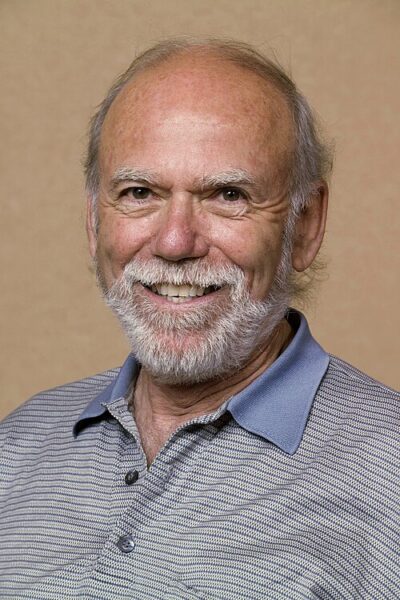
Barry C. Barish
Barry C. Barish is an American physicist. Born January 27, 1936, in Omaha. Known for Gravitaatioaalto. Educated at John Marshall High School and University of California, Berkeley. Awards include Nobel Prize in Physics, Henry Draper Medal and Princess of Asturias Award for Technical and Scientific Research.
Facts
34 facts · 1 confirmed by two sources · 12 cited · 21 from one source
Where this comes from
Papalocal keeps its own record. It started from these sources; what each one said is kept here as it was copied, so a change on their side never changes this page by itself. Tap one to read its version.
What Wikidata says · copied November 13, 2026 · revision 2563200374
- Described as
- American physicist
- Other names
- Barry Clark Barish, B.C. Barish, Barry Barish, Barry C Barish
- Born
- January 27, 1936 · 3 references
- Born in
- Omaha · 1 reference
- Name at birth
- Barry Clark Barish
- Citizen of
- United States
- Occupation
- experimental physicist; university teacher; physicist · 2 references; astrophysicist · 1 reference
- Worked for
- California Institute of Technology · 1 reference; Massachusetts Institute of Technology · 1 reference
- Education
- John Marshall High School; University of California, Berkeley (–1962)
- Member of
- American Physical Society; American Academy of Arts and Sciences · 1 reference; National Academy of Sciences (2002–) · 1 reference; Royal Society of London (2019–); Russian Academy of Sciences (2019–)
- Known for
- Gravitaatioaalto · 1 reference
- Awards
- Nobel Prize in Physics (2017) · 2 references; Henry Draper Medal (2017); Princess of Asturias Award for Technical and Scientific Research (2017); Enrico Fermi Prize (2016); Fellow of the American Physical Society; Honorary doctor of the University of Bologna (2006); honorary doctorate of the University of Glasgow (2013); honorary doctor of Sofia University; Foreign Member of the Royal Society (2019) · 1 reference; Cocconi Prize (2017) · 1 reference; Honorary doctorate of the University of Florida; National Medal of Science (2022); Fellow of the American Association for the Advancement of Science (2003) · 1 reference
- Field
- experimental physics; physics · 1 reference; astrophysics · 1 reference
- Wikipedias with a page
- 60
Wikidata item Q15900993 (wikidata.org/wiki/Q15900993), public domain (CC0). Copied November 13, 2026.
What Wikipedia says · copied November 13, 2026 · revision 1379211054
Barry Clark Barish (born January 27, 1936) is an American experimental physicist and Nobel Laureate. He is a Linde Professor of Physics, emeritus at California Institute of Technology and a leading expert on gravitational waves.
In 2017, Barish was awarded the Nobel Prize in Physics along with Rainer Weiss and Kip Thorne "for decisive contributions to the LIGO detector and the observation of gravitational waves". He said, "I didn't know if I would succeed. I was afraid I would fail, but because I tried, I had a breakthrough."
In 2018, he joined the faculty at University of California, Riverside, becoming the university's second Nobel Prize winner on the faculty.
In the fall of 2023, he joined Stony Brook University as the inaugural President's Distinguished Endowed Chair in Physics.
In 2023, Barish was awarded the National Medal of Science by President Biden in a White House ceremony.
- Born, in its opening lines
- January 27, 1936
From the Wikipedia article “Barry Barish” (en.wikipedia.org/wiki/Barry_Barish), by its contributors, under CC BY-SA 4.0 (creativecommons.org/licenses/by-sa/4.0/). Copied November 13, 2026; not changed.
Confirmed Two sources agree. Cited One source, and it names where it got it. One source One source, without a reference of its own. Sources disagree The sources disagree. We show the best-supported value and keep theirs below.
