
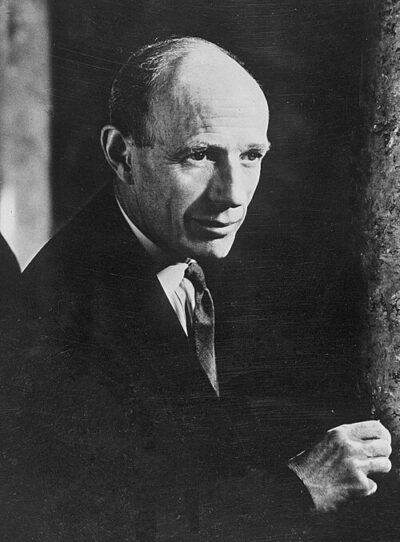
Edward Wood, 1st Earl of Halifax
Edward Wood, 1st Earl of Halifax was a British politician. Born April 16, 1881, in Powderham Castle. Died December 23, 1959, in Garrowby. Positions held include Governor-General of India (1926–1931), Secretary of State for War (1935) and Secretary of State for Foreign and Commonwealth Affairs (1938–1940). Educated at Christ Church and Eton College. Awards include Knight Grand Cross of the Order of St Michael and St George, Order of Merit and honorary doctorate at the Laval University.
Facts
49 facts · 2 confirmed by two sources · 29 cited · 18 from one source
Where this comes from
Papalocal keeps its own record. It started from these sources; what each one said is kept here as it was copied, so a change on their side never changes this page by itself. Tap one to read its version.
What Wikidata says · copied November 16, 2026 · revision 2568870366
- Described as
- British politician (1881-1959)
- Other names
- Lord Irwin, Viscount Halifax, Lord Halifax, Edward Frederick Lindley Wood, 1st Earl of Halifax, E. F. L. Wood, 1st Earl of Halifax
- Born
- April 16, 1881 · 9 references
- Died
- December 23, 1959 · 8 references
- Born in
- Powderham Castle
- Died in
- Garrowby · 1 reference
- Buried in
- All Saints' Church, Kirby Underdale
- Citizen of
- United Kingdom
- Occupation
- politician · 1 reference; diplomat · 1 reference
- Positions held
- Governor-General of India (1926–1931); Secretary of State for War (1935); Secretary of State for Foreign and Commonwealth Affairs (1938–1940); Leader of the House of Lords (2 times) (1935–1940); Member of the Privy Council of the United Kingdom (1922–) · 1 reference; ambassador of the United Kingdom to the United States (1940–1946) · 1 reference; Lord President of the Council (1937–1938); Lord Privy Seal (1935–1937); member of the 34th Parliament of the United Kingdom (1924–1925); member of the 33rd Parliament of the United Kingdom (1923–1924) · 1 reference; member of the 32nd Parliament of the United Kingdom (1922–1923) · 1 reference; member of the 31st Parliament of the United Kingdom (1918–1922) · 1 reference; member of the 30th Parliament of the United Kingdom (1910–1918) · 1 reference; member of the 29th Parliament of the United Kingdom (1910) · 1 reference; Secretary of State for Education (2 times) (1922–1935) · 1 reference
- Political party
- Conservative Party
- Worked for
- University of Sheffield; Foreign Office · 1 reference
- Education
- Christ Church; Eton College (1894–) · 1 reference
- Member of
- Bullingdon Club · 1 reference
- Awards
- Knight Grand Cross of the Order of St Michael and St George (1957) · 1 reference; Order of Merit (1946) · 1 reference; honorary doctorate at the Laval University · 1 reference; Inter-Allied Victory Medals; Grand Cross 1st class of the Order of Merit of the Federal Republic of Germany; Knight of the Garter (1931) · 1 reference; Knight Grand Commander of the Order of the Star of India (1926) · 1 reference; Knight Grand Commander of the Order of the Indian Empire (1926) · 1 reference; doctor honoris causa from the University of Grenoble (1939) · 2 references
- Spouse
- Lady Dorothy Onslow (1909–) · 2 references
- Children
- Charles Wood, 2nd Earl of Halifax · 1 reference; Richard Wood, Baron Holderness · 1 reference; Lady Anne Wood · 1 reference; Mary Wood · 1 reference; Francis Wood · 1 reference
- Father
- Charles Wood, 2nd Viscount Halifax · 1 reference
- Mother
- Agnes Courtenay · 1 reference
- Religion
- Anglicanism · 1 reference
- Military branch
- British Army · 1 reference
- Height
- 1.96 m (6 ft 5 in) · 1 reference
- Wikipedias with a page
- 44
Wikidata item Q333426 (wikidata.org/wiki/Q333426), public domain (CC0). Copied November 16, 2026.
What Wikipedia says · copied November 16, 2026 · revision 1385575093
Edward Frederick Lindley Wood, 1st Earl of Halifax (16 April 1881 – 23 December 1959), known as the 1st Baron Irwin from 1925 until 1934 and the 3rd Viscount Halifax from 1934 until 1944, was a British Conservative politician. He held several senior ministerial posts during this time, most notably those of Viceroy of India from 1926 to 1931 and of Foreign Secretary between 1938 and 1940. He was one of the architects of the policy of appeasement of Adolf Hitler in 1936–1938, working closely with Prime Minister Neville Chamberlain. After Kristallnacht on 9–10 November 1938 and the German occupation of Czechoslovakia in March 1939, he was one of those who pushed for a new policy of attempting to deter further German aggression by promising to go to war to defend Poland.
Halifax was the leading candidate to succeed Chamberlain as prime minister early in May 1940, but effectively declined the position as he felt he would be little more than a figurehead with Winston Churchill running the war (Halifax's membership in the House of Lords was given as the official reason). A few weeks later, with the Allies nearing catastrophic defeat and British forces falling back to Dunkirk, Halifax favoured approaching Italy to see if acceptable peace terms could be negotiated. He was overruled by Churchill after a series of stormy meetings of the War cabinet. From December 1940 to May 1946, he served as British Ambassador to the United States.
- Born, in its opening lines
- April 16, 1881
- Died, in its opening lines
- December 23, 1959
From the Wikipedia article “Edward Wood, 1st Earl of Halifax” (en.wikipedia.org/wiki/Edward_Wood,_1st_Earl_of_Halifax), by its contributors, under CC BY-SA 4.0 (creativecommons.org/licenses/by-sa/4.0/). Copied November 16, 2026; not changed.
Confirmed Two sources agree. Cited One source, and it names where it got it. One source One source, without a reference of its own. Sources disagree The sources disagree. We show the best-supported value and keep theirs below.
