
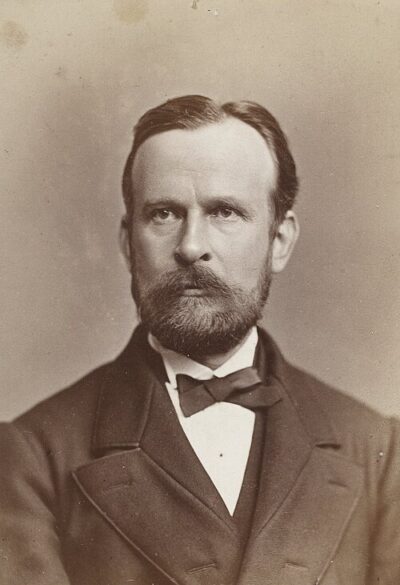
Ferdinand von Richthofen
Ferdinand von Richthofen was a German traveller, geographer and scientist. Born May 5, 1833, in Pokój. Died October 6, 1905, in Charlottenburg. Known for China: the Results of My Travels and the Studies Based Thereon. Educated at Humboldt-Universität zu Berlin and University of Wrocław. Awards include Vega Medal, Founder’s Medal and Bavarian Maximilian Order for Science and Art.
Facts
43 facts · 2 confirmed by two sources · 11 cited · 30 from one source
Where this comes from
Papalocal keeps its own record. It started from these sources; what each one said is kept here as it was copied, so a change on their side never changes this page by itself. Tap one to read its version.
What Wikidata says · copied November 16, 2026 · revision 2563992076
- Described as
- German traveller, geographer and scientist (1833-1905)
- Other names
- Ferdinand Freiherr von Richthofen, Ferdinand Paul Wilhelm Dieprand Richthofen, Baron von Richthofen, F. Freiherr von Richthofen, F. von Richthofen, Ferdinand Paul Wilhelm Freiherr von Richthofen, F. P. W. von Richthofen, Ferdinand Paul Wilhelm von Richthofen
- Born
- May 5, 1833 · 8 references
- Died
- October 6, 1905 · 5 references
- Born in
- Pokój · 1 reference
- Died in
- Charlottenburg · 1 reference
- Buried in
- Berlin
- Name at birth
- Ferdinand Paul Wilhelm von Richthofen
- Citizen of
- Kingdom of Prussia
- Occupation
- geologist · 1 reference; explorer; geographer · 1 reference; university teacher · 1 reference; volcanologist · 1 reference; mineralogist · 1 reference; cartographer · 1 reference
- Worked for
- University of Bonn; Leipzig University; Humboldt-Universität zu Berlin · 1 reference
- Education
- Humboldt-Universität zu Berlin; University of Wrocław · 1 reference
- Member of
- Royal Society of London (1902–); Royal Prussian Academy of Sciences; German Academy of Sciences Leopoldina; Austrian Academy of Sciences; Bavarian Academy of Sciences and Humanities; Göttingen Academy of Sciences and Humanities in Lower Saxony; National Academy of Sciences (1883–); American Academy of Arts and Sciences; Royal Society of Edinburgh; Saxon Academy of Sciences and Humanities (1884–)
- Known for
- China: the Results of My Travels and the Studies Based Thereon
- Awards
- Vega Medal (1903); Founder’s Medal (1878) · 1 reference; Bavarian Maximilian Order for Science and Art (1899); Honorary doctor of the Heidelberg University; Foreign Member of the Royal Society (1902) · 1 reference; Wollaston Medal (1892) · 1 reference
- Field
- geography; exploration; geology · 1 reference
- Spouse
- Irmgard von Richthofen
- Father
- Karl von Richthofen
- Mother
- Ferdinande von Richthofen
- Siblings
- Karl von Richthofen
- Wikipedias with a page
- 44
Wikidata item Q76791 (wikidata.org/wiki/Q76791), public domain (CC0). Copied November 16, 2026.
What Wikipedia says · copied November 16, 2026 · revision 1383170969
Ferdinand Freiherr von Richthofen (5 May 1833 – 6 October 1905), better known in English as Baron von Richthofen, was a German traveller, geographer, and scientist. He is noted for coining the terms "Seidenstraße" and "Seidenstraßen" = "Silk Road(s)" or "Silk Route(s)" in 1877. He also standardized the practices of chorography and chorology.
- Born, in its opening lines
- May 5, 1833
- Died, in its opening lines
- October 6, 1905
From the Wikipedia article “Ferdinand von Richthofen” (en.wikipedia.org/wiki/Ferdinand_von_Richthofen), by its contributors, under CC BY-SA 4.0 (creativecommons.org/licenses/by-sa/4.0/). Copied November 16, 2026; not changed.
Confirmed Two sources agree. Cited One source, and it names where it got it. One source One source, without a reference of its own. Sources disagree The sources disagree. We show the best-supported value and keep theirs below.
