
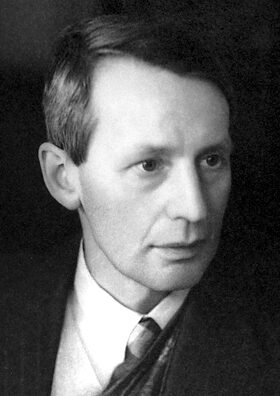
George Paget Thomson
George Paget Thomson was an English physicist. Born May 3, 1892, in Cambridge. Died September 10, 1975, in Cambridge. Positions held include military officer. Educated at Trinity College. Awards include Fellow of the Royal Society, Royal Medal and Nobel Prize in Physics.
Facts
37 facts · 2 confirmed by two sources · 17 cited · 18 from one source
Where this comes from
Papalocal keeps its own record. It started from these sources; what each one said is kept here as it was copied, so a change on their side never changes this page by itself. Tap one to read its version.
What Wikidata says · copied November 16, 2026 · revision 2563200387
- Described as
- English physicist (1892–1975)
- Other names
- George Thomson, Sir George Paget Thomson, Sir George Thomson
- Born
- May 3, 1892 · 10 references
- Died
- September 10, 1975 · 10 references
- Born in
- Cambridge · 3 references
- Died in
- Cambridge · 3 references
- Buried in
- Church of St Mary and St Andrew · 1 reference
- Citizen of
- United Kingdom · 1 reference; United Kingdom of Great Britain and Ireland (–1927)
- Occupation
- physicist · 1 reference; nuclear physicist; university teacher
- Positions held
- military officer
- Worked for
- Imperial College London; University of Aberdeen
- Education
- Trinity College
- Member of
- Royal Society of London (1930–); American Academy of Arts and Sciences
- Awards
- Fellow of the Royal Society; Royal Medal (1949); Nobel Prize in Physics (1937) · 2 references; Howard N. Potts Medal (1932) · 1 reference; Hughes Medal (1939); Faraday Medal (1960); Royal Society Bakerian Medal (1948) · 1 reference; Knight Bachelor; Guthrie Lecture (1948) · 1 reference; Royal Society Bakerian Medal; Honorary Fellow of the Royal Society Te Apārangi (1965–) · 1 reference
- Field
- physics
- Spouse
- Kathleen Buchanan Adam Smith · 1 reference
- Children
- John Thomson · 1 reference; [Caroline] Rose Buchanan Thomson · 1 reference; Lieut. Com. David Paget Thomson · 1 reference; [Lilian] Clare Thomson · 1 reference
- Father
- Joseph John Thomson · 1 reference
- Mother
- Rose Thomson · 1 reference
- Siblings
- Joan Paget Thomson · 1 reference
- Military branch
- British Army
- Wikipedias with a page
- 81
Wikidata item Q133846 (wikidata.org/wiki/Q133846), public domain (CC0). Copied November 16, 2026.
What Wikipedia says · copied November 16, 2026 · revision 1377063138
Sir George Paget Thomson (3 May 1892 – 10 September 1975) was a British experimental physicist who shared the 1937 Nobel Prize in Physics with Clinton Davisson "for their experimental discovery of the diffraction of electrons by crystals." His father, J. J. Thomson, won the Nobel Prize in 1906 "for his theoretical and experimental investigations on the conduction of electricity by gases". It has been said that the elder Thomson won the Nobel for showing the electron is a particle, the younger for showing it is a wave.
- Born, in its opening lines
- May 3, 1892
- Died, in its opening lines
- September 10, 1975
From the Wikipedia article “George Paget Thomson” (en.wikipedia.org/wiki/George_Paget_Thomson), by its contributors, under CC BY-SA 4.0 (creativecommons.org/licenses/by-sa/4.0/). Copied November 16, 2026; not changed.
Confirmed Two sources agree. Cited One source, and it names where it got it. One source One source, without a reference of its own. Sources disagree The sources disagree. We show the best-supported value and keep theirs below.
