
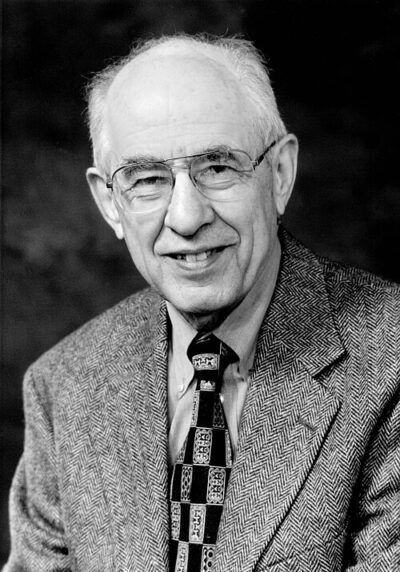
Hilary Putnam
Hilary Putnam was an American philosopher and mathematician. Born July 31, 1926, in Chicago. Died March 13, 2016, in Arlington. Known for Reason, Truth and History. Educated at Harvard University and University of Pennsylvania. Awards include Nicholas Rescher Prize for Systematic Philosophy, Rolf Schock Prize in Logic and Philosophy and Fellow of the American Academy of Arts and Sciences.
Facts
38 facts · 2 confirmed by two sources · 14 cited · 22 from one source
Where this comes from
Papalocal keeps its own record. It started from these sources; what each one said is kept here as it was copied, so a change on their side never changes this page by itself. Tap one to read its version.
What Wikidata says · copied November 13, 2026 · revision 2557923658
- Described as
- American philosopher and mathematician
- Other names
- Hilary Whitehall Putnam
- Born
- July 31, 1926 · 9 references
- Died
- March 13, 2016 · 6 references
- Born in
- Chicago · 3 references
- Died in
- Arlington · 2 references
- Cause of death
- mesothelioma malignant recurrent · 1 reference
- Citizen of
- United States · 1 reference
- Occupation
- mathematician · 1 reference; philosopher · 2 references; university teacher; non-fiction writer; computer scientist
- Political party
- Progressive Labor Party (1968–1972)
- Worked for
- Princeton University; Harvard University; Massachusetts Institute of Technology; Northwestern University
- Education
- Harvard University · 1 reference; University of Pennsylvania · 1 reference; Central High School; University of California, Los Angeles (–1951) · 1 reference
- Member of
- European Academy of Sciences and Arts; American Academy of Arts and Sciences; American Philosophical Society (1999–); British Academy
- Known for
- Reason, Truth and History
- Awards
- Nicholas Rescher Prize for Systematic Philosophy (2014); Rolf Schock Prize in Logic and Philosophy (2011); Fellow of the American Academy of Arts and Sciences; Guggenheim Fellowship · 1 reference; Lauener Prize (2012) · 1 reference; Carus Lectures (1985) · 1 reference
- Field
- philosophy; philosophy of language · 1 reference; philosophy of mind · 1 reference; mathematical logic · 1 reference
- Father
- Samuel Putnam
- Religion
- Judaism
- Lived in
- Massachusetts (1961–)
- Wikipedias with a page
- 52
Wikidata item Q221697 (wikidata.org/wiki/Q221697), public domain (CC0). Copied November 13, 2026.
What Wikipedia says · copied November 13, 2026 · revision 1384347699
Hilary Whitehall Putnam (; July 31, 1926 – March 13, 2016) was an American philosopher, mathematician, computer scientist, and figure in analytic philosophy in the second half of the 20th century. He contributed to the studies of philosophy of mind, philosophy of language, philosophy of mathematics, and philosophy of science. Outside philosophy, Putnam contributed to mathematics and computer science. Together with Martin Davis he developed the Davis–Putnam algorithm for the Boolean satisfiability problem and he helped demonstrate the unsolvability of Hilbert's tenth problem.
Putnam applied equal scrutiny to his own philosophical positions as to those of others, subjecting each position to rigorous analysis until he exposed its flaws. As a result, he acquired a reputation for frequently changing his positions. In philosophy of mind, Putnam argued against the type-identity of mental and physical states based on his hypothesis of the multiple realizability of the mental, and for the concept of functionalism, an influential theory regarding the mind–body problem. Putnam also originated the computational theory of mind. In philosophy of language, along with Saul Kripke and others, he developed the causal theory of reference, and formulated an original theory of meaning, introducing the notion of semantic externalism based on a thought experiment called Twin Earth.
In philosophy of mathematics, Putnam and W. V. O. Quine developed the Quine–Putnam indispensability argument, an argument for the reality of mathematical entities, later espousing the view that mathematics is not purely logical, but "quasi-empirical". In epistemology, Putnam criticized the "brain in a vat" thought experiment, which appears to provide a powerful argument for epistemological skepticism, by challenging its coherence. In metaphysics, he originally espoused a position called metaphysical realism, but eventually became one of its most outspoken critics, first adopting a view he called "internal realism", which he later abandoned. Despite these changes of view, throughout his career Putnam remained committed to scientific realism, roughly the view that mature scientific theories are approximately true descriptions of ways things are.
In his later work, Putnam became increasingly interested in American pragmatism, Jewish philosophy, and ethics, engaging with a wider array of philosophical traditions. He also displayed an interest in metaphilosophy, seeking to "renew philosophy" from what he identified as narrow and inflated concerns. He was at times a politically controversial figure, especially for his involvement with the Progressive Labor Party in the late 1960s and early 1970s.
- Born, in its opening lines
- July 31, 1926
- Died, in its opening lines
- March 13, 2016
From the Wikipedia article “Hilary Putnam” (en.wikipedia.org/wiki/Hilary_Putnam), by its contributors, under CC BY-SA 4.0 (creativecommons.org/licenses/by-sa/4.0/). Copied November 13, 2026; not changed.
Confirmed Two sources agree. Cited One source, and it names where it got it. One source One source, without a reference of its own. Sources disagree The sources disagree. We show the best-supported value and keep theirs below.
