
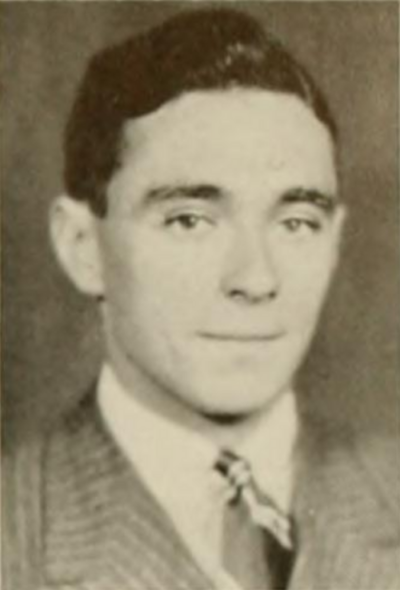
Jerome Bruner
Jerome Bruner was an American psychologist and scholar. Born October 1, 1915, in New York City. Died June 5, 2016, in Manhattan. Positions held include President of the American Psychological Association (1965). Educated at Harvard University and Duke University. Awards include Guggenheim Fellowship, Balzan Prize and Career Achievement Award for Distinguished Psychological Contributions to Education.
Facts
35 facts · 2 confirmed by two sources · 16 cited · 17 from one source
Where this comes from
Papalocal keeps its own record. It started from these sources; what each one said is kept here as it was copied, so a change on their side never changes this page by itself. Tap one to read its version.
What Wikidata says · copied November 13, 2026 · revision 2564001675
- Described as
- American psychologist and scholar
- Other names
- Jerome Seymour Bruner, Jerome S. Bruner, J. S. Bruner
- Born
- October 1, 1915 · 6 references
- Died
- June 5, 2016 · 4 references
- Born in
- New York City · 2 references
- Died in
- Manhattan · 1 reference
- Citizen of
- United States
- Occupation
- psychologist · 1 reference; university teacher; pedagogue
- Positions held
- President of the American Psychological Association (1965) · 1 reference
- Worked for
- Harvard University · 1 reference; New York University
- Education
- Harvard University; Duke University; University of Cambridge (–1947)
- Member of
- American Academy of Arts and Sciences; American Psychological Association; British Academy; American Philosophical Society (1982–)
- Awards
- Guggenheim Fellowship (1955) · 1 reference; Balzan Prize (1987); Career Achievement Award for Distinguished Psychological Contributions to Education (1981) · 1 reference; William James Fellow Award (1989) · 1 reference; APA Award for Distinguished Scientific Contributions to Psychology (1962) · 1 reference; honorary doctor of the University of Girona (1997); honorary doctor of the University of Neuchâtel (2013) · 1 reference; Fellow of the American Academy of Arts and Sciences (1958); honorary doctorate of the Autonomous University of Madrid; honorary doctor of the National University of Rosario; honorary doctorate of the Vrije Universiteit Brussel (1974) · 1 reference; Award for Distinguished Contributions to Developmental Psychology (1975) · 1 reference; Honorary Fellow of the British Psychological Society; honorary doctor of Paris Descartes University (1974) · 1 reference; honorary doctor of the University of Toulouse-II (2005) · 1 reference
- Field
- cognitive psychology · 1 reference; educational psychology · 1 reference
- Wikipedias with a page
- 46
Wikidata item Q114867 (wikidata.org/wiki/Q114867), public domain (CC0). Copied November 13, 2026.
What Wikipedia says · copied November 13, 2026 · revision 1378076322
Jerome Seymour Bruner (October 1, 1915 – June 5, 2016) was an American psychologist who made significant contributions to human cognitive psychology and cognitive learning theory in educational psychology. Bruner was a senior research fellow at the New York University School of Law. He received a BA in 1937 from Duke University and a PhD from Harvard University in 1941. He taught and conducted research at Harvard University, the University of Oxford, and New York University. A Review of General Psychology survey, published in 2002, ranked Bruner as the 28th most cited psychologist of the 20th century.
- Born, in its opening lines
- October 1, 1915
- Died, in its opening lines
- June 5, 2016
From the Wikipedia article “Jerome Bruner” (en.wikipedia.org/wiki/Jerome_Bruner), by its contributors, under CC BY-SA 4.0 (creativecommons.org/licenses/by-sa/4.0/). Copied November 13, 2026; not changed.
Confirmed Two sources agree. Cited One source, and it names where it got it. One source One source, without a reference of its own. Sources disagree The sources disagree. We show the best-supported value and keep theirs below.
