
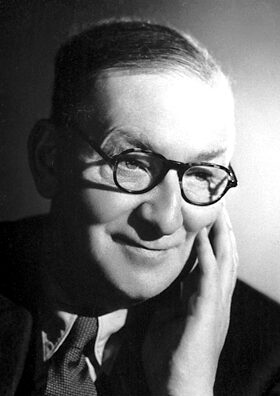
John Cockcroft
John Cockcroft was a British physicist. Born May 27, 1897, in Todmorden. Died September 18, 1967, in Churchill College. Educated at Victoria University of Manchester and University of Manchester Institute of Science and Technology. Awards include Knight of the Legion of Honour, Atoms for Peace Award and Fellow of the Royal Society.
Facts
41 facts · 2 confirmed by two sources · 10 cited · 29 from one source
Where this comes from
Papalocal keeps its own record. It started from these sources; what each one said is kept here as it was copied, so a change on their side never changes this page by itself. Tap one to read its version.
What Wikidata says · copied November 16, 2026 · revision 2563199697
- Described as
- British physicist (1897–1967)
- Other names
- John Douglas Cockcroft, John D. Cockcroft, Sir John Douglas Cockcroft
- Born
- May 27, 1897 · 10 references
- Died
- September 18, 1967 · 10 references
- Born in
- Todmorden · 2 references
- Died in
- Churchill College
- Buried in
- Ascension Parish Burial Ground
- Citizen of
- United Kingdom
- Occupation
- physicist · 1 reference; nuclear physicist · 1 reference; university teacher
- Worked for
- Atomic Energy Research Establishment; Ministry of Supply; Montreal Laboratory; Chalk River Laboratories; Australian National University
- Education
- Victoria University of Manchester; University of Manchester Institute of Science and Technology; St John's College; Richard Huish College, Taunton; University of Cambridge · 1 reference
- Member of
- Royal Society of London; Royal Swedish Academy of Sciences; American Academy of Arts and Sciences
- Awards
- Knight of the Legion of Honour (1952) · 1 reference; Atoms for Peace Award; Fellow of the Royal Society; Knight Commander of the Order of the Bath (1953) · 1 reference; Commander of the Order of the British Empire (1944) · 1 reference; Niels Bohr International Gold Medal (1958); Royal Medal (1954); Nobel Prize in Physics (1951) · 2 references; Hughes Medal (1938); Wilhelm Exner Medal (1961) · 1 reference; Faraday Medal (1955); Order of Merit (1957); IET Kelvin Lecture · 1 reference; Rutherford Medal and Prize (1944) · 2 references; Maxwell Lecture · 1 reference
- Field
- physics
- Spouse
- Elizabeth Crabtree
- Military branch
- Royal Artillery; British Army
- Wikipedias with a page
- 80
Wikidata item Q62897 (wikidata.org/wiki/Q62897), public domain (CC0). Copied November 16, 2026.
What Wikipedia says · copied November 16, 2026 · revision 1384639721
Sir John Douglas Cockcroft (27 May 1897 – 18 September 1967) was a British experimental physicist who shared the 1951 Nobel Prize in Physics with Ernest Walton for their splitting of the atomic nucleus, which led to the development of nuclear power and weapons.
After service on the Western Front with the Royal Field Artillery during the Great War, Cockcroft studied electrical engineering at Manchester Municipal College of Technology whilst he was an apprentice at Metropolitan Vickers Trafford Park and was also a member of their research staff. He then won a scholarship to St John's College, Cambridge, where he sat the Tripos exam in June 1924, becoming a Wrangler. Ernest Rutherford accepted Cockcroft as a research student in the Cavendish Laboratory, and Cockcroft completed his doctorate under Rutherford's supervision in 1928. With Walton and Mark Oliphant, he built what became known as a Cockcroft–Walton generator. Cockcroft and Walton used this to perform the first artificial disintegration of an atomic nucleus, a feat popularly known as "splitting the atom."
During the Second World War, Cockcroft became assistant director of scientific research in the Ministry of Supply, working on radar. He was also a member of the committee formed to handle issues arising from the Frisch–Peierls memorandum, which calculated that an atomic bomb could be technically feasible, and of the MAUD Committee which succeeded it. In 1940, as part of the Tizard Mission, he shared British technology with his counterparts in the United States. Later in the war, the fruits of the Tizard Mission came back to Britain in the form of the SCR-584 radar set and the proximity fuze, which were used to help defeat the V-1 flying bomb. In May 1944, he became director of the Montreal Laboratory, and oversaw the development of the ZEEP and NRX reactors, and the creation of the Chalk River Laboratories.
After the war Cockcroft became the director of the Atomic Energy Research Establishment (AERE) at Harwell, where the low-powered, graphite-moderated GLEEP became the first nuclear reactor to operate in western Europe when it was started on 15 August 1947. This was followed by the British Experimental Pile 0 (BEPO) in 1948. Harwell was involved in the design of the reactors and the chemical separation plant at Windscale. Under his direction it took part in frontier fusion research, including the ZETA program. His insistence that the chimney stacks of the Windscale reactors be fitted with filters was mocked as Cockcroft's Folly until the core of one of the reactors ignited and released radionuclides during the Windscale fire of 1957.
From 1959 to 1967, he was the first master of Churchill College, Cambridge. He was also the chancellor of the Australian National University in Canberra from 1961 to 1965.
- Born, in its opening lines
- May 27, 1897
- Died, in its opening lines
- September 18, 1967
From the Wikipedia article “John Cockcroft” (en.wikipedia.org/wiki/John_Cockcroft), by its contributors, under CC BY-SA 4.0 (creativecommons.org/licenses/by-sa/4.0/). Copied November 16, 2026; not changed.
Confirmed Two sources agree. Cited One source, and it names where it got it. One source One source, without a reference of its own. Sources disagree The sources disagree. We show the best-supported value and keep theirs below.
