
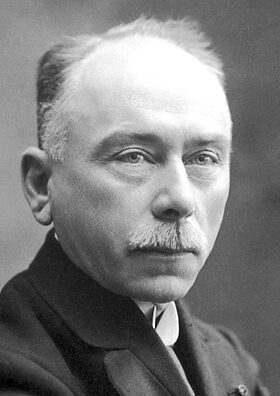
Jules Bordet
Jules Bordet was a Belgian immunologist and microbiologist. Born June 13, 1870, in Soignies. Died April 6, 1961, in Brussels. Positions held include Senator of Belgium. Educated at Free University of Brussels. Awards include honorary doctorate from the University of Cambridge, honorary doctor of the University of Edinburgh and honorary doctor of the University of Athens.
Facts
41 facts · 2 confirmed by two sources · 21 cited · 18 from one source
Where this comes from
Papalocal keeps its own record. It started from these sources; what each one said is kept here as it was copied, so a change on their side never changes this page by itself. Tap one to read its version.
What Wikidata says · copied November 16, 2026 · revision 2569616500
- Described as
- Belgian immunologist and microbiologist (1870-1961)
- Other names
- Jules Jean Baptiste Vincent Bordet
- Born
- June 13, 1870 · 15 references
- Died
- April 6, 1961 · 14 references
- Born in
- Soignies · 1 reference
- Died in
- Brussels · 1 reference
- Buried in
- Ixelles Cemetery · 1 reference
- Citizen of
- Belgium
- Occupation
- biologist · 1 reference; immunologist · 1 reference; politician; university teacher · 1 reference; dermatologist · 1 reference; physician · 3 references; bacteriologist · 2 references
- Positions held
- Senator of Belgium
- Worked for
- Université libre de Bruxelles
- Education
- Free University of Brussels
- Member of
- Royal Society of London (1916–); German Academy of Sciences Leopoldina; Royal Swedish Academy of Sciences; National Academy of Sciences (1935–); Académie Nationale de Médecine; Royal Academy of Medicine of Belgium
- Awards
- honorary doctorate from the University of Cambridge; honorary doctor of the University of Edinburgh; honorary doctor of the University of Athens; Honorary doctorate from the University of Cairo; Cameron Prize of the University of Edinburgh; Foreign Member of the Royal Society (1916) · 1 reference; Nobel Prize in Physiology or Medicine (1919) · 2 references; doctor honoris causa from the University of Paris (1922) · 1 reference; honorary doctorate from the University of Strasbourg (1923) · 2 references; honorary doctor of the University of Toulouse (1925) · 1 reference; Croonian Medal and Lecture (1930); doctor honoris causa from the University of Nancy (1930) · 1 reference; honorary doctorate of the University of Montpellier (1932) · 1 reference; honorary doctorate at the Laval University (1951) · 1 reference; honorary doctor of Caen University (1932) · 2 references
- Field
- microbiology; medicine · 1 reference; bacteriology · 1 reference; immunology · 1 reference
- Wikipedias with a page
- 69
Wikidata item Q211787 (wikidata.org/wiki/Q211787), public domain (CC0). Copied November 16, 2026.
What Wikipedia says · copied November 16, 2026 · revision 1378460545
Jules Jean Baptiste Vincent Bordet ( bor-DAY, French: [ʒyl ʒɑ̃ batist vɛ̃sɑ̃ bɔʁdɛ]; 13 June 1870 – 6 April 1961) was a Belgian immunologist and microbiologist. The bacterial genus Bordetella is named after him. The Nobel Prize in Physiology or Medicine was awarded to him in 1919 for his discoveries relating to immunity.
- Born, in its opening lines
- June 13, 1870
- Died, in its opening lines
- April 6, 1961
From the Wikipedia article “Jules Bordet” (en.wikipedia.org/wiki/Jules_Bordet), by its contributors, under CC BY-SA 4.0 (creativecommons.org/licenses/by-sa/4.0/). Copied November 16, 2026; not changed.
Confirmed Two sources agree. Cited One source, and it names where it got it. One source One source, without a reference of its own. Sources disagree The sources disagree. We show the best-supported value and keep theirs below.
