
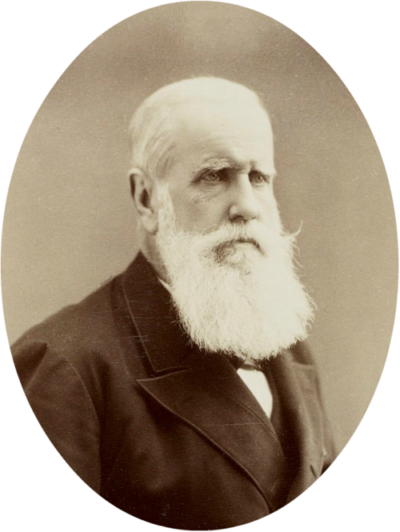
Pedro II of Brazil
Pedro II of Brazil was the 2nd and final Emperor of Brazil (r. 1831–89). Born December 2, 1825, in Rio de Janeiro. Died December 5, 1891, in Paris. Positions held include Emperor of Brazil (1831–1889). Awards include Grand Cross of the Legion of Honour, Knight of the Order of the Golden Fleece and Knight of the Order of St. Alexander Nevsky.
Facts
54 facts · 2 confirmed by two sources · 6 cited · 45 from one source · 1 where the sources disagree
What’s different
- Buried in: we show Petrópolis (Sources disagree). Wikidata also lists Cathedral of Petrópolis
Where this comes from
Papalocal keeps its own record. It started from these sources; what each one said is kept here as it was copied, so a change on their side never changes this page by itself. Tap one to read its version.
What Wikidata says · copied November 16, 2026 · revision 2568524038
- Described as
- 2nd and final Emperor of Brazil (r. 1831–89)
- Other names
- Pedro II
- Born
- December 2, 1825 · 8 references
- Died
- December 5, 1891 · 7 references
- Born in
- Rio de Janeiro · 1 reference
- Died in
- Paris · 1 reference
- Buried in
- Cathedral of Petrópolis; Petrópolis · 1 reference
- Cause of death
- pneumonia
- Name at birth
- Dom Pedro de Alcântara João Carlos Leopoldo Salvador Bibiano Francisco Xavier de Paula Leocádio Miguel Gabriel Rafael Gonzaga de Bragança e Habsburgo
- Citizen of
- Brazil · 1 reference
- Occupation
- politician; monarch; statesperson · 1 reference
- Positions held
- Emperor of Brazil (1831–1889)
- Member of
- Bavarian Academy of Sciences and Humanities; Saint Petersburg Academy of Sciences; French Academy of Sciences; Hellenic Philological Society of Constantinople (1873–); Russian Academy of Sciences; Royal Prussian Academy of Sciences; American Antiquarian Society; Accademia della Crusca · 1 reference; Royal Society of London (1871–) · 1 reference
- Awards
- Grand Cross of the Legion of Honour; Knight of the Order of the Golden Fleece; Knight of the Order of St. Alexander Nevsky; Order of the Black Eagle; Knight Grand Cross in the Order of the Holy Sepulchre; Order of the Star of Romania; Order of Saint Anna, 1st class; Order of the White Eagle; Order of Saint Stanislaus, 1st class; Order of St. Andrew; Imperial Order of the Rose; Order of the Southern Cross; Grand Cross of the Order of the Immaculate Conception of Vila Viçosa; Order of the Redeemer · 1 reference; Order of Pedro I · 1 reference
- Spouse
- Teresa Cristina of the Two Sicilies (1843–1889) · 1 reference
- Children
- Afonso, Prince Imperial of Brazil; Isabel, Princess Imperial of Brazil; Princess Leopoldina of Brazil; Pedro, Prince Imperial of Brazil
- Father
- Pedro I of Brazil
- Mother
- Maria Leopoldina of Austria
- Siblings
- Maria II of Portugal; Isabel Maria de Alcântara, Duchess of Goiás; Princess Maria Amélia of Brazil; Princess Francisca of Brazil; Princess Januária, Countess of Aquila; Princess Paula of Brazil; Infante Miguel of Portugal; Prince João Carlos, Prince of Beira; Pedro de Alcántara Brasileiro; Maria Isabel de Alcântara, Countess of Iguaçu
- Religion
- Catholic Church
- Wikipedias with a page
- 81
Wikidata item Q156774 (wikidata.org/wiki/Q156774), public domain (CC0). Copied November 16, 2026.
What Wikipedia says · copied November 16, 2026 · revision 1383363410
Dom Pedro II (Pedro de Alcântara João Carlos Leopoldo Salvador Bibiano Francisco Xavier de Paula Leocádio Miguel Gabriel Rafael Gonzaga; 2 December 1825 – 5 December 1891), known as "the Magnanimous" (Portuguese: O Magnânimo), was the second and final emperor of the Empire of Brazil. He reigned from 1831 until his deposition in the military coup of 1889, presiding over the longest and most stable reign in Brazilian history.
Born in Rio de Janeiro, Pedro II was the seventh child of Emperor Pedro I and Empress Maria Leopoldina. His father's abdication and departure for Europe in 1831 left the five-year-old prince as emperor, ushering in a regency period marked by political instability and shaping a childhood dominated by rigorous education and preparation for rule. These formative years profoundly influenced his character, instilling a strong sense of duty, intellectual curiosity, and devotion to public service, alongside a growing personal ambivalence toward monarchy.
During his long reign, Pedro II transformed Brazil from a fragile post-colonial state into a consolidated and internationally respected power. His government was characterized by political stability, freedom of speech, respect for civil rights, economic growth, and the functioning of a constitutional parliamentary system. Brazil achieved military success in conflicts such as the Platine War, the Uruguayan War, and the Paraguayan War, while also resolving numerous internal revolts and diplomatic disputes. Despite resistance from powerful interests, Pedro II ultimately supported and enabled the abolition of slavery in Brazil, a defining achievement of his reign.
A patron of education, culture, and science, Pedro II gained international recognition as a learned and enlightened ruler. Nevertheless, in 1889 he was overthrown in a coup d'état with limited popular backing, led primarily by military elites favoring a republican regime. Disillusioned and unwilling to provoke civil conflict, he accepted exile without resistance. Pedro II spent his final years in Europe, living modestly and largely alone.
Though deposed at the height of his personal popularity, the monarchy itself was actively delegitimized by the succeeding republican government. In the decades that followed, as Brazil's republics proved turbulent and often authoritarian, historians reassessed the imperial era more favorably – repatriating his remains to Brazil with national honors and consistently ranking him among the greatest statesmen in Brazilian history, with many considering him the greatest Brazilian ruler.
- Born, in its opening lines
- December 2, 1825
- Died, in its opening lines
- December 5, 1891
From the Wikipedia article “Pedro II of Brazil” (en.wikipedia.org/wiki/Pedro_II_of_Brazil), by its contributors, under CC BY-SA 4.0 (creativecommons.org/licenses/by-sa/4.0/). Copied November 16, 2026; not changed.
Confirmed Two sources agree. Cited One source, and it names where it got it. One source One source, without a reference of its own. Sources disagree The sources disagree. We show the best-supported value and keep theirs below.
