
Dannie Heineman Prize for Mathematical Physics
Dannie Heineman Prize for Mathematical Physics is an award conferred by the American Physical Society (1959–). It is given by the American Institute of Physics.
- Given by
- American Institute of Physics
- Country
- United States
- Created
- 1959
All 7 facts, and where they come from
Facts
7 facts · 0 confirmed by two sources · 0 cited · 7 from one source
Where this comes from
Papalocal keeps its own record. It started from these sources; what each one said is kept here as it was copied, so a change on their side never changes this page by itself. Tap one to read its version.
What Wikidata says · copied November 16, 2026 · revision 2501568883
- Described as
- award conferred by the American Physical Society (1959–)
- What it is
- science award; award of the American Physical Society
- Created
- 1959
- Country
- United States
- Given by
- American Institute of Physics; American Physical Society
- Named after
- Dannie Heineman
- Wikipedias with a page
- 19
Wikidata item Q1164475 (wikidata.org/wiki/Q1164475), public domain (CC0). Copied 2026-11-16.
What Wikipedia says · copied November 16, 2026 · revision 1322640692
Dannie Heineman Prize for Mathematical Physics is an award given each year since 1959 jointly by the American Physical Society and American Institute of Physics. It is established by the Heineman Foundation in honour of Dannie Heineman. As of 2010, the prize consists of US$10,000 and a certificate citing the contributions made by the recipient plus travel expenses to attend the meeting at which the prize is bestowed.
From the Wikipedia article “Dannie Heineman Prize for Mathematical Physics” (en.wikipedia.org/wiki/Dannie_Heineman_Prize_for_Mathematical_Physics), by its contributors, under CC BY-SA 4.0 (creativecommons.org/licenses/by-sa/4.0/). Copied 2026-11-16; not changed.
Confirmed Two sources agree. Cited One source, and it names where it got it. One source One source, without a reference of its own. Sources disagree The sources disagree. We show the best-supported value and keep theirs below.
People connected 19
Won it
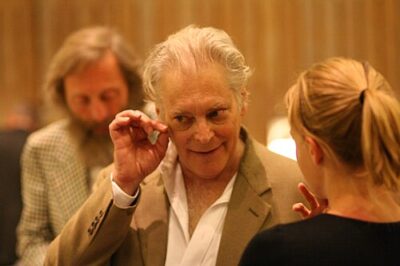 Mitchell Feigenbaum (2008)American mathematical physicist (1944–2019)
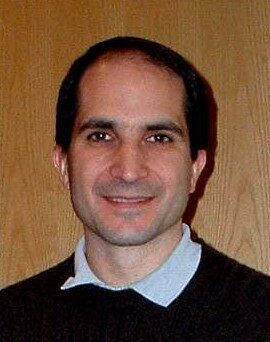 Juan Martín Maldacena (2007)Argentine physicist
 Joseph Polchinski (2007)physicist working on string theory (1954–2018)
 Giorgio Parisi (2005)Italian physicist (1948-)
- JJohn Henry Schwarz (2002)American theoretical physicist
 Vladimir Arnold (2001)Russian mathematician who studied integrable systems and differential equations (1937–2010)
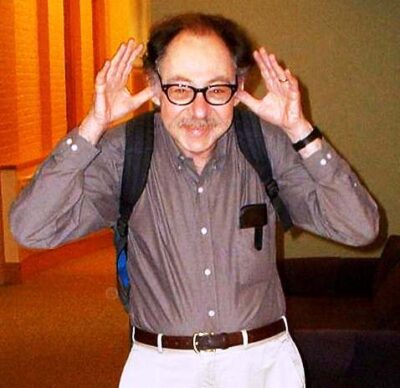 Sidney Coleman (2000)American physicist (1937–2007)
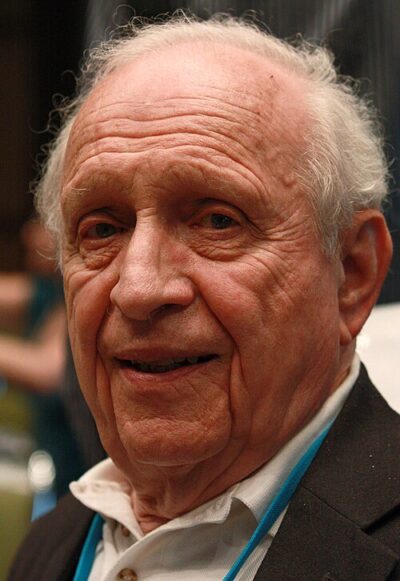 Roy J. Glauber (1996)American theoretical physicist (1925–2018)
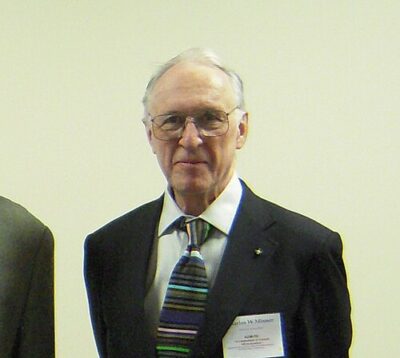 Charles W. Misner (1994)American physicist (1932–2023)
 Yakov Sinai (1990)Russian-American mathematician
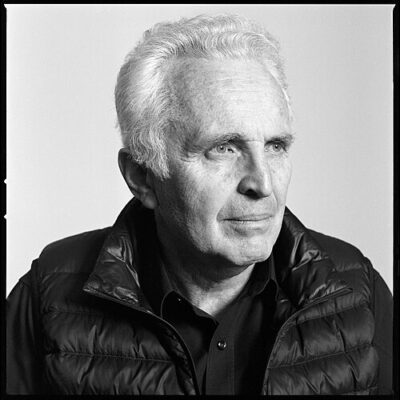 Aleksandr Polyakov (1986)Russian physicist
 Martin David Kruskal (1983)American mathematician (1925-2006)
 Gerard 't Hooft (1979)Dutch theoretical physicist
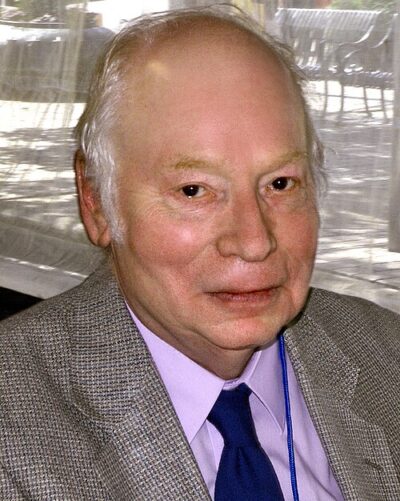 Steven Weinberg (1977)American theoretical physicist (1933-2021)
- KKenneth G. Wilson (1973)Nobel prize winning US physicist
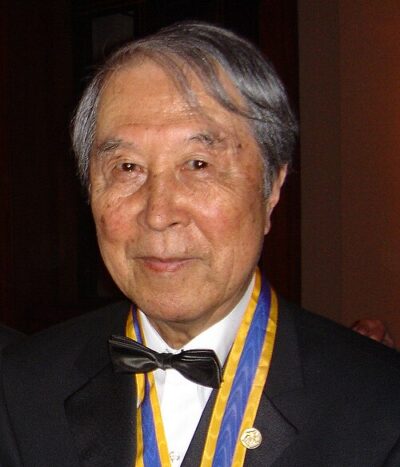 Yoichiro Nambu (1970)American theoretical physicist (1921-2015)
 Freeman Dyson (1965)theoretical physicist and mathematician (1923–2020)
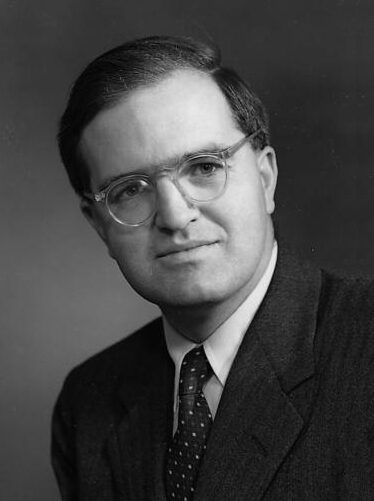 Aage Bohr (1960)Danish physicist (1922–2009)
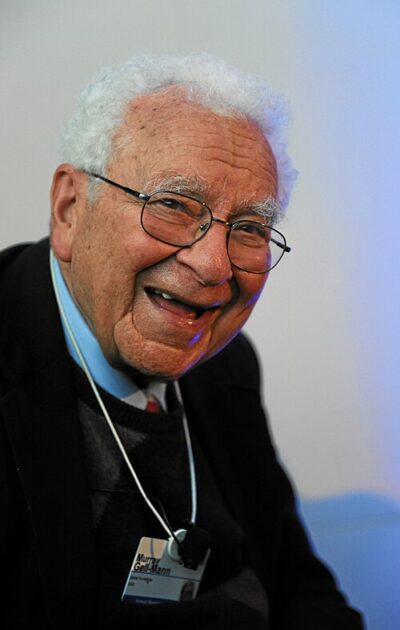 Murray Gell-Mann (1959)American physicist (1929–2019)
