
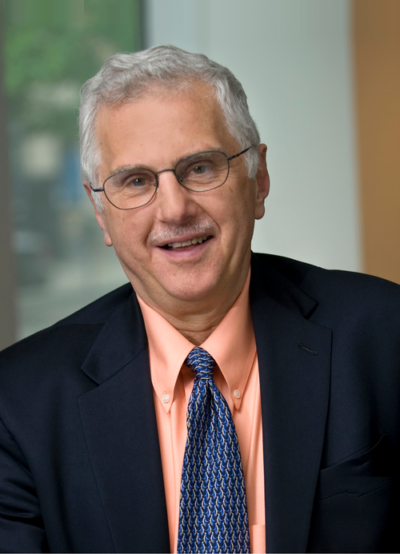
Bruce Alberts
Bruce Alberts is an American biochemist. Born April 14, 1938, in Chicago. Known for Molecular Biology of the Cell. Educated at Harvard University and Harvard College. Awards include Canada Gairdner International Award, National Medal of Science and NAS Award in Molecular Biology.
Facts
32 facts · 1 confirmed by two sources · 8 cited · 23 from one source
Where this comes from
Papalocal keeps its own record. It started from these sources; what each one said is kept here as it was copied, so a change on their side never changes this page by itself. Tap one to read its version.
What Wikidata says · copied November 16, 2026 · revision 2517518476
- Described as
- American biochemist
- Other names
- Bruce Michael Alberts, Bruce M. Alberts
- Born
- April 14, 1938 · 3 references
- Born in
- Chicago
- Citizen of
- United States
- Occupation
- biochemist · 1 reference; university teacher; anthropologist · 1 reference; biologist · 1 reference
- Worked for
- Princeton University; University of California, San Francisco
- Education
- Harvard University; Harvard College
- Member of
- Royal Society of London (1993–); National Academy of Sciences; European Academy of Sciences and Arts; American Academy of Arts and Sciences; Russian Academy of Sciences; Romanian Academy; Indian National Science Academy; Accademia Nazionale delle Scienze detta dei XL; Academia Europaea (1994–) · 1 reference
- Known for
- Molecular Biology of the Cell
- Awards
- Canada Gairdner International Award (1995); National Medal of Science (2012); NAS Award in Molecular Biology (1975) · 1 reference; honorary doctor of Tel Aviv University; Fellow of the AACR Academy (2016); Fellow of the American Academy of Arts and Sciences; Foreign Member of the Royal Society (1993) · 1 reference; Philip Hauge Abelson Prize (2014) · 1 reference; Lasker-Koshland Special Achievement Award in Medical Science (2016) · 1 reference
- Field
- biochemistry
- Lived in
- France · 1 reference
- Wikipedias with a page
- 20
Wikidata item Q902112 (wikidata.org/wiki/Q902112), public domain (CC0). Copied November 16, 2026.
What Wikipedia says · copied November 16, 2026 · revision 1381214636
Bruce Michael Alberts (born April 14, 1938, in Chicago, Illinois) is an American biochemist and the Emeritus Chancellor's Leadership Chair in Biochemistry and Biophysics for Science and Education at the University of California, San Francisco. He has done important work studying the protein complexes which enable chromosome replication when living cells divide. He is known as an original author of the "canonical, influential, and best-selling scientific textbook" Molecular Biology of the Cell, and served as Editor-in-Chief of Science magazine. He was awarded the National Medal of Science for "intellectual leadership and experimental innovation in the field of DNA replication, and for unparalleled dedication to improving science education and promoting science-based public policy" in 2014.
Alberts was the president of the National Academy of Sciences from 1993 to 2005. He is known for his work in forming science public policy, and has served as United States Science Envoy to Pakistan and Indonesia.
He has stated that "Science education should be about learning to think and solve problems like a scientist—insisting, for all citizens, that statements be evaluated using evidence and logic the way scientists evaluate statements." He is an Honorary Fellow of St Edmund's College, Cambridge.
- Born, in its opening lines
- April 14, 1938
From the Wikipedia article “Bruce Alberts” (en.wikipedia.org/wiki/Bruce_Alberts), by its contributors, under CC BY-SA 4.0 (creativecommons.org/licenses/by-sa/4.0/). Copied November 16, 2026; not changed.
Confirmed Two sources agree. Cited One source, and it names where it got it. One source One source, without a reference of its own. Sources disagree The sources disagree. We show the best-supported value and keep theirs below.
