
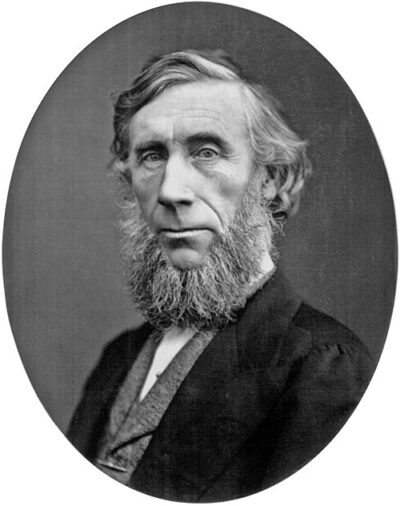
John Tyndall
John Tyndall was an Irish physicist. Born August 2, 1820, in Leighlinbridge. Died December 4, 1893, in Haslemere. Educated at University of Marburg. Awards include Fellow of the Royal Society, Royal Medal and Rumford Medal.
Facts
38 facts · 2 confirmed by two sources · 15 cited · 21 from one source
Where this comes from
Papalocal keeps its own record. It started from these sources; what each one said is kept here as it was copied, so a change on their side never changes this page by itself. Tap one to read its version.
What Wikidata says · copied November 16, 2026 · revision 2568765190
- Described as
- Irish physicist (1820–1893)
- Other names
- John Tyndal
- Born
- August 2, 1820 · 7 references
- Died
- December 4, 1893 · 8 references
- Born in
- Leighlinbridge · 2 references
- Died in
- Haslemere · 1 reference
- Buried in
- St. Bartholomew's Churchyard, Haslemere · 1 reference
- Citizen of
- United Kingdom of Great Britain and Ireland; Ireland
- Occupation
- physicist · 2 references; glaciologist; mountaineer; inventor · 1 reference; philosopher · 1 reference; writer · 1 reference; university teacher · 1 reference; naturalist · 1 reference
- Worked for
- Royal Institution
- Education
- University of Marburg · 1 reference
- Member of
- Royal Academy; Royal Swedish Academy of Sciences; Royal Society of London; German Academy of Sciences Leopoldina; Accademia Nazionale delle Scienze detta dei XL; Bavarian Academy of Sciences and Humanities; Göttingen Academy of Sciences and Humanities in Lower Saxony
- Sport
- mountaineering
- Awards
- Fellow of the Royal Society; Royal Medal (1853); Rumford Medal (1864) · 1 reference; honorary doctor of the University of Edinburgh (1867); Royal Society Bakerian Medal (1881) · 4 references; honorary member of the Physics Association (Frankfurt am Main, Germany) (1886)
- Field
- physics · 1 reference; experimental physics · 1 reference; thermal radiation · 1 reference; light scattering · 1 reference; glaciology · 1 reference
- Spouse
- Louisa Charlotte Tyndall (1876–) · 1 reference
- Father
- John Tyndall · 1 reference
- Wikipedias with a page
- 52
Wikidata item Q360808 (wikidata.org/wiki/Q360808), public domain (CC0). Copied November 16, 2026.
What Wikipedia says · copied November 16, 2026 · revision 1384365366
John Tyndall (; 2 August 1820 – 4 December 1893) was an Irish physicist. His scientific fame arose in the 1850s from his study of diamagnetism. Later he made discoveries in the realms of infrared radiation and the physical properties of air, proving the connection between atmospheric CO2 and what is now known as the greenhouse effect in 1859.
Tyndall also published more than a dozen science books which brought state-of-the-art 19th century experimental physics to a wide audience. From 1853 to 1887 he was professor of physics at the Royal Institution of Great Britain in London. He was elected as a member to the American Philosophical Society in 1868.
- Born, in its opening lines
- August 2, 1820
- Died, in its opening lines
- December 4, 1893
From the Wikipedia article “John Tyndall” (en.wikipedia.org/wiki/John_Tyndall), by its contributors, under CC BY-SA 4.0 (creativecommons.org/licenses/by-sa/4.0/). Copied November 16, 2026; not changed.
Confirmed Two sources agree. Cited One source, and it names where it got it. One source One source, without a reference of its own. Sources disagree The sources disagree. We show the best-supported value and keep theirs below.
