
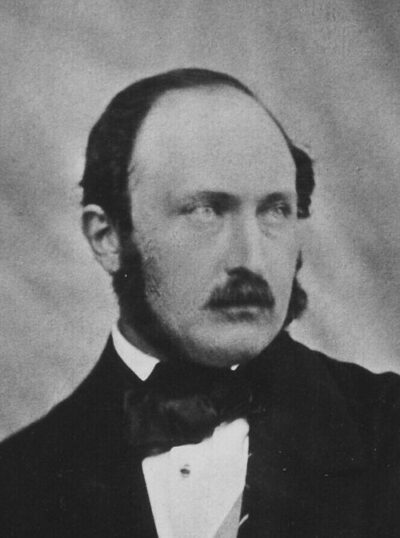
Prince Albert of Saxe-Coburg and Gotha
Prince Albert of Saxe-Coburg and Gotha was a Consort of Queen Victoria from 1840 to 1861. Born August 26, 1819, in Schloss Rosenau. Died December 14, 1861, in Windsor Castle. Positions held include Member of the Privy Council of the United Kingdom and Chancellor of the University of Cambridge (1847–1861). Educated at University of Bonn and Marlborough School. Awards include Knight of the Order of the Golden Fleece, Knight Grand Cross of the Order of St Michael and St George and Order of the Black Eagle.
Facts
54 facts · 2 confirmed by two sources · 19 cited · 32 from one source · 1 where the sources disagree
What’s different
- Buried in: we show St George's Chapel, Windsor (Sources disagree). Wikidata also lists The Royal Mausoleum
Where this comes from
Papalocal keeps its own record. It started from these sources; what each one said is kept here as it was copied, so a change on their side never changes this page by itself. Tap one to read its version.
What Wikidata says · copied November 16, 2026 · revision 2568381724
- Described as
- Consort of Queen Victoria from 1840 to 1861 (1819–1861)
- Other names
- Prince Consort Albert, The Prince Consort Albert, Albert, Prince Consort of the United Kingdom, Prince Albert, Prince Albert, Prince Consort, consort of Victoria, Queen of the United Kingdom, Albert, Prince Consort, Albert of Saxe-Coburg-Gotha, Albert of Saxe-Coburg and Gotha, Prince Albert of Saxe-Coburg-Gotha
- Born
- August 26, 1819 · 12 references
- Died
- December 14, 1861 · 11 references
- Born in
- Schloss Rosenau · 1 reference
- Died in
- Windsor Castle
- Buried in
- St George's Chapel, Windsor; The Royal Mausoleum
- Cause of death
- typhoid fever · 1 reference
- Name at birth
- Franz Albrecht August Karl Emanuel von Sachsen-Coburg-Saalfeld · 1 reference
- Citizen of
- United Kingdom of Great Britain and Ireland
- Occupation
- musician · 1 reference; conductor · 1 reference; singer · 1 reference; organist · 1 reference; painter · 1 reference; consort
- Positions held
- Member of the Privy Council of the United Kingdom; Chancellor of the University of Cambridge (1847–1861)
- Education
- University of Bonn; Marlborough School
- Member of
- German Academy of Sciences Leopoldina (1860–); Zoological Society of London; Royal Society of London (1840–) · 1 reference; Victoria of the United Kingdom and Prince Albert
- Instrument
- voice
- Awards
- Knight of the Order of the Golden Fleece; Knight Grand Cross of the Order of St Michael and St George; Order of the Black Eagle; Order of St. Andrew; Order of the Garter; Order of the Thistle; Order of St Patrick; Order of the Bath; Order of the Star of India; Knight of the Order of the Elephant (1843); Royal Order of the Seraphim; Grand Cross of the Sash of the Three Orders · 1 reference; Honorary Fellow of the Royal Society of Edinburgh; Order of Saint Stephen of Hungary · 1 reference; Royal Fellow of the Royal Society (1840) · 1 reference
- Spouse
- Victoria (1840–1861) · 2 references
- Children
- Victoria, Princess Royal · 1 reference; Edward VII · 1 reference; Princess Alice of the United Kingdom · 1 reference; Alfred, Duke of Saxe-Coburg and Gotha · 1 reference; Princess Helena of the United Kingdom · 1 reference; Princess Louise, Duchess of Argyll · 2 references; Prince Arthur, Duke of Connaught and Strathearn · 1 reference; Prince Leopold, Duke of Albany; Princess Beatrice of the United Kingdom
- Father
- Ernest I, Duke of Saxe-Coburg and Gotha
- Mother
- Princess Louise of Saxe-Gotha-Altenburg
- Siblings
- Ernest II, Duke of Saxe-Coburg and Gotha
- Religion
- Lutheranism
- Military branch
- British Army
- Military rank
- field marshal
- Wikipedias with a page
- 68
Wikidata item Q152245 (wikidata.org/wiki/Q152245), public domain (CC0). Copied November 16, 2026.
What Wikipedia says · copied November 16, 2026 · revision 1384923135
Prince Albert of Saxe-Coburg and Gotha (Franz August Karl Albert Emanuel; 26 August 1819 – 14 December 1861) was the husband of Queen Victoria and consort of the British monarch from their marriage on 10 February 1840 until his death in 1861. Victoria granted him the title Prince Consort in 1857.
Albert was born in the Saxon duchy of Saxe-Coburg-Saalfeld to a family connected to many of Europe's ruling monarchs. At the age of 20, he married Victoria, his first cousin, with whom he had nine children. Initially, he felt constrained by his role as consort, which did not afford him power or responsibilities. He gradually developed a reputation for supporting public causes, such as educational reform and the abolition of slavery worldwide, and was entrusted with running the Queen's household, office and estates. He was heavily involved with the organisation of the Great Exhibition of 1851, which was a resounding success.
Victoria came to depend more and more on Albert's support and guidance. He aided the development of Britain's constitutional monarchy by persuading his wife to be less partisan in her dealings with the British parliament, but he actively disagreed with the interventionist foreign policy pursued during Lord Palmerston's tenure as Foreign Secretary. Albert died in 1861 at the age of 42, devastating Victoria so much that she entered into a deep state of mourning and wore black for the rest of her life. On the day of her death in 1901, their eldest son succeeded as Edward VII, the first British monarch of the House of Saxe-Coburg and Gotha, named after the ducal house to which Albert belonged.
- Born, in its opening lines
- August 26, 1819
- Died, in its opening lines
- December 14, 1861
From the Wikipedia article “Prince Albert of Saxe-Coburg and Gotha” (en.wikipedia.org/wiki/Prince_Albert_of_Saxe-Coburg_and_Gotha), by its contributors, under CC BY-SA 4.0 (creativecommons.org/licenses/by-sa/4.0/). Copied November 16, 2026; not changed.
Confirmed Two sources agree. Cited One source, and it names where it got it. One source One source, without a reference of its own. Sources disagree The sources disagree. We show the best-supported value and keep theirs below.
