
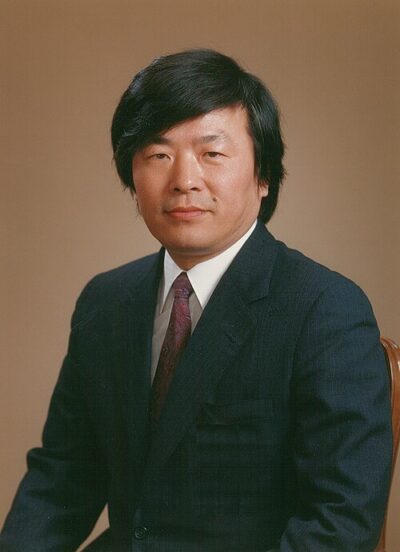
Susumu Tonegawa
Susumu Tonegawa was a Japanese biologist, neuroscientist. Born September 5, 1939, in Nagoya. Died July 11, 2026, in San Mateo. Educated at Kyoto University and Hibiya High School. Awards include Albert Lasker Award for Basic Medical Research, Louisa Gross Horwitz Prize and Canada Gairdner International Award.
Facts
41 facts · 2 confirmed by two sources · 24 cited · 15 from one source
Where this comes from
Papalocal keeps its own record. It started from these sources; what each one said is kept here as it was copied, so a change on their side never changes this page by itself. Tap one to read its version.
What Wikidata says · copied November 16, 2026 · revision 2564829670
- Described as
- Japanese biologist, neuroscientist (1939–2026)
- Other names
- Tonegawa S, S Tonegawa, Tonegawa S., Tonegawa, S. Tonegawa
- Born
- September 5, 1939
- Died
- July 11, 2026 · 1 reference
- Born in
- Nagoya · 1 reference
- Died in
- San Mateo · 1 reference
- Citizen of
- Japan · 2 references
- Occupation
- molecular biologist · 1 reference; immunologist · 1 reference; neuroscientist; professor · 3 references; scientist · 3 references; physician; chemist · 1 reference; geneticist · 1 reference
- Worked for
- Massachusetts Institute of Technology · 1 reference; Salk Institute for Biological Studies · 1 reference; Basel Institute for Immunology · 1 reference; RIKEN · 1 reference
- Education
- Kyoto University · 1 reference; Hibiya High School · 1 reference; University of California, San Diego · 1 reference
- Member of
- National Academy of Sciences (1986–) · 2 references; American Academy of Arts and Sciences · 1 reference; European Molecular Biology Organization
- Awards
- Albert Lasker Award for Basic Medical Research (1987) · 1 reference; Louisa Gross Horwitz Prize (1982) · 1 reference; Canada Gairdner International Award (1983); Nobel Prize in Physiology or Medicine (1987) · 2 references; Order of Culture (1984); German Immunology Prize (1981); EMBO Membership; Shincho Gakugei Literature Prize (1991); Person of Cultural Merit (1983); Cloëtta Prize (1978); Asahi Prize (1981); Robert Koch Prize (1986) · 2 references; Bristol-Myers Squibb Award for Distinguished Achievement in Cancer Research (1986) · 1 reference; honorary doctorate of the University of Alcala (2006) · 1 reference; Gold medal of the Spanish National Research Council (2007)
- Field
- molecular biology · 2 references; immunology · 2 references; neuroscience · 2 references
- Wikipedias with a page
- 61
Wikidata item Q108602 (wikidata.org/wiki/Q108602), public domain (CC0). Copied November 16, 2026.
What Wikipedia says · copied November 16, 2026 · revision 1384137334
Susumu Tonegawa (利根川 進, Tonegawa Susumu; September 5, 1939 – July 11, 2026) was a Japanese scientist who was the sole recipient of the Nobel Prize for Physiology or Medicine in 1987 for his discovery of V(D)J recombination, the genetic mechanism which produces antibody diversity. Although he won the Nobel Prize for his work in immunology, Tonegawa was a molecular biologist by training and, following his Nobel Prize win, changed fields to neuroscience, examining the molecular, cellular and neuronal basis of memory formation and retrieval.
- Born, in its opening lines
- September 5, 1939
- Died, in its opening lines
- July 11, 2026
From the Wikipedia article “Susumu Tonegawa” (en.wikipedia.org/wiki/Susumu_Tonegawa), by its contributors, under CC BY-SA 4.0 (creativecommons.org/licenses/by-sa/4.0/). Copied November 16, 2026; not changed.
Confirmed Two sources agree. Cited One source, and it names where it got it. One source One source, without a reference of its own. Sources disagree The sources disagree. We show the best-supported value and keep theirs below.
