
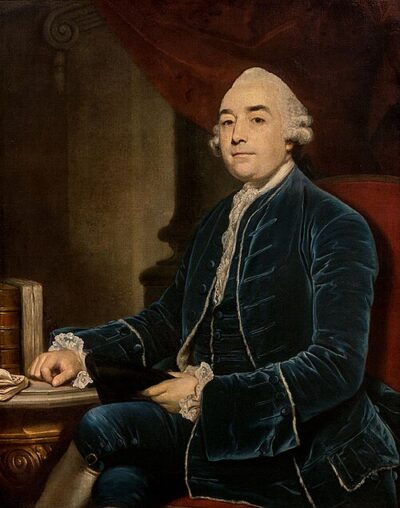
William Petty, 2nd Earl of Shelburne
William Petty, 2nd Earl of Shelburne was a British Prime Minister. Born May 2, 1737, in Dublin. Died May 7, 1805, in London. Positions held include Member of Parliament in the Parliament of Ireland, Prime Minister of the United Kingdom (1782–1783) and Leader of the House of Lords (1782–1783). Educated at Christ Church. Awards include Fellow of the American Academy of Arts and Sciences and Order of the Garter.
Facts
32 facts · 2 confirmed by two sources · 11 cited · 19 from one source
Where this comes from
Papalocal keeps its own record. It started from these sources; what each one said is kept here as it was copied, so a change on their side never changes this page by itself. Tap one to read its version.
What Wikidata says · copied November 16, 2026 · revision 2568337317
- Described as
- British Prime Minister (1737-1805)
- Other names
- William Petty, Marquis of Lansdowne, William FitzMaurice-Petty, William Petty Fitzmaurice, 1st Marquess of Lansdowne, The Earl of Sherburne, William Petty, Earl of Shelburne
- Born
- May 2, 1737 · 1 reference
- Died
- May 7, 1805 · 9 references
- Born in
- Dublin · 1 reference
- Died in
- London · 1 reference
- Buried in
- Church of All Saints, High Wycombe
- Citizen of
- Kingdom of Great Britain
- Occupation
- politician · 2 references; military officer; aristocrat; diplomat · 1 reference
- Positions held
- Member of Parliament in the Parliament of Ireland; Prime Minister of the United Kingdom (1782–1783); Leader of the House of Lords (1782–1783); Home Secretary (1782); Secretary of State for the Southern Department; member of the House of Lords; member of the 11th Parliament of Great Britain; member of the 12th Parliament of Great Britain
- Political party
- Whigs
- Education
- Christ Church
- Member of
- American Academy of Arts and Sciences
- Awards
- Fellow of the American Academy of Arts and Sciences; Order of the Garter · 1 reference
- Spouse
- Lady Sophia Carteret (1765–1771) · 3 references; Louisa Petty, Countess of Shelburne (1779–) · 2 references
- Children
- Henry Petty-Fitzmaurice, 3rd Marquess of Lansdowne · 1 reference; John Petty, 2nd Marquess of Lansdowne; Lady Louisa Fitzmaurice · 1 reference
- Father
- John Petty, 1st Earl of Shelburne · 1 reference
- Mother
- Mary FitzMaurice · 2 references
- Military branch
- British Army
- Military rank
- general · 1 reference
- Wikipedias with a page
- 47
Wikidata item Q312573 (wikidata.org/wiki/Q312573), public domain (CC0). Copied November 16, 2026.
What Wikipedia says · copied November 16, 2026 · revision 1385211975
William Petty Fitzmaurice, 1st Marquess of Lansdowne (2 May 1737 – 7 May 1805), known as the Earl of Shelburne between 1761 and 1784, by which title he is generally known to history, was an Anglo-Irish Whig statesman who was the first home secretary in 1782 and then prime minister in 1782–83 during the final months of the American War of Independence. He succeeded in securing peace with America and this feat remains his most notable legacy.
Lord Shelburne was born in Dublin and spent his formative years in Ireland. After attending Oxford University, he served in the British Army during the Seven Years' War. As a reward for his conduct at the Battle of Kloster Kampen, Shelburne was appointed an aide-de-camp to George III. He became involved in politics, becoming a member of parliament in 1760. After his father's death in 1761, he inherited his title and entered the House of Lords.
In 1766, Shelburne was appointed as Southern Secretary, a position which he held for two years. He departed office during the Corsican Crisis and joined the Opposition. Following the fall of the North government, Shelburne joined its replacement under Lord Rockingham. Shelburne was made prime minister in 1782 following Rockingham's death, with the American War still being fought.
He lost his authority and influence after being driven out of office at the age of 45 in 1783. Shelburne lamented that his career had been a failure, despite the many high offices he held over 17 years, and his undoubted abilities as a debater. He blamed his poor education—although it was as good as that of most peers—and said the real problem was that "it has been my fate through life to fall in with clever but unpopular connections".
- Born, in its opening lines
- May 2, 1737
- Died, in its opening lines
- May 7, 1805
From the Wikipedia article “William Petty, 2nd Earl of Shelburne” (en.wikipedia.org/wiki/William_Petty,_2nd_Earl_of_Shelburne), by its contributors, under CC BY-SA 4.0 (creativecommons.org/licenses/by-sa/4.0/). Copied November 16, 2026; not changed.
Confirmed Two sources agree. Cited One source, and it names where it got it. One source One source, without a reference of its own. Sources disagree The sources disagree. We show the best-supported value and keep theirs below.
