
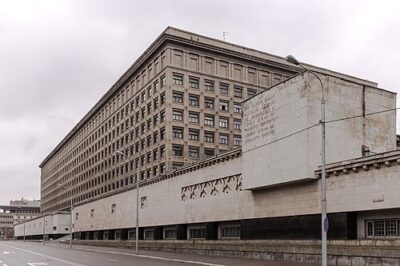
M.V. Frunze Military Academy
The M.V. Frunze Military Academy is a former military academy of the Russian Armed Forces and during Sowjet Union. It was founded in 1918. It won the Order of Suvorov, 1st class and 7 more.
All 15 facts, and where they come from
Facts
15 facts · 0 confirmed by two sources · 0 cited · 15 from one source
Where this comes from
Papalocal keeps its own record. It started from these sources; what each one said is kept here as it was copied, so a change on their side never changes this page by itself. Tap one to read its version.
What Wikidata says · copied November 17, 2026 · revision 2510831143
- Described as
- former military academy of the Russian Armed Forces and during Sowjet Union
- What it is
- military academy
- Founded
- 1918
- Ended
- 1998
- Located in
- Moscow
- Country
- Russia · 1 reference; Soviet Union
- Awards
- Order of Suvorov, 1st class; Order of Lenin; Order of the October Revolution; Order of the Red Banner; Order of the Red Banner · 1 reference; Order of Zhukov · 1 reference; Order of the Red Banner · 1 reference; Military Order "For Services to the People and the Fatherland" · 1 reference
- Named after
- Mikhail Frunze
- Wikipedias with a page
- 23
Wikidata item Q14404494 (wikidata.org/wiki/Q14404494), public domain (CC0). Copied 2026-11-17.
What Wikipedia says · copied November 17, 2026 · revision 1359707319
The M. V. Frunze Military Academy (Russian: Военная академия имени М. В. Фрунзе), or in full the Military Order of Lenin and the October Revolution, Red Banner, Order of Suvorov Academy in the name of M. V. Frunze (Russian: Военная орденов Ленина и Октябрьской Революции, Краснознамённая, ордена Суворова академия имени М. В. Фрунзе), was a military academy of the Soviet and later the Russian Armed Forces.
Established in 1918 to train officers for the newly formed Red Army, the academy was one of the most prestigious military educational institutions in the Soviet Union. At first titled the General Staff Academy of the Red Army, taking on a similar role to its pre-revolutionary predecessor, the Imperial Nicholas Military Academy, it was renamed the Military Academy in 1921 and then the M. V. Frunze Military Academy in 1925, honouring Mikhail Frunze, who had been a commandant of the academy.
It became a higher staff college with the addition of courses for senior command officers in the 1930s, before these were transferred in 1936 to the newly formed Military Academy of the General Staff. By this time many of the Red Army's most senior commanders were graduates of the academy. During the Second World War, large numbers of staff and students were called up to fight. Many won decorations and awards, including 244 Heroes of the Soviet Union, and 18 twice Heroes of the Soviet Union. Training and research at the academy continued throughout the war.
The academy continued to train senior officers for the Soviet Armed Forces after the war, acting as a stepping stone for those tipped for high command before they attended the Military Academy of the General Staff. It was ranked as the most prestigious of all the Soviet military academies, taking officers ranked captain or above for a three-year course of study to prepare them for higher commands. The academy also offered research and postgraduate degrees in various aspects of military studies. Between 1934 and 1988, 722 graduates of the academy were awarded the title of Hero of the Soviet Union, while the academy received the Order of Lenin, the Order of Suvorov First Class, and the Order of the October Revolution.
The academy continued to operate after the dissolution of the Soviet Union in 1991. In 1998 it was merged with the Malinovsky Military Armoured Forces Academy and the Vystrel officer training courses to form the Combined Arms Academy of the Armed Forces of the Russian Federation.
From the Wikipedia article “Frunze Military Academy” (en.wikipedia.org/wiki/Frunze_Military_Academy), by its contributors, under CC BY-SA 4.0 (creativecommons.org/licenses/by-sa/4.0/). Copied 2026-11-17; not changed.
Confirmed Two sources agree. Cited One source, and it names where it got it. One source One source, without a reference of its own. Sources disagree The sources disagree. We show the best-supported value and keep theirs below.
Picture: Sergey Norin from Moscow, Russia, via Wikimedia Commons · CC BY 2.0
People connected 64
Studied here 64
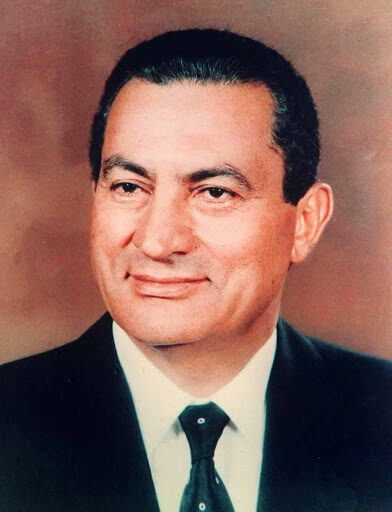 Hosni MubarakPresident of Egypt from 1981 to 2011
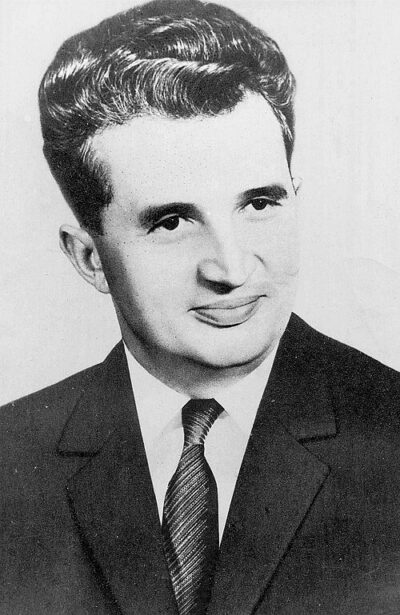 Nicolae Ceaușescudictator of Romania from 1965 to 1989
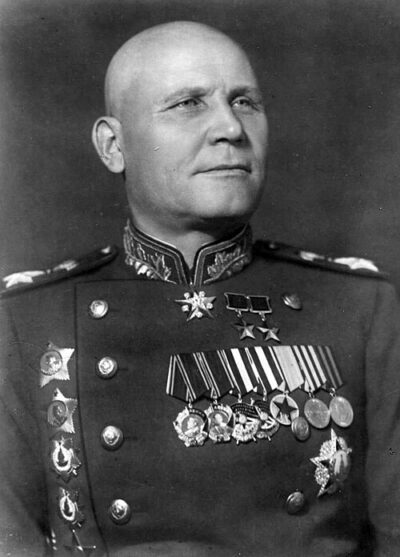 Ivan KonevSoviet military commander (1897-1973)
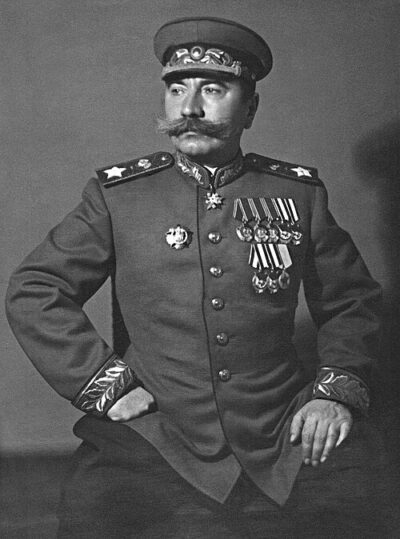 Semyon Budyonny (–1932)Soviet marshal (1883-1973)
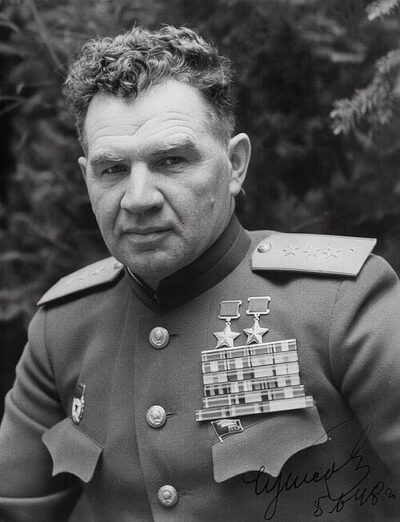 Vasily Chuikov (–1925)Soviet marshal (1900–1982)
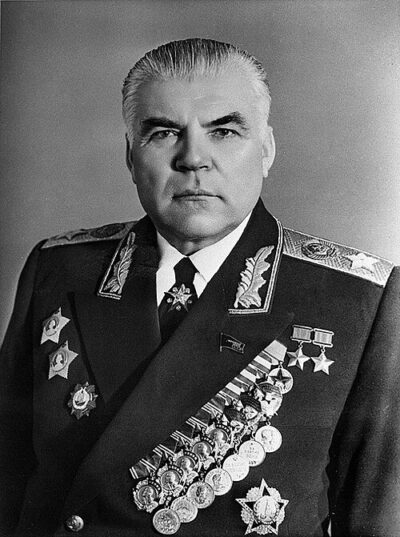 Rodion Malinovsky (1927–1930)Soviet military commander
 Ivan Bagramyan (1931–1934)Marshal of the Soviet Union (1897-1982)
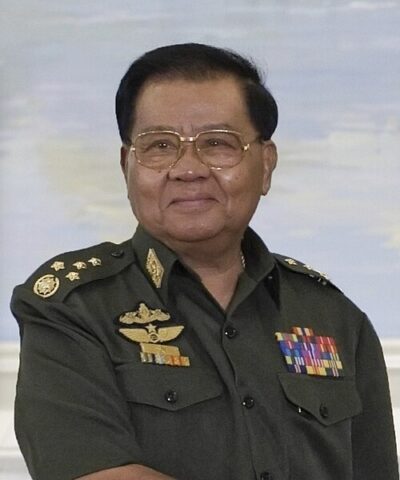 Than ShweBurmese senior general and head of state of Myanmar of Myanmar from 1992 to 2011
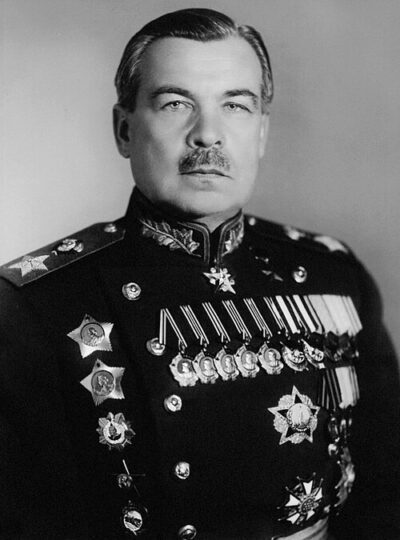 Leonid GovorovSoviet marshal (1897–1955)
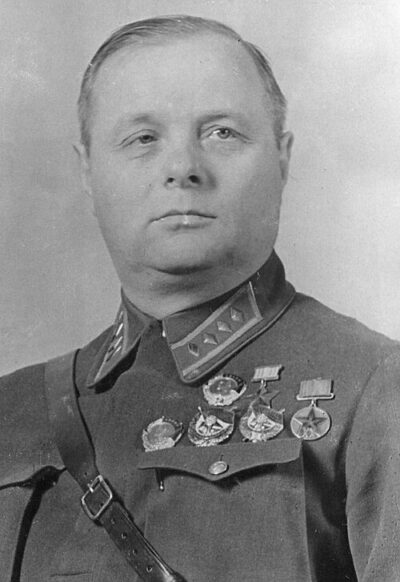 Kirill MeretskovSoviet marshal (1897–1968)
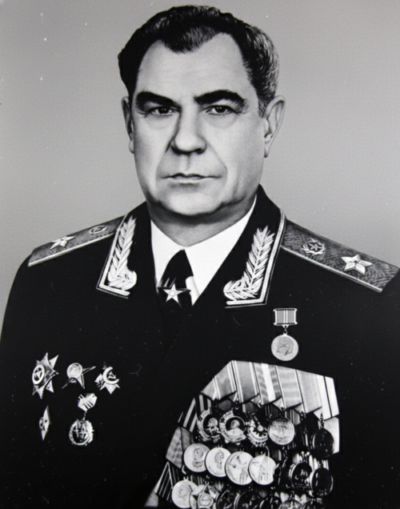 Dmitry YazovSoviet minister of defence (1924-2020)
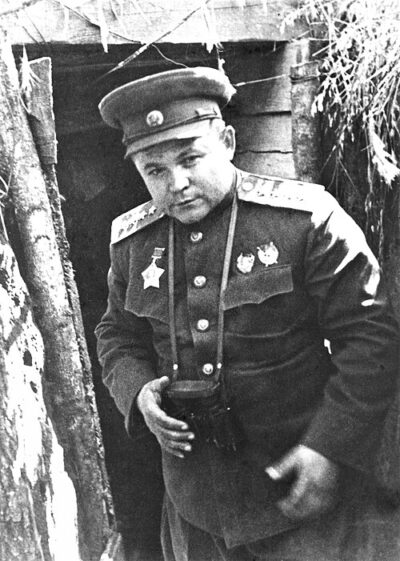 Nikolai VatutinSoviet general
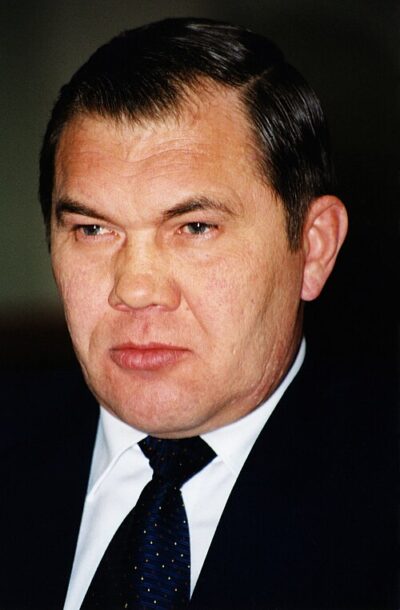 Alexander LebedRussian general (1950-2002)
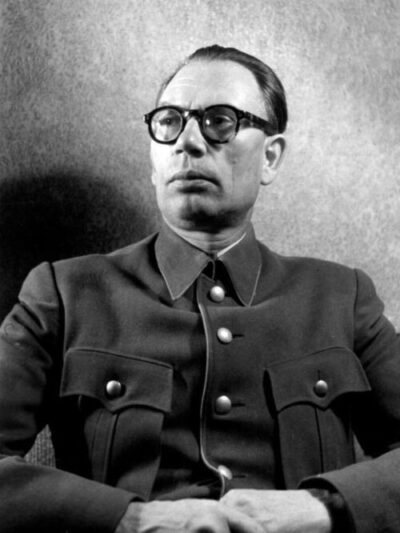 Andrey VlasovRussian lieutenant general (1901–1946)
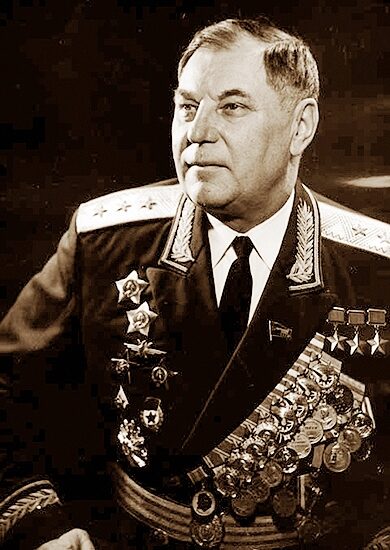 Alexander Pokryshkin (–1948)Soviet aviator (1913-1985)
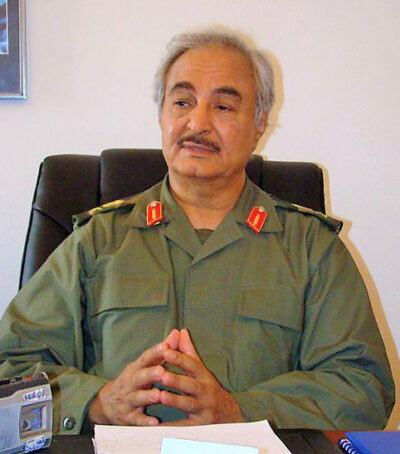 Khalifa Belqasim HaftarLibyan war criminal
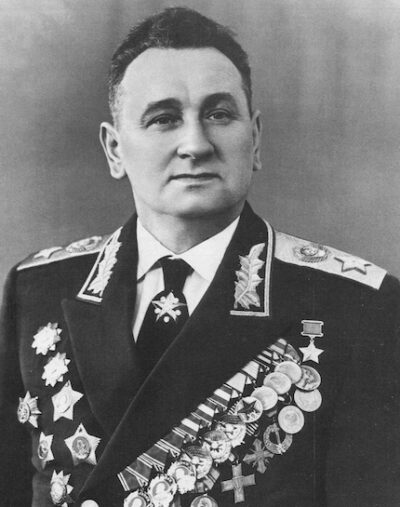 Andrei Grechko (–1936)Soviet marshal
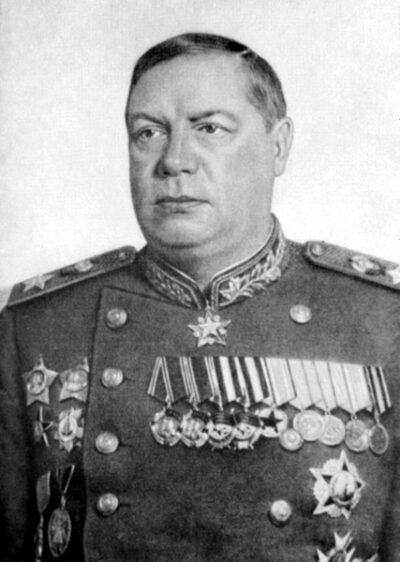 Fyodor Ivanovich Tolbukhin (–1934)Soviet military commander and Marshal of the Soviet Union (1894-1949)
 Vasily SokolovskySoviet marshal (1897–1968)
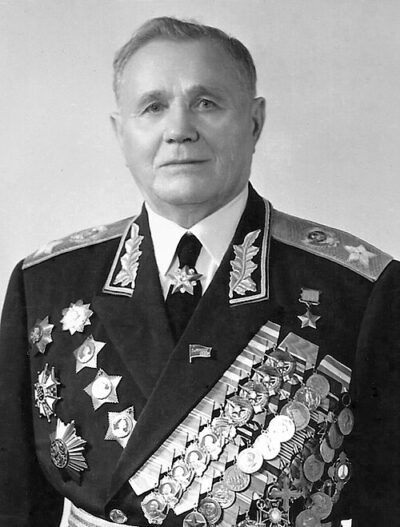 Andrey YeryomenkoMarshal of the Soviet Union (1892-1970)
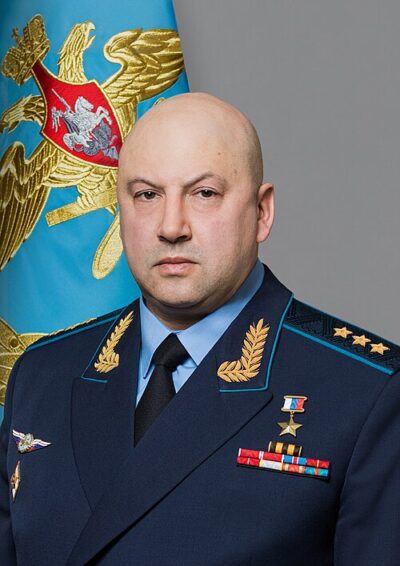 Sergei SurovikinHead of the CIS' Coordinating Committee for Air Defence
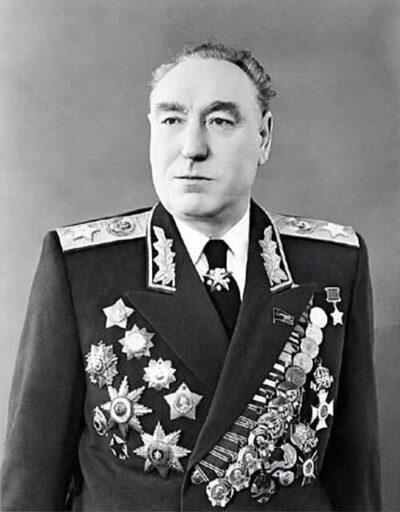 Sergey Biryuzov (1937)Soviet military commander (1904-1964)
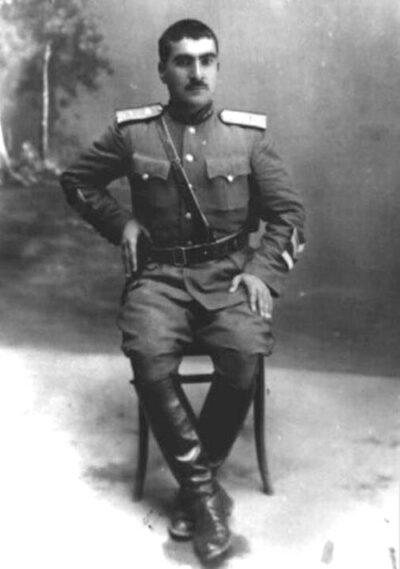 Mustafa BarzaniKurdish nationalist (1903–1979)
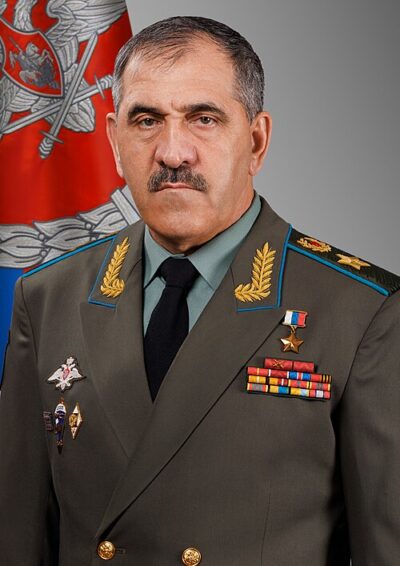 Yunus-bek YevkurovRussian politician
and 40 more
