
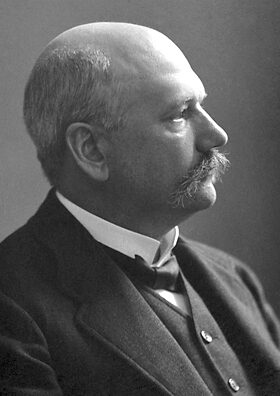
Albrecht Kossel
Albrecht Kossel was a German biochemist and pioneer in the study of genetics. Born September 16, 1853, in Rostock. Died July 5, 1927, in Heidelberg. Educated at University of Strasbourg and University of Rostock. Awards include Nobel Prize in Physiology or Medicine and honorary member of the Physics Association (Frankfurt am Main, Germany).
Facts
32 facts · 2 confirmed by two sources · 15 cited · 15 from one source
Where this comes from
Papalocal keeps its own record. It started from these sources; what each one said is kept here as it was copied, so a change on their side never changes this page by itself. Tap one to read its version.
What Wikidata says · copied November 16, 2026 · revision 2568488333
- Described as
- German biochemist and pioneer in the study of genetics
- Other names
- Albrecht Carl Ludwig Martin Leonhard Kossel, Ludwig Karl Martin Leonhard Albrecht Kossel
- Born
- September 16, 1853 · 10 references
- Died
- July 5, 1927 · 10 references
- Born in
- Rostock · 4 references
- Died in
- Heidelberg · 4 references
- Buried in
- Bergfriedhof · 1 reference
- Name at birth
- Ludwig Karl Martin Leonhard Albrecht Kossel
- Citizen of
- Germany
- Occupation
- chemist · 1 reference; physician · 1 reference; university teacher; physiologist · 1 reference; biochemist · 2 references
- Worked for
- Humboldt-Universität zu Berlin (1887–1895) · 2 references; University of Marburg (1895–1901) · 1 reference; Heidelberg University (1901–1923) · 1 reference
- Education
- University of Strasbourg; University of Rostock · 1 reference
- Member of
- German Academy of Sciences Leopoldina; Heidelberg Academy of Sciences and Humanities (1909–) · 1 reference; Royal Swedish Academy of Sciences; Russian Academy of Sciences; Académie Nationale de Médecine; National Academy of Sciences (1913–); Academy of Sciences of Turin (1910–) · 1 reference; Göttingen Academy of Sciences and Humanities in Lower Saxony
- Awards
- Nobel Prize in Physiology or Medicine (1910) · 2 references; honorary member of the Physics Association (Frankfurt am Main, Germany) (1903)
- Field
- biochemistry; physiology
- Children
- Walther Kossel · 1 reference
- Father
- Albrecht Kossel · 1 reference
- Siblings
- Hermann Kossel · 1 reference
- Wikipedias with a page
- 66
Wikidata item Q57128 (wikidata.org/wiki/Q57128), public domain (CC0). Copied November 16, 2026.
What Wikipedia says · copied November 16, 2026 · revision 1378437916
Ludwig Karl Martin Leonhard Albrecht Kossel (German pronunciation: [ˈalbʁɛçt ˈkɔsl̩] ; 16 September 1853 – 5 July 1927) was a German biochemist and pioneer in the study of genetics. He was awarded the Nobel Prize for Physiology or Medicine in 1910 for his work in determining the chemical composition of nucleic acids, the genetic substance of biological cells.
Kossel isolated and described the five organic compounds that are present in nucleic acid: adenine, cytosine, guanine, thymine, and uracil. These compounds were later shown to be nucleobases, and are key in the formation of DNA and RNA, the genetic material found in all living cells.
Kossel was an important influence on and collaborator with other important researchers in biochemistry, including Henry Drysdale Dakin, Friedrich Miescher, Edwin B. Hart, and his professor and mentor, Felix Hoppe-Seyler. Kossel was editor of the Zeitschrift für Physiologische Chemie (Journal of Physiological Chemistry) from 1895 until his death. Kossel also conducted important research into the composition of protein, and his research predicted the discovery of the polypeptide nature of the protein molecule.
The Albrecht Kossel Institute for Neuroregeneration at the University of Rostock is named in his honor.
- Born, in its opening lines
- September 16, 1853
- Died, in its opening lines
- July 5, 1927
From the Wikipedia article “Albrecht Kossel” (en.wikipedia.org/wiki/Albrecht_Kossel), by its contributors, under CC BY-SA 4.0 (creativecommons.org/licenses/by-sa/4.0/). Copied November 16, 2026; not changed.
Confirmed Two sources agree. Cited One source, and it names where it got it. One source One source, without a reference of its own. Sources disagree The sources disagree. We show the best-supported value and keep theirs below.
