
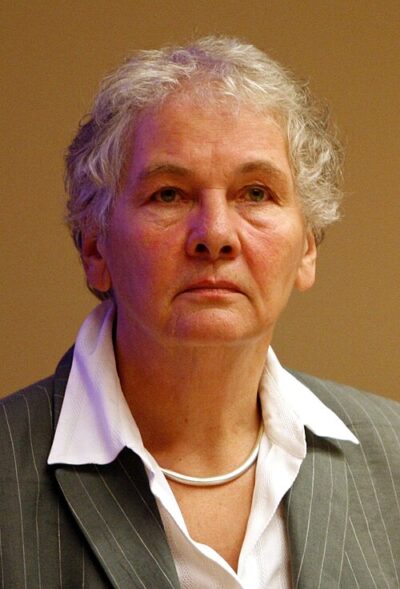
Christiane Nüsslein-Volhard
Christiane Nüsslein-Volhard is a German biologist (1995 Nobel Prize). Born October 20, 1942, in Magdeburg. Educated at University of Tübingen and Goethe University Frankfurt. Awards include Pour le Mérite for Sciences and Arts order, Albert Lasker Award for Basic Medical Research and Nobel Prize in Physiology or Medicine.
Facts
48 facts · 1 confirmed by two sources · 20 cited · 27 from one source
Where this comes from
Papalocal keeps its own record. It started from these sources; what each one said is kept here as it was copied, so a change on their side never changes this page by itself. Tap one to read its version.
What Wikidata says · copied November 16, 2026 · revision 2568909568
- Described as
- German biologist (1995 Nobel Prize)
- Other names
- C. Nüesslein-Volhard, C. Nüesslein Volhard, Christiane Nusslein Volhard, C. Nuesslein-Volhard, Christiane Nüsslein Volhard, C Nuesslein Volhard, Christiane Nusslein-Volhard, Christiane Nüesslein Volhard, Christiane Nüesslein-Volhard, Christiane Nuesslein-Volhard, C Nuesslein-Volhard, Christiane Nuesslein Volhard
- Born
- October 20, 1942 · 2 references
- Born in
- Magdeburg
- Citizen of
- Germany
- Occupation
- biologist · 2 references; biochemist · 2 references; geneticist · 1 reference; psychologist; university teacher; physiologist; chemist · 1 reference
- Worked for
- University of Tübingen; European Molecular Biology Laboratory; Max Planck Institute for Biology Tübingen; Biozentrum University of Basel; University of Freiburg; University of Duisburg-Essen · 1 reference
- Education
- University of Tübingen; Goethe University Frankfurt
- Member of
- German Academy of Sciences Leopoldina (1991–) · 1 reference; Academia Europaea (1989–) · 1 reference; National Academy of Sciences (1990–) · 1 reference; Berlin-Brandenburg Academy of Sciences and Humanities; North Rhine-Westphalia Academy for Sciences and Arts; Heidelberg Academy of Sciences and Humanities (1989–) · 1 reference; French Academy of Sciences (2009–); American Academy of Arts and Sciences; Göttingen Academy of Sciences and Humanities in Lower Saxony; European Molecular Biology Organization
- Awards
- Pour le Mérite for Sciences and Arts order (1997) · 1 reference; Albert Lasker Award for Basic Medical Research (1991) · 1 reference; Nobel Prize in Physiology or Medicine (1995) · 2 references; Order of Merit of Baden-Württemberg (1996); Carus medal (1989); Otto Bayer Award (1992); Ernst Schering Prize (1993) · 1 reference; Otto Warburg Medal (1992) · 1 reference; Louisa Gross Horwitz Prize (1992) · 1 reference; Deutscher Stifterpreis (2007); Goethe Plaque of the City of Frankfurt (1996) · 1 reference; Bavarian Maximilian Order for Science and Art (2014); Alfred P. Sloan, Jr. Prize (1992) · 1 reference; Rosenstiel Award (1989) · 1 reference; Gottfried Wilhelm Leibniz Prize (1986)
- Field
- biology · 1 reference; biochemistry · 1 reference; genetic research · 1 reference; developmental biology · 1 reference; embryology · 1 reference
- Wikipedias with a page
- 71
Wikidata item Q77174 (wikidata.org/wiki/Q77174), public domain (CC0). Copied November 16, 2026.
What Wikipedia says · copied November 16, 2026 · revision 1383457549
Christiane (Janni) Nüsslein-Volhard (German pronunciation: [kʁɪsˈti̯anə ˈnʏslaɪ̯n ˈfɔlˌhaʁt] ; born 20 October 1942) is a German developmental biologist. She was awarded the Nobel Prize in Physiology or Medicine in 1995, together with Eric Wieschaus and Edward B. Lewis, for their research on the genetic control of embryonic development. She had previously received the Albert Lasker Award for Basic Medical Research in 1991.
- Born, in its opening lines
- October 20, 1942
From the Wikipedia article “Christiane Nüsslein-Volhard” (en.wikipedia.org/wiki/Christiane_Nüsslein-Volhard), by its contributors, under CC BY-SA 4.0 (creativecommons.org/licenses/by-sa/4.0/). Copied November 16, 2026; not changed.
Confirmed Two sources agree. Cited One source, and it names where it got it. One source One source, without a reference of its own. Sources disagree The sources disagree. We show the best-supported value and keep theirs below.
