
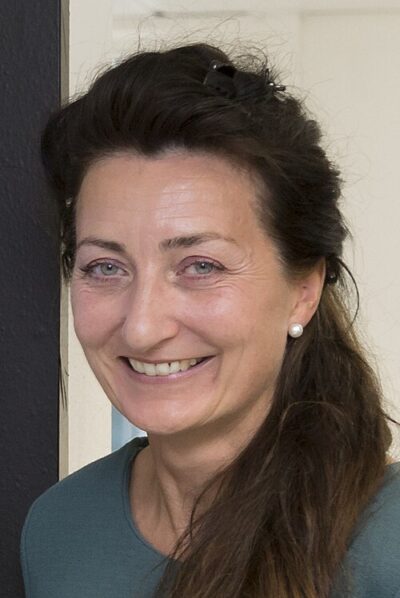
May-Britt Moser
May-Britt Moser is a Norwegian psychologist and neuroscientist. Born January 4, 1963, in Fosnavåg. Positions held include professor. Educated at University of Edinburgh and University of Oslo. Awards include Nobel Prize in Physiology or Medicine, Louisa Gross Horwitz Prize and Fridtjof Nansen Award of Excellence, Mathematics-Natural sciences class.
Facts
37 facts · 0 confirmed by two sources · 15 cited · 22 from one source
Where this comes from
Papalocal keeps its own record. It started from these sources; what each one said is kept here as it was copied, so a change on their side never changes this page by itself. Tap one to read its version.
What Wikidata says · copied November 16, 2026 · revision 2565632554
- Described as
- Norwegian psychologist and neuroscientist
- Other names
- May-Britt Andreassen
- Born
- January 4, 1963 · 3 references
- Born in
- Fosnavåg · 1 reference
- Name at birth
- May-Britt Andreassen
- Citizen of
- Norway
- Occupation
- neuroscientist · 1 reference; psychologist; researcher; university teacher
- Positions held
- professor
- Worked for
- Norwegian University of Science and Technology; University of Oslo
- Education
- University of Edinburgh; University of Oslo (–1995) · 1 reference
- Member of
- Norwegian Academy of Science and Letters; Norwegian Academy of Technological Sciences; Academia Europaea (2011–) · 1 reference; National Academy of Sciences (2014–) · 1 reference; Royal Norwegian Society of Sciences and Letters; American Philosophical Society; German Academy of Sciences Leopoldina · 1 reference
- Awards
- Nobel Prize in Physiology or Medicine (2014) · 2 references; Louisa Gross Horwitz Prize (2013) · 1 reference; Fridtjof Nansen Award of Excellence, Mathematics-Natural sciences class (2013); Årets trønder (2014); Körber European Science Prize (2014); Karl Spencer Lashley Award (2014) · 1 reference; Perl-UNC Prize (2012); W. Alden Spencer Award (2005); Eric K. Fernströms Nordiska Pris (2008) · 1 reference; prix Liliane-Bettencourt pour les sciences du vivant (2006); Louis-Jeantet Prize for Medicine (2011) · 1 reference; Erna Hamburger Prize (2016) · 1 reference; Knight Grand Cross of the Order of St. Olav (2018) · 2 references
- Field
- neuroscience; grid neuron · 1 reference
- Spouse
- Edvard Moser (1985–2016)
- Lived in
- Trondheim · 1 reference
- Wikipedias with a page
- 73
Wikidata item Q6796222 (wikidata.org/wiki/Q6796222), public domain (CC0). Copied November 16, 2026.
What Wikipedia says · copied November 16, 2026 · revision 1384626688
May-Britt Moser (born 1963) is a Norwegian psychologist and neuroscientist, who is a Professor of Psychology and Neuroscience at the Norwegian University of Science and Technology (NTNU). She and her former husband, Edvard Moser, shared half of the 2014 Nobel Prize in Physiology or Medicine,
awarded for work concerning the grid cells in the entorhinal cortex, as well as several additional space-representing cell types in the same circuit that make up the positioning system in the brain.
Together with Edvard Moser she established the Moser research environment at NTNU, which they lead. Since 2023 she has headed the Centre for Algorithms in the Cortex.
Moser received her education as a psychologist at the Department of Psychology, University of Oslo and obtained a PhD in neurophysiology at the Faculty of Medicine in 1995; in 1996 she was appointed as associate professor in biological psychology at the Department of Psychology at the Norwegian University of Science and Technology (NTNU) she was promoted to professor of neuroscience in 2000. In 2002 her research group was given the status of a separate "centre of excellence".
From the Wikipedia article “May-Britt Moser” (en.wikipedia.org/wiki/May-Britt_Moser), by its contributors, under CC BY-SA 4.0 (creativecommons.org/licenses/by-sa/4.0/). Copied November 16, 2026; not changed.
Confirmed Two sources agree. Cited One source, and it names where it got it. One source One source, without a reference of its own. Sources disagree The sources disagree. We show the best-supported value and keep theirs below.
