
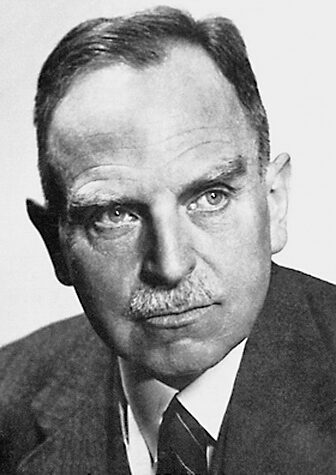
Otto Hahn
Otto Hahn was a German chemist and physicist. Born March 8, 1879, in Frankfurt. Died July 28, 1968, in Göttingen. Educated at University of Marburg and LMU Munich. Awards include Officer of the Legion of Honour, Pour le Mérite for Sciences and Arts order and honorary citizen of Berlin.
Facts
54 facts · 2 confirmed by two sources · 11 cited · 41 from one source
Where this comes from
Papalocal keeps its own record. It started from these sources; what each one said is kept here as it was copied, so a change on their side never changes this page by itself. Tap one to read its version.
What Wikidata says · copied November 16, 2026 · revision 2568860603
- Described as
- German chemist and physicist (1879–1968)
- Other names
- O. Hahn, Otto Emil Hahn
- Born
- March 8, 1879 · 10 references
- Died
- July 28, 1968 · 11 references
- Born in
- Frankfurt · 2 references
- Died in
- Göttingen · 2 references
- Buried in
- Göttingen City Cemetery · 2 references
- Citizen of
- West Germany; German Empire; Weimar Republic; Nazi Germany
- Occupation
- chemist · 2 references; university teacher; non-fiction writer; nuclear physicist · 1 reference; autobiographer · 1 reference; physicist · 1 reference
- Worked for
- Frederick William University Berlin; University College London (1904–1905); McGill University (1905–1906); Humboldt-Universität zu Berlin (1907–1933); Cornell University (1933); Freie Universität Berlin · 1 reference
- Education
- University of Marburg (1897–1901); LMU Munich; Humboldt-Universität zu Berlin · 1 reference
- Member of
- Royal Society of London (1957–); Royal Prussian Academy of Sciences; German Academy of Sciences at Berlin; German Academy of Sciences Leopoldina; Royal Swedish Academy of Sciences; Austrian Academy of Sciences; Pontifical Academy of Sciences · 1 reference; Bavarian Academy of Sciences and Humanities; Academy of Sciences and Literature Mainz; Göttingen Academy of Sciences and Humanities in Lower Saxony
- Awards
- Officer of the Legion of Honour (1959); Pour le Mérite for Sciences and Arts order (1952); honorary citizen of Berlin; Officer of the Order of the British Empire (1957); Great Cross with Star and Sash of the Order of Merit of the Federal Republic of Germany (1954) · 1 reference; Faraday Lectureship Prize (1956); Ernst Reuter Medal (1959) · 1 reference; Nobel Prize in Chemistry (1944) · 2 references; Max Planck Medal (1949); honorary citizen of Frankfurt am Main (1959); Harnack medal (1954); Wilhelm Exner Medal (1958) · 1 reference; Helmholtz Medal (1959); Goethe Plaque of the City of Frankfurt (1944); Cothenius Medal (1944)
- Field
- radiochemistry; nuclear chemistry
- Spouse
- Edith Junghans · 1 reference
- Children
- Hanno Hahn · 1 reference
- Religion
- Lutheranism
- Wikipedias with a page
- 96
Wikidata item Q57065 (wikidata.org/wiki/Q57065), public domain (CC0). Copied November 16, 2026.
What Wikipedia says · copied November 16, 2026 · revision 1382489943
Otto Hahn (German: [ˈɔtoː ˈhaːn] ; 8 March 1879 – 28 July 1968) was a German chemist who was a pioneer in the field of radiochemistry. He is referred to as the father of nuclear chemistry and discoverer of nuclear fission, the science behind nuclear reactors and nuclear weapons. Hahn and Lise Meitner discovered isotopes of the radioactive elements radium, thorium, protactinium and uranium. He also discovered the phenomena of atomic recoil and nuclear isomerism, and pioneered rubidium–strontium dating. In 1938, Hahn, Meitner, Otto Frisch and Fritz Strassmann discovered nuclear fission, for which Hahn alone was awarded the 1944 Nobel Prize in Chemistry.
A graduate of Marburg University, which awarded him a doctorate in 1901, Hahn studied under Sir William Ramsay at University College London and at McGill University in Montreal, Canada, under Ernest Rutherford, where he discovered several new radioactive isotopes. He returned to Germany in 1906; Emil Fischer let him use a former woodworking shop in the basement of the Chemical Institute at the Friedrich Wilhelm University of Berlin as a laboratory. Hahn completed his habilitation in early 1907 and became a Privatdozent. In 1912, he became head of the Radioactivity Department of the newly founded Kaiser Wilhelm Institute for Chemistry (KWIC). Working with Austrian physicist Lise Meitner in the building that now bears their names, they made a series of groundbreaking discoveries, culminating with her isolation of the longest-lived isotope of protactinium in 1918.
During World War I Hahn served with a Landwehr regiment on the Western Front, and with the chemical warfare unit headed by Fritz Haber on the Western, Eastern and Italian fronts, earning the Iron Cross (2nd Class) for his part in the First Battle of Ypres. After the war he became the head of the KWIC, while remaining in charge of his own department. Between 1934 and 1938, he worked with Strassmann and Meitner on the study of isotopes created by neutron bombardment of uranium and thorium, which led to the discovery of nuclear fission. He was an opponent of Nazism and the persecution of Jews by the Nazi Party that caused the removal of many of his colleagues, including Meitner, who was forced to flee Germany in 1938. Nonetheless, during World War II, he worked on the German nuclear weapons program, cataloguing the fission products of uranium. At the end of the war he was arrested by the Allied forces and detained in Farm Hall with nine other German scientists, from July 1945 to January 1946.
Hahn served as the last president of the Kaiser Wilhelm Society for the Advancement of Science in 1946 and as the founding president of its successor, the Max Planck Society from 1948 to 1960. In 1959, he co-founded the Federation of German Scientists, a non-governmental organisation committed to the ideal of responsible science. As he worked to rebuild German science, he became one of the most influential and respected citizens of post-war West Germany.
- Born, in its opening lines
- March 8, 1879
- Died, in its opening lines
- July 28, 1968
From the Wikipedia article “Otto Hahn” (en.wikipedia.org/wiki/Otto_Hahn), by its contributors, under CC BY-SA 4.0 (creativecommons.org/licenses/by-sa/4.0/). Copied November 16, 2026; not changed.
Confirmed Two sources agree. Cited One source, and it names where it got it. One source One source, without a reference of its own. Sources disagree The sources disagree. We show the best-supported value and keep theirs below.
