
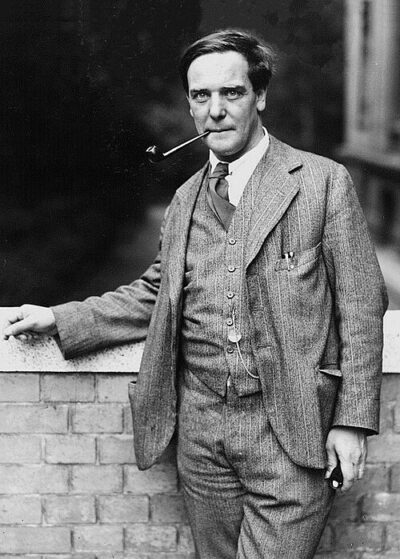
Pyotr Kapitsa
Pyotr Kapitsa was a Soviet physicist. Born June 26, 1894, in Kronstadt. Died April 8, 1984, in Moscow. Educated at Trinity College and Saint Petersburg Polytechnic Institute. Awards include Medal "For the Defence of Moscow", Medal "For Valiant Labour in the Great Patriotic War 1941–1945" and Medal "Veteran of Labour".
Facts
53 facts · 1 confirmed by two sources · 13 cited · 38 from one source · 1 where the sources disagree
What’s different
- Born: we show June 26, 1894 (Sources disagree). Wikipedia says July 9, 1894
Where this comes from
Papalocal keeps its own record. It started from these sources; what each one said is kept here as it was copied, so a change on their side never changes this page by itself. Tap one to read its version.
What Wikidata says · copied November 16, 2026 · revision 2565598438
- Described as
- Soviet physicist
- Other names
- Pyotr Leonidovich Kapitsa, Peter Kapitza
- Born
- June 26, 1894 · 3 references
- Died
- April 8, 1984 · 14 references
- Born in
- Kronstadt · 2 references
- Died in
- Moscow · 2 references
- Buried in
- Novodevichy Cemetery
- Cause of death
- stroke
- Citizen of
- Russian Empire · 1 reference; Russian Socialist Federative Soviet Republic; Soviet Union · 2 references
- Occupation
- physicist · 5 references; inventor; professor
- Worked for
- Peter the Great Saint Petersburg State Polytechnical University; University of Cambridge; P.L. Kapitza Institute for Physical Problems RAS (2 times) (1935–1957) · 1 reference; Moscow Institute of Physics and Technology (1956–); Lomonosov Moscow State University (1943–); A.V. Shubnikov Institute of Crystallography; Ioffe Institute
- Education
- Trinity College; Saint Petersburg Polytechnic Institute (1914–); University of Cambridge
- Member of
- Royal Society of London (1929–); German Academy of Sciences Leopoldina (1958–) · 1 reference; National Academy of Sciences (1946–); Academy of Sciences of the USSR (1929–); Royal Swedish Academy of Sciences (1966–); Polish Academy of Sciences (1962–) · 1 reference; American Academy of Arts and Sciences (1968–); International Academy of Astronautics (1964–); International Academy of the History of Science (1971–); Royal Netherlands Academy of Arts and Sciences (1969–)
- Awards
- Medal "For the Defence of Moscow"; Medal "For Valiant Labour in the Great Patriotic War 1941–1945"; Medal "Veteran of Labour"; Jubilee Medal "In Commemoration of the 100th Anniversary of the Birth of Vladimir Ilyich Lenin"; Medal "In Commemoration of the 800th Anniversary of Moscow"; State Stalin Prize, 1st degree (2 times) (1941, 1943); Faraday Medal (1942); Order of Lenin (6 times) (1943, 1944, 1945, 1964, 1971, 1974) · 1 reference; Franklin Medal (1944) · 1 reference; doctor honoris causa from the University of Alger (1944) · 1 reference; Hero of Socialist Labour (2 times) (1945, 1974) · 1 reference; doctor honoris causa from the University of Paris (1945) · 1 reference; Order of the Red Banner of Labour (1954); Cothenius Medal (1959); Lomonosov Gold Medal (1959) · 1 reference
- Field
- physics
- Spouse
- Anna Krylova
- Children
- Andrey Kapitsa; Sergey Kapitsa · 1 reference
- Father
- Leonid Kapitsa
- Mother
- Olga Ieronimovna Kapitsa · 1 reference
- Wikipedias with a page
- 91
Wikidata item Q172844 (wikidata.org/wiki/Q172844), public domain (CC0). Copied November 16, 2026.
What Wikipedia says · copied November 16, 2026 · revision 1383789981
Pyotr Leonidovich Kapitsa (Russian: Пётр Леонидович Капица; Romanian: Petre Capița; 9 July [O.S. 27 June] 1894 – 8 April 1984), also known as Peter Kapitza, was a Russian and Soviet physicist, whose research focused on low-temperature physics. He was awarded the Nobel Prize in Physics in 1978.
- Born, in its opening lines
- July 9, 1894
- Died, in its opening lines
- April 8, 1984
From the Wikipedia article “Pyotr Kapitsa” (en.wikipedia.org/wiki/Pyotr_Kapitsa), by its contributors, under CC BY-SA 4.0 (creativecommons.org/licenses/by-sa/4.0/). Copied November 16, 2026; not changed.
Confirmed Two sources agree. Cited One source, and it names where it got it. One source One source, without a reference of its own. Sources disagree The sources disagree. We show the best-supported value and keep theirs below.
