
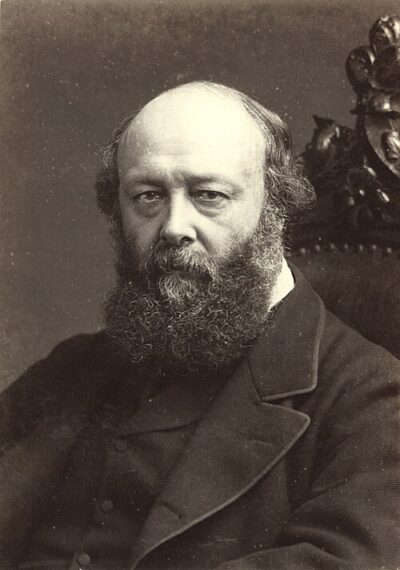
Robert Gascoyne-Cecil, 3rd Marquess of Salisbury
Robert Gascoyne-Cecil, 3rd Marquess of Salisbury was a British politician and prime minister. Born February 3, 1830, in Hatfield. Died August 22, 1903, in Hatfield. Positions held include Prime Minister of the United Kingdom (2 times) (1885–1902), Lord Privy Seal (1900–1902) and Leader of the Opposition (1892–1895). Educated at Christ Church and Eton College. Awards include Fellow of the Royal Society, Knight Grand Cross of the Royal Victorian Order and Order of the Garter.
Facts
45 facts · 2 confirmed by two sources · 18 cited · 25 from one source
Where this comes from
Papalocal keeps its own record. It started from these sources; what each one said is kept here as it was copied, so a change on their side never changes this page by itself. Tap one to read its version.
What Wikidata says · copied November 16, 2026 · revision 2562947368
- Described as
- British politician and prime minister (1830-1903)
- Other names
- Robert Gascoyne-Cecil, Robert Arthur Talbot Gascoyne-Cecil, Robert Arthur Talbot Gascoyne-Cecil, 3rd Marquess of Salisbury, Robert Arthur Talbot Gascoigne Cecil, Marquis of Salisbury
- Born
- February 3, 1830 · 6 references
- Died
- August 22, 1903 · 6 references
- Born in
- Hatfield · 1 reference
- Died in
- Hatfield
- Buried in
- Parish Church of St Etheldreda, Old Hatfield · 1 reference
- Citizen of
- United Kingdom of Great Britain and Ireland · 1 reference
- Occupation
- politician · 2 references; diplomat · 1 reference
- Positions held
- Prime Minister of the United Kingdom (2 times) (1885–1902) · 1 reference; Lord Privy Seal (1900–1902) · 1 reference; Leader of the Opposition (1892–1895) · 1 reference; Member of the Privy Council of the United Kingdom; Secretary of State for Foreign and Commonwealth Affairs (1895–1900); Secretary of State for India; member of the 19th Parliament of the United Kingdom (1865–1868); member of the 18th Parliament of the United Kingdom (1859–1865) · 1 reference; member of the 17th Parliament of the United Kingdom (1857–1859) · 1 reference; member of the 16th Parliament of the United Kingdom (1853–1857) · 1 reference; Leader of the House of Lords (2 times) (1885–1902) · 1 reference; Chancellor of the University of Oxford (1869–1903); Lord Warden of the Cinque Ports (1895–1903)
- Political party
- Conservative Party · 1 reference
- Worked for
- University of Oxford · 1 reference
- Education
- Christ Church · 1 reference; Eton College
- Member of
- Royal Society of London; Roxburghe Club (1884–1903) · 1 reference
- Awards
- Fellow of the Royal Society; Knight Grand Cross of the Royal Victorian Order; Order of the Garter · 1 reference; Honorary Fellow of the Royal College of Surgeons (1900) · 1 reference
- Spouse
- Georgina Gascoyne-Cecil, Marchioness of Salisbury (1857–) · 3 references
- Children
- Hugh Cecil, 1st Baron Quickswood · 1 reference; Robert Cecil · 1 reference; Lord William Cecil · 2 references; James Gascoyne-Cecil, 4th Marquess of Salisbury · 1 reference; Maud Palmer, Countess of Selborne · 2 references; Gwendolen Gascoyne-Cecil · 2 references; Lady Fanny Cecil · 3 references; Lord Edward Cecil · 2 references
- Father
- James Gascoyne-Cecil, 2nd Marquess of Salisbury · 1 reference
- Mother
- Frances Gascoyne · 2 references
- Siblings
- Lord Eustace Cecil · 1 reference; Lady Blanche Gascoyne-Cecil · 1 reference
- Religion
- Anglicanism
- Wikipedias with a page
- 69
Wikidata item Q243705 (wikidata.org/wiki/Q243705), public domain (CC0). Copied November 16, 2026.
What Wikipedia says · copied November 16, 2026 · revision 1373707099
Robert Arthur Talbot Gascoyne-Cecil, 3rd Marquess of Salisbury ( GASK-oyn SISS-əl; 3 February 1830 – 22 August 1903), known as Lord Salisbury, was a British statesman and Conservative politician who served as Prime Minister of the United Kingdom three times for a total of over thirteen years. He was also Foreign Secretary before and during most of his tenure. He avoided international alignments or alliances, maintaining the policy of "splendid isolation".
Lord Robert Cecil, later known as Lord Salisbury, was first elected to the House of Commons in 1854 and served as Secretary of State for India in Lord Derby's Conservative government 1866–1867. In 1874, under Disraeli, Salisbury returned as Secretary of State for India, and, in 1878, was appointed foreign secretary, and played a leading part in the Congress of Berlin. After Disraeli's death in 1881, Salisbury emerged as the Conservative leader in the House of Lords, with Sir Stafford Northcote leading the party in the Commons. He succeeded William Ewart Gladstone as prime minister in June 1885, and held the office until January 1886.
When Gladstone came out in favour of Home Rule for Ireland later that year, Salisbury opposed him and formed an alliance with the breakaway Liberal Unionists, winning the subsequent 1886 general election. His biggest achievement in this term was obtaining the majority of the new territory in Africa during the Scramble for Africa, avoiding a war or serious confrontation with the other powers. He remained as prime minister until Gladstone's Liberals formed a government with the support of the Irish nationalists at the 1892 general election. The Liberals, however, lost the 1895 general election, and Salisbury for the third and last time became prime minister. He led Britain to victory in a bitter, controversial war against the Boers, and led the Unionists to another electoral victory in 1900. He relinquished the premiership to his nephew Arthur Balfour in 1902 and died in 1903. He was the last prime minister to serve from the House of Lords throughout the entirety of their premiership.
Historians agree that Salisbury was a strong and effective leader in foreign affairs, with a wide grasp of the issues. Paul Smith characterises his personality as "deeply neurotic, depressive, agitated, introverted, fearful of change and loss of control, and self-effacing but capable of extraordinary competitiveness". A representative of the landed aristocracy, he held a reactionary credo: "Whatever happens will be for the worse, and therefore it is in our interest that as little should happen as possible." Searle says that instead of seeing his party's victory in 1886 as a harbinger of a new and more popular Conservatism, Salisbury longed to return to the stability of the past, when his party's main function was to restrain what he saw as demagogic liberalism and democratic excess. He is generally ranked in the upper tier of British prime ministers.
- Born, in its opening lines
- February 3, 1830
- Died, in its opening lines
- August 22, 1903
From the Wikipedia article “Robert Gascoyne-Cecil, 3rd Marquess of Salisbury” (en.wikipedia.org/wiki/Robert_Gascoyne-Cecil,_3rd_Marquess_of_Salisbury), by its contributors, under CC BY-SA 4.0 (creativecommons.org/licenses/by-sa/4.0/). Copied November 16, 2026; not changed.
Confirmed Two sources agree. Cited One source, and it names where it got it. One source One source, without a reference of its own. Sources disagree The sources disagree. We show the best-supported value and keep theirs below.
